

Social Media Management Business: 2024’s Ultimate Guide
Launching and running a successful social media management business can be a game-changer for small business owners looking to boost their online presence and revenue. If you’re ready to dive into this industry, here’s what you need to know right off the bat:
- Social media management involves creating and publishing content, monitoring engagement, growing a community, and analyzing performance.
- A well-executed social media strategy can improve brand awareness, customer engagement, and return on investment (ROI).
- Essential skills include communication, creativity, collaboration, and organization.
- Key tools like Agorapulse, Hootsuite, and Buffer streamline your workflow.
Starting on this journey requires meticulous planning, creativity, and strategic thinking. We’ll guide you through every step to ensure you’re well-equipped to manage both your company’s and your clients’ social media accounts effectively. Ready to get started?
Social media management business word basics:
– how do you become a social media manager
– how much to charge as a social media manager
What is Social Media Management?
Social media management is the process of creating, scheduling, analyzing, and engaging with content posted on social media platforms. It’s a crucial element for building brand awareness and fostering communities around a brand or business.
Key Elements of Social Media Management
When managing social media, there are several key elements to focus on:
Content Creation: This involves generating engaging, relevant, and visually appealing content that aligns with your brand’s voice and goals. Content types can include text posts, images, videos, infographics, and more.
Scheduling: Consistency is key in social media. Scheduling tools like Agorapulse and Hootsuite help you plan and automate your posts, ensuring you maintain a regular presence without the need to be online 24/7.
Monitoring: Keeping an eye on engagement metrics and mentions is crucial. This helps you understand what resonates with your audience and allows you to respond promptly to comments and messages.
Reporting: Analyzing the performance of your social media efforts is essential. This involves tracking metrics such as reach, engagement, and follower growth. Tools like Buffer and Sprout Social can help you compile comprehensive reports.
Importance of Social Media Management
Brand Awareness: Maintaining an active presence on social media helps businesses reach a larger audience and increase brand recognition. Regularly sharing content and engaging with users boosts visibility and makes the brand more familiar to potential customers.
Customer Engagement: Social media provides a direct channel for businesses to interact with their audience. Engaging with customers through comments, messages, and mentions humanizes the brand and fosters a sense of community.
Return on Investment (ROI): A well-executed social media strategy can generate measurable ROI. By analyzing performance data, businesses can optimize their strategies to maximize engagement and conversions, turning social media efforts into tangible business results.
Steps to Start a Social Media Management Business
Starting a social media management business involves several key steps. These steps will help you plan, budget, and implement effective strategies to ensure success.
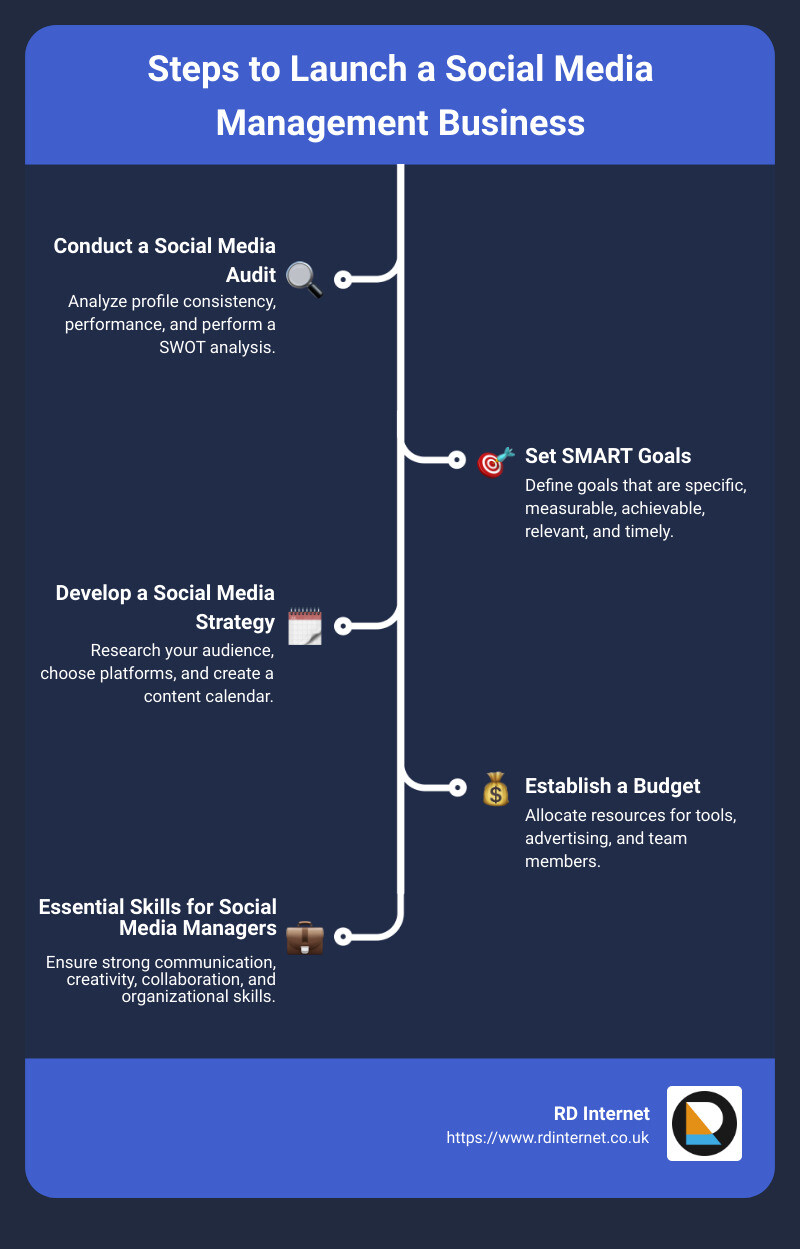
Conduct a Social Media Audit
Before diving into new strategies, it’s crucial to understand where you currently stand. Conducting a social media audit helps you assess your current social media profiles and their performance.
-
List All Social Accounts: Identify all the social media accounts your business owns. Ensure that handles, display names, and branding are consistent across platforms. This alignment reduces confusion and makes your business easier to find.
-
Analyze Performance: Prepare a comprehensive social media report. Review metrics like audience growth, reach, and engagement rates. Look for patterns and identify top-performing content.
-
SWOT Analysis: Compare your recent results with past performance, industry benchmarks, or competitors. Use these insights to perform a Strengths, Weaknesses, Opportunities, and Threats (SWOT) analysis. This will guide your future social media planning.
Set SMART Goals
Once you have a clear understanding of your current performance, it’s time to set goals. Goals should be Specific, Measurable, Achievable, Relevant, and Timely (SMART).
-
Specific: Instead of a vague goal like “increase followers,” aim for a concrete number, such as “gain 1,000 followers on Instagram.”
-
Measurable: Ensure you can track your progress. Use metrics like engagement rates, follower count, or brand mentions.
-
Achievable: Set realistic goals. For example, aiming to gain 10 million followers for a small account isn’t practical. Choose a target that is within reach if you execute well.
-
Relevant: Focus on goals that matter to your business. If increasing brand awareness is crucial, prioritize it over less impactful objectives.
-
Timely: Assign deadlines to your goals. For instance, “gain 1,000 followers on Instagram by the end of Q4.”
Develop a Social Media Strategy
A well-thought-out strategy is essential for achieving your SMART goals. This involves:
-
Audience Research: Understand who your target audience is. Analyze demographics, interests, and behaviors to tailor your content effectively.
-
Platform Selection: Not all platforms are suitable for every business. Choose platforms based on your audience and industry. For example, LinkedIn is ideal for B2B businesses, while TikTok caters to younger audiences.
-
Content Calendar: Plan your content in advance. Create a content calendar to outline what and when you will post. This ensures consistency and helps in maintaining a regular presence.
Establish a Budget
Budgeting is crucial for managing resources effectively. Consider the following:
-
Resources: Allocate funds for tools and software that will aid in content creation, scheduling, and analytics. Tools like Agorapulse and Canva can be invaluable.
-
Advertising: Decide how much you will spend on paid campaigns. Paid ads can boost visibility and reach a broader audience.
-
Team Members: If your business grows, you may need to hire additional team members. Budget for salaries, training, and development.
-
Tools and Services: Invest in essential tools for social media management. Analytics tools help track performance, while content creation tools aid in producing high-quality visuals and videos.
By following these steps, you’ll be well on your way to launching a successful social media management business. Next, we’ll explore the essential skills needed for social media managers.
Essential Skills for Social Media Managers
Communication Skills
Effective communication is the backbone of any successful social media management business. As a social media manager, you’re the voice of the brand. You need to convey messages clearly, whether you’re posting updates, responding to comments, or handling customer inquiries.
Brand Messaging: Consistency is key. Develop a brand style guide that outlines your brand’s tone, voice, and style. This guide ensures that every piece of content aligns with your brand identity, making your communication more cohesive.
Engagement: Engaging with your audience is crucial. Respond to comments, messages, and mentions promptly. This builds a community around your brand and fosters customer loyalty.
Creativity and Innovation
Standing out in the crowded social media landscape requires a constant flow of fresh, innovative ideas.
Content Ideas: Tap into trending topics, user-generated content, and seasonal themes to keep your content relevant and engaging. Authenticity resonates well with audiences. According to The Sprout Social Index™ 2023, consumers prefer authentic, non-promotional content.
Trends and Tactics: Stay updated with the latest social media trends and experiment with new tactics. Follow industry leaders and successful brands to see what works. For example, Instagram Stories and TikTok challenges can be great ways to engage your audience.
Collaboration and Teamwork
Social media management is rarely a solo endeavor. Collaboration with team members, influencers, and other stakeholders is essential.
Team Roles: Clearly define roles within your team. Who is responsible for content creation, who handles analytics, and who manages community engagement? Clear roles prevent overlap and ensure smooth operations.
Influencer Partnerships: Collaborate with influencers who align with your brand. They can help amplify your message and reach new audiences. Ensure you have a clear approval process in place to maintain brand consistency.
Organizational Skills
With so many moving parts, staying organized is vital for a social media manager.
Workflow: Develop a reliable workflow for content creation, scheduling, and posting. Tools like Airtable can help you keep track of tasks and deadlines.
Productivity Tools: Use productivity tools to streamline your processes. Time management apps like Toggl can help you track your time and stay on schedule.
Project Management: Effective project management ensures that all tasks are completed on time and meet quality standards. Use project management tools to assign tasks, set deadlines, and monitor progress.
By mastering these essential skills, you’ll be well-equipped to handle the dynamic and world of social media management. Next, let’s explore the tools and resources that can make your job easier.
Tools and Resources for Social Media Management
To run a successful social media management business, you need the right tools. Here are some top options:
-
RD Internet’s Proprietary Tools: At RD Internet, we have developed a suite of tools tailored specifically for social media management. These tools help you organize creative assets, schedule content, handle engagement, and perform social listening. You can also create automated reports to track progress toward your goals.
-
In-House Analytics and Monitoring Tools: Understanding your audience and measuring your performance are crucial for success. RD Internet offers exclusive tools for social listening and sentiment analysis, helping you track brand mentions, monitor conversations, and understand public sentiment. This insight is invaluable for shaping your content strategy.
-
Content Creation Tools: Creating engaging content is at the heart of social media management. RD Internet provides access to top-tier content creation tools, helping you craft high-quality visuals and videos. Our tools are designed to integrate seamlessly with your social media management workflow, ensuring efficiency and creativity.
By leveraging these exclusive tools and resources, you’ll be well-equipped to manage your clients’ social media accounts effectively.
Pricing Your Social Media Management Services
Determining the right price for your social media management services can be tricky. But with a clear strategy, you can ensure your rates reflect your value.
Determining Your Rates
Business Size and Scope of Work
First, consider the size of the business you’re working with. Larger companies often have bigger budgets and more complex needs, while smaller businesses might be more price-sensitive.
Experience Level
Your experience level also plays a significant role. If you’re just starting out, you might need to price competitively to attract clients. As you gain more experience and build a portfolio, you can command higher rates.
Scope of Work
The scope of work includes the number of social media channels you manage, the volume of posts, and additional services like content creation or paid advertising. More extensive services should come with higher price tags.
Creating Service Packages
Offering a variety of service packages can make your pricing more attractive and flexible.
Basic Services
A basic package might include:
- Managing 1-2 social media channels
- Posting a set number of times per week
- Basic engagement (liking and responding to comments)
Premium Services
A premium package could offer:
- Managing 3-4 social media channels
- Increased posting frequency
- Advanced engagement (community management)
- Analytics and reporting
Add-ons
Add-ons are extra services clients can choose to include:
- Content creation (graphics, videos)
- Paid advertising management
- Influencer partnerships
- Social media audits
Market Rates and Trends
Understanding market rates and trends can help you set competitive prices.
Industry Benchmarks
According to Payscale, social media managers earn an average salary of around $54,600 per year. However, rates can vary widely based on experience and location. For instance, social media directors can earn approximately $80,700 annually.
Look at what your competitors are charging. This can give you a benchmark and help you position your services effectively. Platforms like Upwork can provide insights into what other social media managers charge for similar work.
Pricing Strategies
Consider different pricing strategies:
- Hourly Rates: Good for flexible work but can be unpredictable.
- Monthly Retainers: Provide steady income and are ideal for ongoing management.
- Project-Based Pricing: Best for one-off projects like social media audits or campaign launches.
By carefully considering these factors, you can set prices that reflect your value and attract the right clients.
Next, we’ll explore how to market your social media management business effectively.
Marketing Your Social Media Management Business
Once you’ve set your prices, the next step is to market your business effectively. Here’s how to build your brand, acquire clients, and use the best marketing channels.
Building Your Brand
Brand Identity
Your brand identity is how you present your business to the world. It includes your logo, colors, and the tone of your communications. A strong brand identity helps you stand out and be memorable.
Online Presence
Create a professional website showcasing your services, portfolio, and client testimonials. Make sure your site is easy to steer and mobile-friendly. Use SEO best practices to help potential clients find you online.
Portfolio
A strong portfolio is crucial. Showcase case studies, client testimonials, and examples of your work. Highlight successful campaigns and the results you achieved. This builds credibility and trust with potential clients.
Client Acquisition Strategies
Networking
Networking is one of the most effective ways to acquire clients. Attend industry events, webinars, and conferences. Join online forums and social media groups where your potential clients hang out.
Referrals
Encourage satisfied clients to refer you to others. Offer incentives like discounts on future services for successful referrals. Word-of-mouth is powerful and can bring in high-quality leads.
Online Platforms
Leverage online platforms like LinkedIn, Upwork, and Fiverr to find clients. These platforms allow you to showcase your skills and connect with businesses looking for social media management services.
Effective Marketing Channels
Social Media
Use social media to market your own business. Share valuable content, engage with your audience, and showcase your expertise. Platforms like LinkedIn, Instagram, and Twitter are great for B2B and B2C engagement.
Email Marketing
Build an email list and send regular newsletters. Share tips, case studies, and updates about your services. Email marketing helps you stay top-of-mind with potential clients.
Content Marketing
Create high-quality content that showcases your expertise. Write blog posts, create videos, and share infographics. This content can drive traffic to your website and establish you as an authority in the field.
By focusing on these strategies, you can effectively market your social media management business and attract the right clients.
Next, we’ll dive into some frequently asked questions about running a social media management business.
Frequently Asked Questions about Social Media Management Business
What is a social media management business?
A social media management business involves managing social media accounts for clients. This includes creating and scheduling content, engaging with followers, and analyzing performance. The goal is to grow and nurture an audience across various social media platforms. Social media managers help businesses build relationships, increase brand awareness, and foster loyalty.
Key services provided by a social media management business include:
- Content creation and scheduling
- Community management
- Online reputation management
- Paid social media strategy and execution
How much should a business pay a social media manager?
The cost of hiring a social media manager can vary widely based on several factors such as the number of social channels managed, the volume of content created, and the complexity of campaigns.
Here are some common pricing models:
- Hourly rates: Often range from $25 to $100 per hour, depending on experience and location.
- Monthly retainers: Typically between $500 to $5,000 per month, depending on the scope of work and the size of the business.
- Project-based fees: Can vary significantly based on the specific needs of the project.
When determining your rates, consider:
- The number of social channels managed
- The frequency of posts
- Whether you are creating original content or using client-provided assets
- Management of paid social campaigns
Is social media management a profitable business?
Yes, social media management can be a highly profitable business. Profit margins can be substantial due to the relatively low overhead costs compared to other types of businesses.
Factors contributing to profitability include:
- High demand: With the rise of social media, businesses increasingly need professional management to maintain a strong online presence.
- Scalability: You can manage multiple clients simultaneously, increasing your revenue potential.
- Diverse revenue streams: Offering a range of services from organic social media management to paid advertising campaigns can boost profitability.
Revenue potential is influenced by:
- Client retention: Long-term contracts provide steady income.
- Service packages: Offering tiered packages can cater to different business needs and budgets.
- Market rates: Staying competitive while ensuring quality service can help attract and retain clients.
According to the U.S. Bureau of Labor Statistics, advertising and promotions managers, including social media managers, earned a median salary of $127,830 in 2022, with a projected job growth of 7% from 2021 to 2031. This indicates a promising outlook for those in the field.
By focusing on building a strong brand, setting competitive prices, and offering high-quality services, a social media management business can achieve significant growth and profitability.
Conclusion
Starting a social media management business can be a lucrative and rewarding venture. By offering services like content creation, community management, and online reputation management, you can help businesses thrive in the digital landscape.
At RD Internet, based in Cardiff, we specialize in comprehensive social media marketing strategies that lift your online presence and drive measurable results. Our services extend beyond social media management to include SEO services, ensuring your business achieves maximum online visibility.
SEO services are crucial for improving search engine rankings and driving organic traffic to your website. By integrating SEO with social media efforts, businesses can improve their online footprint, attract more visitors, and convert them into loyal customers.
Increased online visibility directly translates to increased revenue. When your target audience can easily find and engage with your brand, the potential for sales and customer loyalty grows exponentially.
Whether you are just starting out or looking to scale your social media management business, partnering with a seasoned team like RD Internet can provide the expertise and tools needed for success.
Ready to take your business to the next level? Contact us today to learn how we can help you achieve your goals.
Recent Comments