

Open up the Power of PPC Campaign Optimization
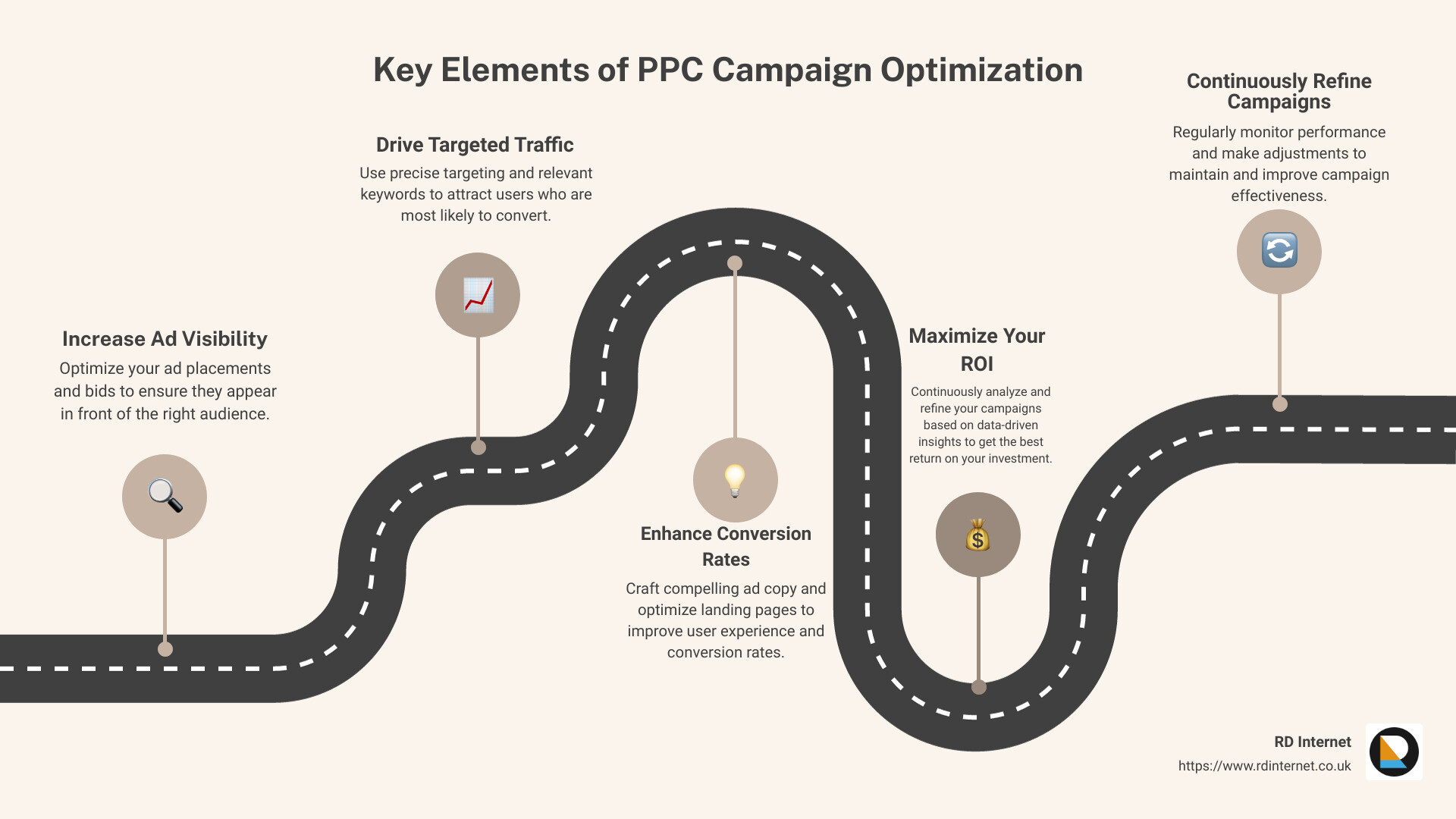
If you’re looking to boost your digital marketing efforts and increase online visibility for your small business in Cardiff, PPC campaign optimization is key. By optimizing your pay-per-click advertising campaigns, you can:
- Increase ad visibility
- Drive targeted traffic
- Improve conversion rates
- Maximize your ROI
In the competitive digital advertising landscape, every click counts. It’s not just about spending money to gain visibility but spending smartly to reach your audience at the right time with the right message. This means carefully selecting keywords, crafting compelling ad copy, and continuously refining your campaigns based on data-driven insights.
By focusing on these strategies, you can ensure that your PPC campaigns are not only seen but also compelling enough to provoke the desired action, whether it’s a click, sign-up, or purchase.
What is PPC Campaign Optimization?
PPC campaign optimization is the process of fine-tuning your pay-per-click (PPC) advertising campaigns to achieve the best possible performance. It’s about making strategic adjustments to improve efficiency and return on investment (ROI). The goal is to ensure that every penny spent on ads contributes to reaching the right audience at the right time with the right message.
Importance of PPC Campaign Optimization
In the competitive world of digital advertising, every click is valuable. PPC campaign optimization helps ensure that your ad campaigns are not only visible but also effective in driving the desired actions, such as clicks, sign-ups, or purchases. Optimizing your campaigns means:
- Increasing Ad Visibility: Ensuring your ads appear to the right audience.
- Driving Targeted Traffic: Attracting users who are more likely to convert.
- Enhancing Conversion Rates: Improving the likelihood that visitors take the desired action.
- Maximizing ROI: Getting the most value out of your advertising budget.
Goals of PPC Campaign Optimization
The primary goals of PPC campaign optimization are to increase ad performance and achieve specific marketing objectives. These goals include:
- Boosting Click-Through Rates (CTR): Crafting relevant and compelling ads to encourage more clicks.
- Improving Quality Scores: Enhancing the relevance of keywords, ad copy, and landing pages.
- Lowering Cost Per Click (CPC): Reducing the amount spent on each click while maintaining or increasing traffic quality.
- Increasing Conversion Rates: Ensuring that the traffic driven by your ads converts into customers.
By focusing on these goals, you can create more efficient and effective PPC campaigns that drive business growth.
Key Elements of PPC Optimization
To achieve optimal results, several key elements must be considered:
-
Strategic Keyword Selection: Choose keywords that are not only popular but also highly relevant to your business. Use tools like Google’s Keyword Planner to find terms that your audience is searching for.
-
Ad Copy and Design: Craft ad copy that speaks directly to your audience’s needs and interests. Pair it with a compelling design to make your ads stand out.
-
Landing Page Relevance: Ensure that your landing pages align with the promises made in your ads. A seamless user experience from ad to landing page is crucial for conversions.
-
Continuous Monitoring and Adjustment: Regularly monitor your campaigns and make data-driven adjustments. This ongoing process helps you stay responsive to market trends and audience behavior.
Example: Keyword Selection and Bidding Strategies
Choosing the right keywords is crucial. For instance, if you’re selling luxury watches, bidding on broad terms like “watches” might not be as effective as targeting specific phrases like “luxury watch brands.”
Understanding the types of keywords and their match types can also help refine your strategy. For example:
- Exact Match: Highly relevant but restrictive.
- Broad Match: Flexible but can lead to irrelevant searches.
Employing a mix of these types and continuously reviewing their performance can help you reach the right audience efficiently.

Continuous Improvement
Successful PPC campaign optimization is an ongoing process. It involves:
- Monitoring Key Metrics: Track metrics like CTR, CPC, conversion rates, and ROI.
- Deriving Insights from Data: Analyze performance data to understand user behavior and campaign effectiveness.
- Making Responsive Adjustments: Be agile and make quick adjustments based on performance data.
By following these steps, you can ensure that your PPC campaigns remain effective and competitive in the changing digital landscape.
Next, we’ll dive into Manual Bidding Strategies and how they can give you more control over your PPC campaigns.
Top 11 Tips for PPC Campaign Optimization
Optimizing your PPC campaigns involves a mix of strategic planning and continuous improvement. Here are the top 11 expert tips to help you boost your ad performance:
1. Explore Manual Bidding
Manual bidding lets you control your keyword bids to maximize ad visibility and conversions. By focusing on high-performing keywords and adjusting bids based on performance, you can lower your cost per action (CPA) and increase ad effectiveness.
Example: Increase bids for keywords that convert well and lower bids for those with high impressions but low conversions. This hands-on approach can significantly improve your campaign’s ROI.
2. Take Advantage of Remarketing
Remarketing targets users who have previously interacted with your website but didn’t convert. By showing custom ads to these users, you can encourage them to return and complete their purchase.
Pro Tip: Use video retargeting on platforms like YouTube to engage users who have shown interest in your business. This method combines the power of video and remarketing to boost conversions.
3. Explore Microsoft Ads
Microsoft Ads offer a less competitive landscape compared to Google Ads, often resulting in a higher ROI. Use features like LinkedIn profile targeting and ad extensions to reach a more specific audience and improve ad performance.
4. Harness Amazon Ads for Ecommerce Businesses
Amazon Ads are essential for ecommerce businesses. They offer various ad types, including Sponsored Products and Sponsored Brands, which can drive significant traffic and sales.
Strategy: Use automatic campaigns to gather data on effective keywords and then transition to manual campaigns for more precise targeting.
5. Leverage Responsive Search Ads (RSAs)
Responsive Search Ads (RSAs) allow you to input multiple headlines and descriptions. Google then tests different combinations to find the most effective ad variations.
Benefit: RSAs save time and cost while optimizing for the best-performing ad elements automatically.
6. Optimize Your Website
Your website’s performance directly impacts your PPC campaigns. Focus on improving Core Web Vitals like loading performance, visual stability, and interactivity to improve user experience and increase conversions.
7. Conduct Keyword Research
Effective keyword research is the backbone of any successful PPC campaign. Use tools to identify high-performing keywords and consider long-tail keywords to target specific search intents.
Tip: Don’t forget to create a list of negative keywords to avoid wasting budget on irrelevant searches.
8. Check in on Your Conversion Tracking
Accurate conversion tracking is crucial for measuring your campaign’s success. Use tools like Google Analytics and Google Tag Manager to set up and monitor conversion actions.
Pro Tip: Regularly review your conversion data to make informed adjustments to your campaigns.
9. Add Performance Max Campaigns to the Mix
Performance Max campaigns use machine learning to optimize ad placements across Google’s inventory. This can help you reach a broader audience and maximize conversions.
Best Practice: Split campaigns based on customer acquisition and use exact match keywords for better targeting.
10. Always A/B Test PPC Campaigns
A/B testing different ad elements, such as headlines, CTAs, and landing pages, can reveal what resonates most with your audience. This continuous testing helps you refine your ads for better performance.
Example: Test different call-to-action phrases to see which one drives more conversions.
11. Know When to Keep Optimizing vs. When to Scrap It
Not all campaigns will be successful. It’s essential to recognize when a campaign isn’t performing and make the tough decision to either optimize further or scrap it entirely.
Strategy: Set clear performance benchmarks and timelines. If a campaign consistently underperforms despite adjustments, it might be time to redirect your budget elsewhere.
By implementing these expert tips, you can significantly improve your PPC campaign performance and achieve your marketing goals. Next, we’ll dive into Manual Bidding Strategies and how they can give you more control over your PPC campaigns.
Manual Bidding Strategies
Switching from Automatic to Manual Bidding
Switching from automatic to manual bidding is an advanced strategy that offers more control over your PPC campaigns. While automatic CPC bidding allows Google to set your bids to maximize clicks, it can limit your ability to adjust your campaign if it’s not performing as expected.
Manual bidding can solve this issue by giving you a hands-on approach to manage your bids. This can lead to increased ad visibility, lower CPA, and the ability to prioritize keywords that convert better.
Here are some key steps to effectively switch from automatic to manual bidding:
- Focus on One Campaign at a Time: Manual bidding can be time-consuming. Start by focusing on one campaign to ensure you can give it the attention it needs.
- Set Default Bids: Choose a default bid close to the average CPC in your automatic campaigns to maintain performance while you adjust.
- Adjust Bids Based on Performance: Lower bids for keywords that get impressions but don’t convert. Increase bids for keywords that perform well to boost their position and generate more conversions.
Pro Tip: Run your manual bidding campaign for a couple of weeks to see if it achieves your goals of lowering CPC and increasing sales.
Intelligent Bidding Strategies
Once you’ve mastered manual bidding, you can take advantage of intelligent bidding strategies. These strategies use automated rules to optimize your bids based on campaign performance.
Automated Rules can help you:
- Pause Poorly Performing Keywords: Automatically pause keywords that aren’t generating conversions.
- Raise Bids for High Performers: Increase bids for keywords that are converting well to maximize their visibility.
- Adjust Bids Based on Time of Day: Modify bids during peak performance times to maximize conversions.
- Target CPA to Increase Conversions: Set a target CPA to ensure your bids are aligned with your conversion goals.
For example, you can use automated rules to pause keywords that have a high CPA or raise bids during times of the day when your ads perform best.
Pro Tip: Use tools like the First Page Bridger to segment your keywords based on their Quality Score and make targeted bid adjustments.

By leveraging these intelligent bidding strategies, you can optimize your bids more effectively and improve your PPC campaign performance.
Next, we’ll explore Remarketing for PPC Campaigns and how it can help you re-engage potential customers.
Remarketing for PPC Campaigns
Remarketing is a powerful tool in PPC campaign optimization. It helps you re-engage visitors who have already shown interest in your products or services. By targeting these warm leads, you can significantly boost your conversion rates.
Video Retargeting
Video retargeting is an underused gem in the PPC world. According to Dang, combining retargeting with YouTube or other video platforms can be incredibly effective. You can target users who have interacted with your business on Google’s video platform, reminding them of your offerings in a more engaging format.
For example, if someone watched a product video on your YouTube channel but didn’t make a purchase, you can retarget them with an ad that appears before other videos they watch. This keeps your brand top-of-mind and encourages them to return to your site.
Pro Tip: Use YouTube’s video retargeting to create a sequence of videos that guide users through the sales funnel, from awareness to consideration and finally, conversion.
Adjusting Remarketing Lists
Most marketers default to a 30-day remarketing list, but this isn’t always optimal. The duration of your remarketing lists should align with your business needs and sales cycle. For businesses with longer sales cycles, consider extending your remarketing lists to 60 or even 90 days.
For instance, if you sell high-ticket items like real estate or luxury goods, a longer remarketing list can keep potential buyers engaged until they’re ready to make a purchase.
Here are some tips for adjusting your remarketing lists:
- Analyze Your Sales Cycle: Understand how long it typically takes for a visitor to convert. Use this data to set the duration of your remarketing lists.
- Segment Your Audience: Create different lists for users at various stages of the sales funnel. For example, have separate lists for people who visited your homepage, product pages, or added items to their cart without purchasing.
- Use Dynamic Remarketing: Show ads that feature specific products or services users viewed on your site. This personalized approach can substantially increase your conversion rates.
Pro Tip: Regularly review and update your remarketing lists to ensure they remain relevant and effective.
By leveraging video retargeting and fine-tuning your remarketing lists, you can create a more compelling and effective PPC campaign.
Next, we’ll explore Exploring Microsoft Ads and how they can complement your PPC strategy.
Exploring Microsoft Ads
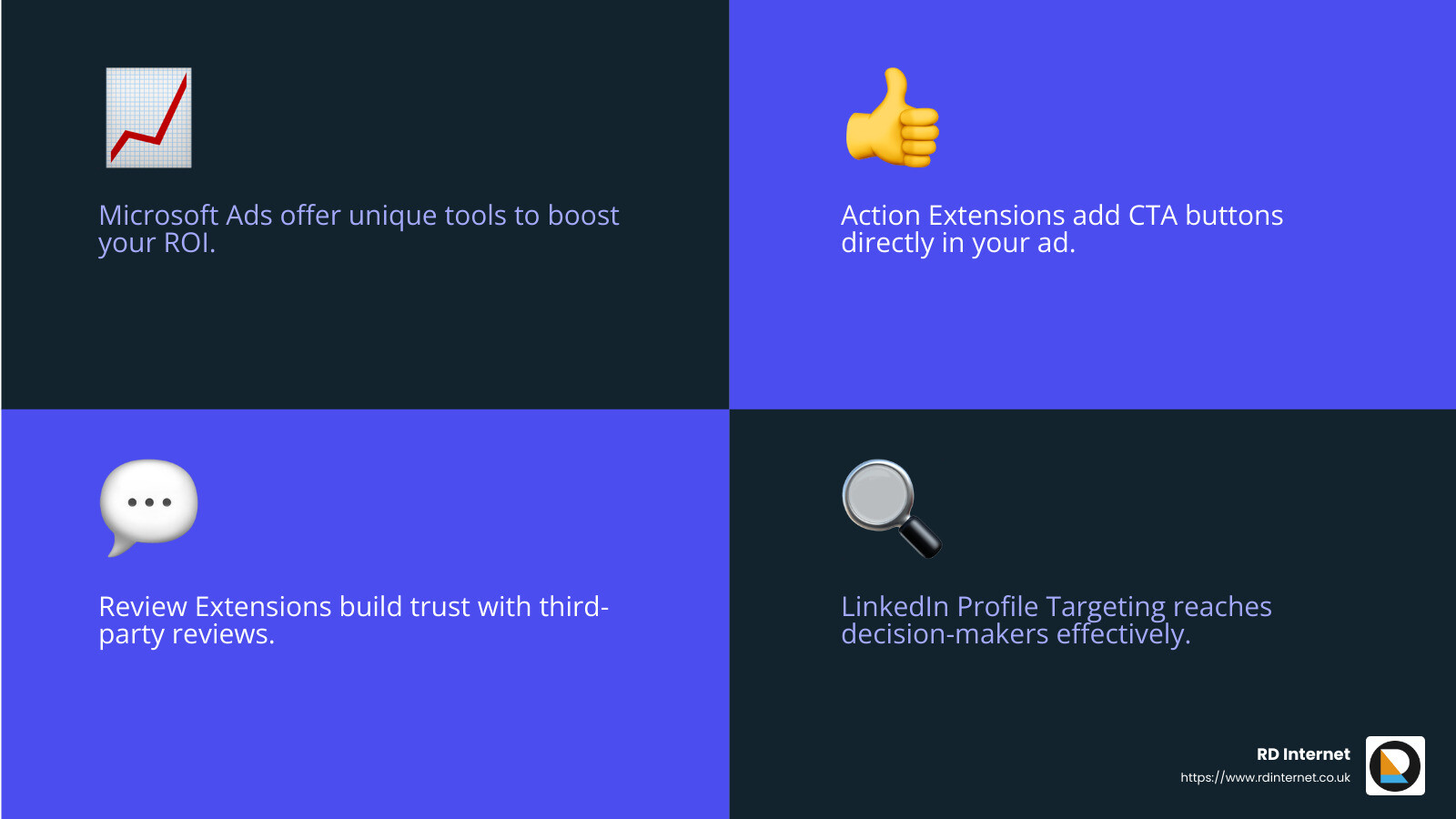
When it comes to PPC campaign optimization, many marketers focus solely on Google Ads. But don’t overlook Microsoft Advertising. It can be a valuable addition to your strategy, offering unique tools that can boost your ROI and give you an edge over the competition.
Microsoft Advertising Tools
Microsoft Advertising provides several features that can improve your campaigns. Here are some key tools to consider:
1. Action Extensions
These allow you to add call-to-action (CTA) buttons directly in your ad. These buttons link to a landing page of your choice, making it easier for users to take immediate action. For example, you could use a “Buy Now” button to drive sales or a “Learn More” button to guide users to additional information.
2. Review Extensions
Featuring third-party reviews below your ad can build trust and credibility. Reviews play a significant role in consumer decision-making. By showcasing positive feedback, you increase the likelihood that users will click on your ad and convert.
3. LinkedIn Profile Targeting
One of the standout features of Microsoft Advertising is its ability to target users based on LinkedIn profiles. You can narrow your audience by company, job function, or industry, making your ads more relevant to the people who see them.
Pro Tip: Use LinkedIn profile targeting to reach decision-makers in specific industries. This can be particularly effective for B2B campaigns.
4. Competition Insight
Microsoft Advertising offers tools to see how your ads stack up against the competition. You can analyze performance metrics to identify areas for improvement and adjust your strategy accordingly.
Pro Tip: Regularly review the competition insight reports to stay ahead of competitors and refine your ad strategies.
By leveraging these Microsoft Advertising tools, you can create more targeted and effective PPC campaigns. This not only improves your ROI but also gives you a competitive advantage in the digital marketing landscape.
Next, we’ll dive into Using Amazon Ads for Ecommerce and how they can drive conversions for your business.
Using Amazon Ads for Ecommerce
When it comes to PPC campaign optimization for ecommerce, Amazon Ads offer a unique advantage. Unlike other platforms, Amazon users are typically closer to making a purchase, which means higher conversion rates.
Types of Amazon Ads
Amazon Advertising provides several types of sponsored ads custom for ecommerce:
- Brand Ads: These appear as banner ads in search results, showcasing your brand and multiple products.
- Product Ads: These show up within search results for selected keywords, appearing as promoted relevant results.
- Brand Videos: Auto-playing videos that include an image, description, and a link to the product.
- Lockscreen Ads: Specifically for ebooks, these ads appear on Kindle devices’ lock screens.
Each ad type offers different benefits and can be used strategically depending on your goals.
Optimizing Amazon PPC Ads
To maximize your Amazon PPC campaigns, consider the following strategies:
1. Structured Campaigns
Organize your ad campaigns by product category. This helps in managing your budget and tracking performance more effectively.
2. Ad Copy
Be precise and descriptive in your ad copy. Highlight key features and benefits to capture attention. Users on Amazon are ready to buy, so your ad copy should focus on why your product is the best choice.
3. Search Term Report
Leverage Amazon’s Search Term Report to identify which keywords are driving clicks and conversions. Use this data to refine your keyword targeting and improve your ad relevance.
4. High-Quality Imagery
High-resolution images can significantly impact your ad’s performance. Ensure your product images are clear, professional, and show the product from multiple angles.
5. A/B Testing
Regularly conduct A/B tests to see what resonates with your audience. Test different headlines, images, and copy to find the most effective combinations.
Pro Tip: Even if you don’t sell directly on Amazon, you can still benefit from Amazon Ads to drive traffic to your own ecommerce site.
By implementing these strategies, you can optimize your Amazon PPC ads to drive more conversions and improve your overall ROI.
Next, we’ll explore the benefits of Leveraging Responsive Search Ads and how they can improve your PPC efforts.
Leveraging Responsive Search Ads
Benefits of Responsive Search Ads
Responsive Search Ads (RSAs) are a game-changer for PPC campaign optimization. Introduced in 2019, RSAs allow you to create up to 15 headlines and four descriptions for a single ad. Google then tests different combinations to find the best-performing ones based on various factors like keywords, devices used, and browsing behavior.
Time-Saving and Cost-Effective
One of the biggest advantages of RSAs is the time and money you save on A/B testing. Instead of manually creating and testing multiple ad variations, Google does the heavy lifting for you. This means you can reach your target audience faster and with less effort.
Target Audience Optimization
Google’s algorithm tests various combinations of your headlines and descriptions to see which ones perform best. This ensures that your ads are always optimized for the right audience at the right time. For example, if a user searches for “eco-friendly cleaners” on their mobile device, Google will show the headline and description combination that’s most likely to resonate with them.
Adaptability to User Preferences
RSAs automatically adjust their size, appearance, and format to fit available ad spaces. This flexibility allows your ads to appear in more places across the Google network, increasing your chances of capturing potential customers. This is especially useful given that Google sunsetted expanded text ads in June 2022, making RSAs the preferred ad type.
Pro Tip: Make sure your headlines and descriptions are varied and cover different aspects of your product or service. This gives Google more options to test and find the best-performing combinations.
Improved Performance
RSAs are designed to improve your ad performance by leveraging Google’s machine learning capabilities. They adapt to user behavior and preferences, ensuring that your ads are always relevant. This not only increases click-through rates but also improves conversion rates.
For instance, if your ad targets users looking for “herbal skincare solutions,” Google might show a combination like “Find the Secret to Flawless Skin” and “Explore Our Revolutionary Herbal Creams.” This approach taps into users’ curiosity and offers a clear call-to-action, driving higher engagement.
By incorporating RSAs into your PPC strategy, you can improve your ad performance, save time, and reach your target audience more effectively. Next, we’ll dive into Optimizing Your Website for PPC to ensure your landing pages are ready to convert those clicks into sales.
Image

Optimizing Your Website for PPC
Even the best PPC ads won’t drive conversions if your website isn’t optimized. Google now factors in Core Web Vitals when ranking your pages, making it crucial to focus on loading performance, visual stability, and interactivity.
Core Web Vitals
Loading Performance
Your page should load in under 2.5 seconds. Slow loading times can increase bounce rates, which means lost potential customers. Imagine a visitor clicking your ad only to leave because the page takes too long to load. Speed is essential.
Visual Stability
Page elements should remain stable as the content loads. If images or text shift around, users might get frustrated and leave. This often happens when media elements load late, disrupting the user’s reading flow. Keep your page elements in place to improve the user experience.
Interactivity
Ensure that the time between a user action (like clicking a button) and the site’s response is under 100 milliseconds. Quick interactivity keeps users engaged and reduces friction, making it more likely they’ll complete a purchase or sign up for a service.
E-A-T Strategy
Google rewards content that demonstrates Expertise, Authoritativeness, and Trustworthiness (E-A-T). To optimize your website for PPC, your content must be high-quality and valuable.
Expertise
Your content should be detailed and comprehensive. Answer questions your audience might have and provide actionable advice. For example, include step-by-step guides or detailed product descriptions.
Authoritativeness
Build authority by citing credible sources and including quotes from industry experts. Adding an author bio can also establish credibility. For instance, if you’re selling skincare products, having a dermatologist’s endorsement can boost trust.
Trustworthiness
Your site should appear trustworthy. Use testimonials, reviews, and security badges to reassure users. Displaying accreditation logos or offering money-back guarantees can also improve trust.
High-Value Content
Google ranks original, high-quality content that provides real value. Include comprehensive body content, examples with screenshots, and detailed walkthroughs. For instance, a blog post on “How to Choose the Best Running Shoes” should cover different shoe types, foot shapes, and running styles.
User Experience
Improving Core Web Vitals and following the E-A-T strategy will not only boost your search engine rankings but also improve the user experience. A well-optimized website ensures that the clicks from your PPC ads convert into sales or leads.
Next, we’ll explore Conducting Keyword Research to ensure your PPC campaigns target the right audience effectively.
Conducting Keyword Research
Keyword research is the backbone of any successful PPC campaign optimization. It helps you understand how your audience searches for your products or services and allows you to target the right keywords for maximum impact. Let’s explore the two critical aspects of keyword research: identifying keywords to remove and gauging competition.
Identifying Keywords to Remove
To keep your PPC campaigns efficient, it’s crucial to prune out underperforming keywords. Here are some key indicators to help you identify which keywords to remove:
-
Low Click-Through Rates (CTR): If a keyword has a low CTR, it’s a sign that your ad isn’t resonating with users searching for that term. Regularly comb through your search terms report to find these low-performing keywords.
-
High Costs with Little Returns: Keywords that are costing you a lot but not generating conversions should be reconsidered. Examine your cost-per-acquisition (CPA) to identify these money drains.
-
Search Query Reports: These reports are a gold mine for insights. They can help you find new positive and negative keyword ideas. For instance, if you notice a search term consistently not leading to conversions, it might be time to add it to your negative keywords list.
-
Overly Competitive or Expensive Keywords: Keywords that are too competitive might not be worth the investment. If a keyword’s cost-per-click (CPC) is too high compared to its conversion rate, consider pausing it.
“You’ll know when to pause a keyword after running it for a few months and seeing little traction. Look to the data to tell the story on keywords,” advises Dang.
Gauging Competition
Understanding your competition is crucial for effective PPC campaign optimization. Here’s how you can keep an eye on what your competitors are doing:
-
Competitor Campaigns: Regularly monitor your competitors’ PPC campaigns. Tools like Google Analytics can help you see which terms your competition is ranking for. This can give you ideas for new keywords to target.
-
Search Terms: Use your user search term reports in Google Analytics to find new keywords that aren’t already in your account. This can help you stay ahead of the competition by targeting untapped search terms.
-
Return on Investment (ROI): Focus on keywords that offer a high ROI. This means not just looking at the clicks and costs but also the conversions and revenue generated from those keywords.
-
Google Keyword Planner: This tool is invaluable for additional research. It can help you find new keyword opportunities and see how competitive certain keywords are.
Pro tip: Keep a pulse on new entrants or competitors in your space. This ensures you’re always targeting up-to-date competitor sets and not missing out on valuable keywords.
Next, we’ll check in on Conversion Tracking to ensure your data is accurate and actionable.
Checking Conversion Tracking
Setting Up Conversion Tracking
Conversions are the holy grail of PPC campaign optimization. They help you understand what’s working and what needs tweaking. To get accurate data, you must set up conversion tracking correctly.
GA4 and Google Tag Manager are essential tools for this task. They allow you to track various user actions, like form completions or purchases, across multiple channels. Here’s how to get started:
-
Configure Tags in Google Tag Manager (GTM): Set up tags to track specific actions on your site. For example, if you want to track form completions, configure a tag for that event in GTM.
-
Build Goals in Google Analytics (GA4): Create goals in GA4 that align with your business objectives. These could be anything from a purchase to a newsletter sign-up.
-
Import Goals to Google Ads: Once your GA4 goals are set up, import them into Google Ads. This allows you to track conversions directly within your PPC campaigns.
-
Link GA and Google Ads Accounts: Linking these accounts lets you create remarketing audiences in GA and import them into Google Ads. This is crucial for retargeting efforts.
By following these steps, you streamline your conversion tracking setup, making it easier to gather actionable data.
Pro tip: Track the right actions but not too many. Too many conversion actions can confuse Google’s algorithms. Aim for robust attribution models like data-driven attribution instead of first or last-click models.
Using Conversion Data
Once your conversion tracking is set up, the next step is to use this data to make informed decisions. Here’s how:
-
Data-Driven Decisions: Use the conversion data to understand which campaigns, keywords, and ads are driving the most conversions. This helps you allocate your budget more effectively.
-
Robust Attribution Models: Opt for data-driven attribution models. These models consider multiple touchpoints in the customer journey, giving you a more accurate picture of what’s driving conversions.
-
ConversionIQ: Consider using advanced tools like ConversionIQ for deeper insights. This tool offers full-funnel attribution, helping you understand the entire customer journey from the first click to conversion.
-
Remarketing Audiences: Use your conversion data to create remarketing audiences. For instance, if a user completed a form but didn’t make a purchase, you can target them with ads to encourage them to complete the sale.
By leveraging conversion data, you can continuously improve your PPC campaigns, making them more effective and efficient.
Next, let’s explore how Performance Max campaigns can take your PPC strategy to the next level.
Adding Performance Max Campaigns
Best Practices for Performance Max
Performance Max (PMax) campaigns are a game-changer in PPC campaign optimization. They leverage automation and machine learning to optimize ad performance across various Google platforms, including Search, YouTube, Display Network, Maps, and Gmail.
Here are some best practices to get the most out of your PMax campaigns:
1. Use Exact Match Keywords
Even though PMax can pull from branded campaigns, adding exact match keywords to your branded ads helps ensure you’re targeting the most relevant terms. If certain keywords aren’t performing well, you can negate them to avoid impacting other campaigns.
2. Split Campaigns by Product or Service Type
Segment your campaigns based on different products or services. This allows you to create highly-targeted landing pages and use relevant ad copy and images for each group. For example, a company selling both shoes and bags should have separate campaigns for each.
3. Prioritize New Customer Acquisition
Focus on acquiring new customers rather than remarketing or targeting branded terms. This approach works similarly to prospecting campaigns and helps you expand your customer base.
4. Upload Specific Customer Data
Upload detailed customer data and split it by product or service. Google can then target similar audiences more effectively, increasing your chances of conversions.
5. Leverage Audience Targeting
Use audience signals to help Google’s AI identify and target new potential customers. This can improve your campaign’s reach and effectiveness, especially when combined with detailed customer data.
6. Monitor and Adjust Regularly
PMax campaigns can be conservative when they’re first learning, so give them some time to gather data. Regularly check performance and make adjustments as needed to keep optimizing.
Pro Tip: PMax campaigns are particularly effective for purchase targeting. They may not perform as well for lead generation yet, so focus on driving sales.
By following these best practices, you can harness the full power of Performance Max campaigns to boost your ad performance across multiple platforms. Next, let’s discuss the importance of A/B testing in refining your PPC strategy.
Always A/B Test PPC Campaigns
Elements to A/B Test
A/B testing is crucial in PPC campaign optimization. It helps you understand what works best for your audience by comparing two versions of an element to see which performs better. Here are key elements to A/B test:
1. Landing Page CTAs
Your Call-to-Action (CTA) can make or break conversions. Test different CTA texts, colors, and placements. For example, changing “Buy Now” to “Get Your Discount” might increase clicks.
Pro Tip: Use tools like Google Analytics to track engagement metrics and see which CTA performs best.
2. Ad Extensions
Ad extensions provide extra information and can boost your ad’s visibility. Test different types of extensions like site links, callouts, and structured snippets.
Example: A retailer might test a “Free Shipping” callout versus a “24/7 Customer Support” callout to see which attracts more clicks.
3. Ad Copy
Your ad copy needs to be compelling and relevant. Test different headlines, descriptions, and even emotional triggers.
Case Study: A skincare brand tested “Get Flawless Skin Today” against “30% Off All Skincare Products” and found the discount offer had a higher conversion rate.
4. Headlines
Headlines are the first thing users see. Test different headlines to find which ones grab attention.
Example: An online course provider could test “Learn Python in 30 Days” versus “Become a Python Expert” to see which attracts more sign-ups.
5. Visual Elements
Images and videos can significantly impact ad performance. Test different visuals to see which ones resonate with your audience.
Fact: High-quality imagery can increase click-through rates by up to 65%.
Pro Tip: Always use high-resolution images and ensure they are relevant to the ad copy.
By continuously A/B testing these elements, you can fine-tune your PPC campaigns for optimal performance. Next, we will explore frequently asked questions about PPC campaign optimization.
Frequently Asked Questions about PPC Campaign Optimization
What is PPC campaign optimization?
PPC campaign optimization is the process of refining and improving your pay-per-click (PPC) advertising campaigns to achieve better performance and higher returns on investment. This involves a series of steps such as:
- Strategic Keyword Selection: Picking the right keywords that your audience frequently searches for. For example, using specific phrases like “luxury watch brands” instead of broad terms like “watches.”
- Ad Copy and Design: Crafting compelling ad copy and visually appealing designs that capture attention and drive action.
- Landing Page Relevance: Ensuring that the landing page aligns with the promises made in the ad, providing a seamless user experience.
- Continuous Monitoring and Adjustment: Regularly analyzing performance data to make informed adjustments. This includes tracking metrics like click-through rates (CTR), cost per click (CPC), and conversion rates.
How do you make a good PPC campaign?
Creating a successful PPC campaign involves several key steps:
-
Define Clear Goals: Start with specific objectives such as increasing website traffic, generating leads, or boosting sales.
-
Keyword Research: Use tools like Google’s Keyword Planner to find relevant and high-volume keywords. Include negative keywords to filter out irrelevant traffic.
-
Compelling Ad Copy: Write ads that speak directly to your audience’s needs and interests. For example, a skincare brand might use the headline “Get Flawless Skin Today” to attract clicks.
-
Optimized Landing Pages: Ensure your landing page is relevant to the ad and provides a smooth user experience. A mismatch can lead to high bounce rates and low conversions.
-
A/B Testing: Continuously test different elements of your campaigns, such as ad copy, headlines, and visuals, to see what works best.
-
Monitor and Adjust: Regularly review performance metrics and make necessary adjustments. For instance, if your CTR is low, consider revising your ad copy or targeting.
What is PPC optimization in Amazon?
PPC optimization on Amazon involves fine-tuning your Amazon PPC campaigns to improve performance and achieve your advertising goals. Here are some key aspects:
-
Structured Campaigns: Organize your campaigns and ad groups logically. For example, separate your ads for different product categories like “Casual Beach Sandals” and “Formal Sandals.”
-
Keyword Research: Use tools like Jungle Scout’s Keyword Scout to find high-converting keywords. Include long-tail keywords and negative keywords to filter out irrelevant traffic.
-
High-Quality Imagery: Use high-resolution images that are relevant to your product. This can significantly improve click-through rates.
-
A/B Testing: Regularly test different ad elements such as headlines, images, and call-to-actions to see which combinations yield the best results.
-
Analyze and Adjust: Use Amazon’s reporting tools to track performance metrics like Advertising Cost of Sales (ACoS) and Return on Ad Spend (ROAS). Make data-driven adjustments to optimize your campaigns.
By following these steps, you can maximize your Amazon PPC strategy and achieve better results.
Next, let’s dig into manual bidding strategies and how they can improve your PPC campaign performance.
Conclusion
At RD Internet, we specialize in PPC campaign optimization to help your business achieve its digital marketing goals. Our expert team in Cardiff leverages the latest strategies to improve your online visibility and drive increased revenue.
Why choose RD Internet for your PPC needs?
-
Customized Strategies: We tailor our PPC campaigns to fit your specific business needs, ensuring that every penny spent is optimized for maximum return.
-
Expert Keyword Research: Our team conducts thorough keyword research to identify the most effective keywords for your ads, helping you reach the right audience.
-
Compelling Ad Copy and Design: We craft engaging ad copy and visually appealing designs that capture attention and drive clicks.
-
Continuous Monitoring and Adjustment: We don’t just set up your campaigns and leave them. Our team continuously monitors performance and makes data-driven adjustments to keep improving your ROI.
-
Comprehensive Services: Beyond PPC, we offer a full suite of digital marketing services, including SEO, social media management, and web design, to ensure your online presence is as strong as possible.
Boost Your Ad Performance Today
Ready to take your PPC campaigns to the next level? Partner with RD Internet and watch your business grow. Learn more about our PPC advertising services and how we can help you achieve your digital marketing goals.
By following expert tips and leveraging the right strategies, you can optimize your PPC campaigns and see significant improvements in performance. At RD Internet, we’re here to guide you every step of the way.
For more insights and personalized support, contact us today and let’s boost your ad performance together!
Recent Comments