

Does pay per click advertising really work? Let’s address the search intent upfront:
- Yes, PPC advertising can deliver impressive results if done correctly.
- It drives more traffic and increases sales.
- There are risks and costs involved, so careful management is required.
- Testing and optimization are crucial for maximizing ROI.
In the competitive world of digital marketing, standing out is crucial for success. Pay-per-click (PPC) advertising has emerged as a powerful tool to help businesses gain visibility, attract more customers, and boost sales. This form of advertising allows you to place ads in search engine results, social media platforms, and other websites, paying only when someone clicks your ad.
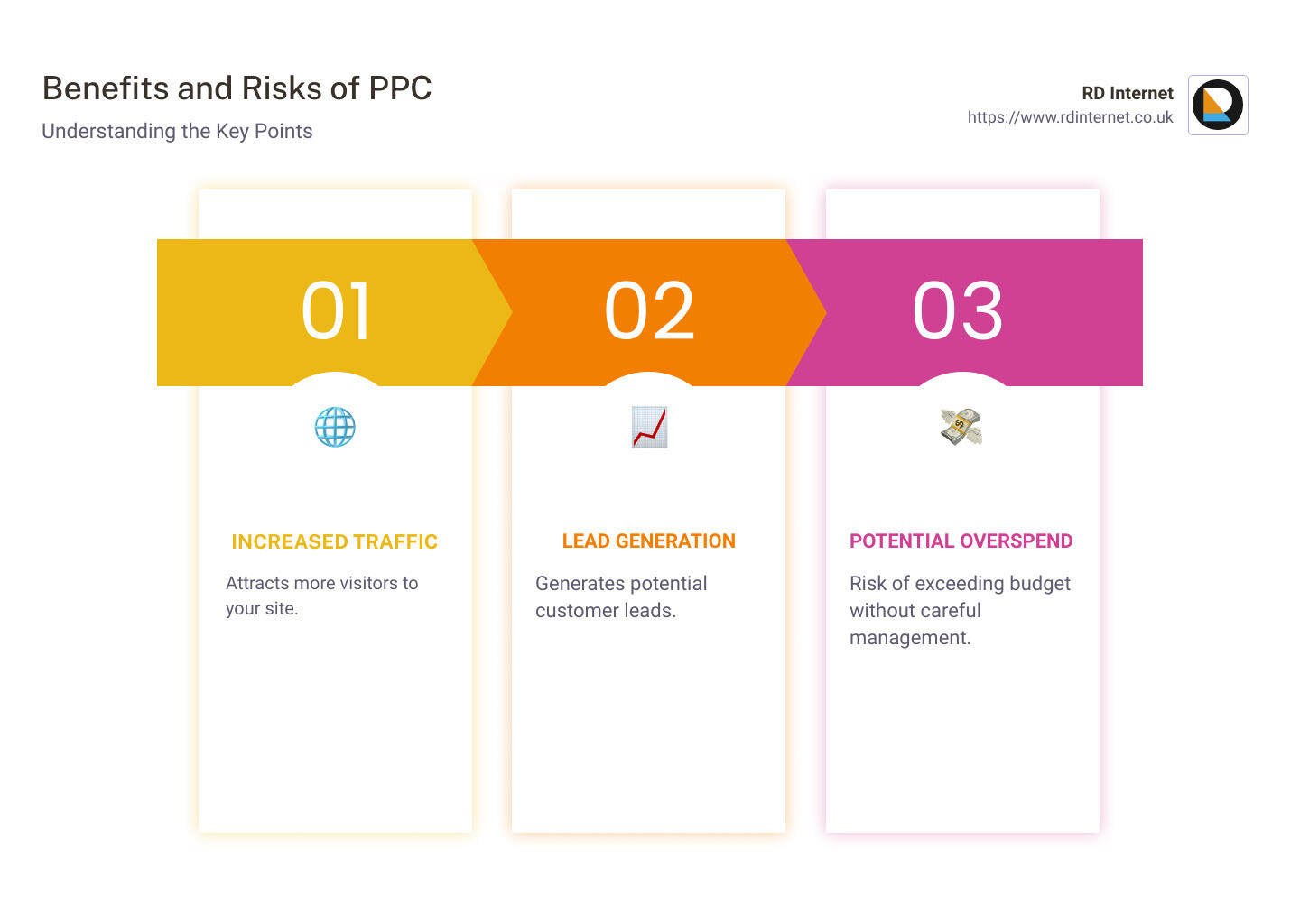
PPC offers several advantages, such as increasing traffic to your site and improving brand awareness. However, it also comes with its challenges, including the potential for overspending and navigating high competition. Understanding the basics of PPC, its benefits, and the risks involved is essential for leveraging this tool effectively.
For small business owners looking to make a mark online, mastering PPC could be a game-changer. Throughout this article, we’ll explore whether PPC advertising really works and how you can harness it to grow your business.
Relevant articles related to does pay per click advertising really work:
– how does pay per click advertising work
– what are the benefits of using pay-per-click advertising
– how much does pay per click advertising cost
What is Pay Per Click (PPC) Advertising?
Pay-per-click (PPC) advertising is a digital marketing model where advertisers pay a fee each time one of their ads is clicked. Essentially, it’s a way of buying visits to your site, rather than attempting to earn them organically.
How It Works
When you set up a PPC campaign, you bid on specific keywords relevant to your business. These keywords trigger your ads to appear in search engine results or on various websites. Every time someone clicks on your ad, you pay the search engine or website a predetermined amount.
Here’s a simple breakdown of how PPC works:
- Keyword Selection: Choose keywords that are relevant to your product or service.
- Ad Creation: Write compelling ad copy that encourages users to click.
- Bidding: Set a bid for how much you’re willing to pay per click.
- Ad Auction: When users search for your keywords, an auction determines which ads appear and in what order.
- Clicks and Payment: Pay only when someone clicks on your ad.
Platforms for PPC Advertising
Several platforms offer PPC advertising, each with its unique features and audience:
-
Google Ads: The most popular PPC platform, Google Ads allows you to display your ads on Google search results and across the Google Display Network. Ads appear at the top and bottom of search results, as well as on partner websites.
-
Facebook Ads: Facebook offers highly targeted PPC ads based on user demographics, interests, and behaviors. Ads can appear in users’ newsfeeds, stories, and sidebars.
-
Bing Ads: Similar to Google Ads, Bing Ads allows you to place ads on the Bing search engine and its partner networks. It often has lower competition and costs compared to Google.
Why Use PPC?
PPC advertising offers several benefits:
- Immediate Results: Unlike SEO, which can take months to show results, PPC ads can bring traffic to your site almost instantly.
- Targeted Advertising: You can target your ads based on location, demographics, time of day, and even device type.
- Measurable ROI: PPC platforms provide detailed analytics, allowing you to track the performance of your ads and measure your return on investment (ROI).
Example
Consider a local plumber who wants to attract more customers. By using PPC, they can target ads to people searching for plumbing services within a 20-mile radius. This ensures that their ads are shown to potential customers who are likely to need their services.
Challenges of PPC
While PPC can be highly effective, it also comes with challenges:
- Cost: PPC can get expensive, especially in competitive industries where keywords can cost several dollars per click.
- Management: Successful PPC campaigns require ongoing management and optimization. Without regular monitoring, you might spend a lot without seeing significant returns.
For instance, a study by YouGov revealed that only 18% of small and medium enterprises using Google Ads recoup their investment. This highlights the importance of careful planning and management.
Next, we’ll dig into whether PPC advertising truly delivers results and how you can make it work for your business.
Does Pay Per Click Advertising Really Work?
When considering “does pay per click advertising really work”, weigh both the benefits and risks. Let’s explore the details.
Benefits of PPC Advertising
Increased Traffic and Lead Generation
PPC advertising can quickly drive a significant amount of traffic to your website. Unlike organic methods, which take time to build up, PPC can deliver immediate results. For example, by targeting the right keywords, a local plumber can attract potential customers searching for emergency plumbing services.
Boost in Brand Visibility
PPC ads can increase your brand’s visibility. By appearing at the top of search results or on popular websites, your brand gets more exposure. This is particularly useful for new businesses looking to make a mark.
Sales Boost
By driving targeted traffic to your site, PPC can lead to higher conversions and sales. If your ads are well-crafted and lead to a compelling landing page, potential customers are more likely to make a purchase.
Precise Audience Targeting
PPC allows you to target your ads based on various factors like location, device, and user behavior. This ensures that your ads are shown to the right audience, increasing the chances of conversion.
Risks and Downsides of PPC Advertising
Costs and Budget Management
One of the biggest risks of PPC advertising is the potential for high costs. If not managed properly, you might end up spending a lot without seeing a significant return. It’s crucial to set a budget and monitor your campaigns closely.
Competition
In highly competitive industries, the cost per click (CPC) can be very high. Competing against big players with larger budgets can make it challenging for smaller businesses to see a good return on their investment.
Potential to Overspend
Without careful budget management, it’s easy to overspend on PPC campaigns. Setting daily or monthly limits can help prevent your costs from spiraling out of control.
Common Pitfalls
Several common mistakes can hinder the success of your PPC campaigns. These include choosing overly broad keywords, not using negative keywords, and failing to optimize landing pages. Avoiding these pitfalls requires ongoing monitoring and optimization.
Effectiveness and Success Factors
Conversion Rates
The effectiveness of PPC largely depends on your conversion rates. High click-through rates (CTR) and low conversion rates can indicate that while your ads are attracting clicks, they aren’t converting into sales. A/B testing your ads can help identify which versions perform best.
Audience Targeting
Precise audience targeting is crucial for PPC success. Using buyer personas and data-driven strategies can help ensure your ads reach the right people at the right time.
Success Stories
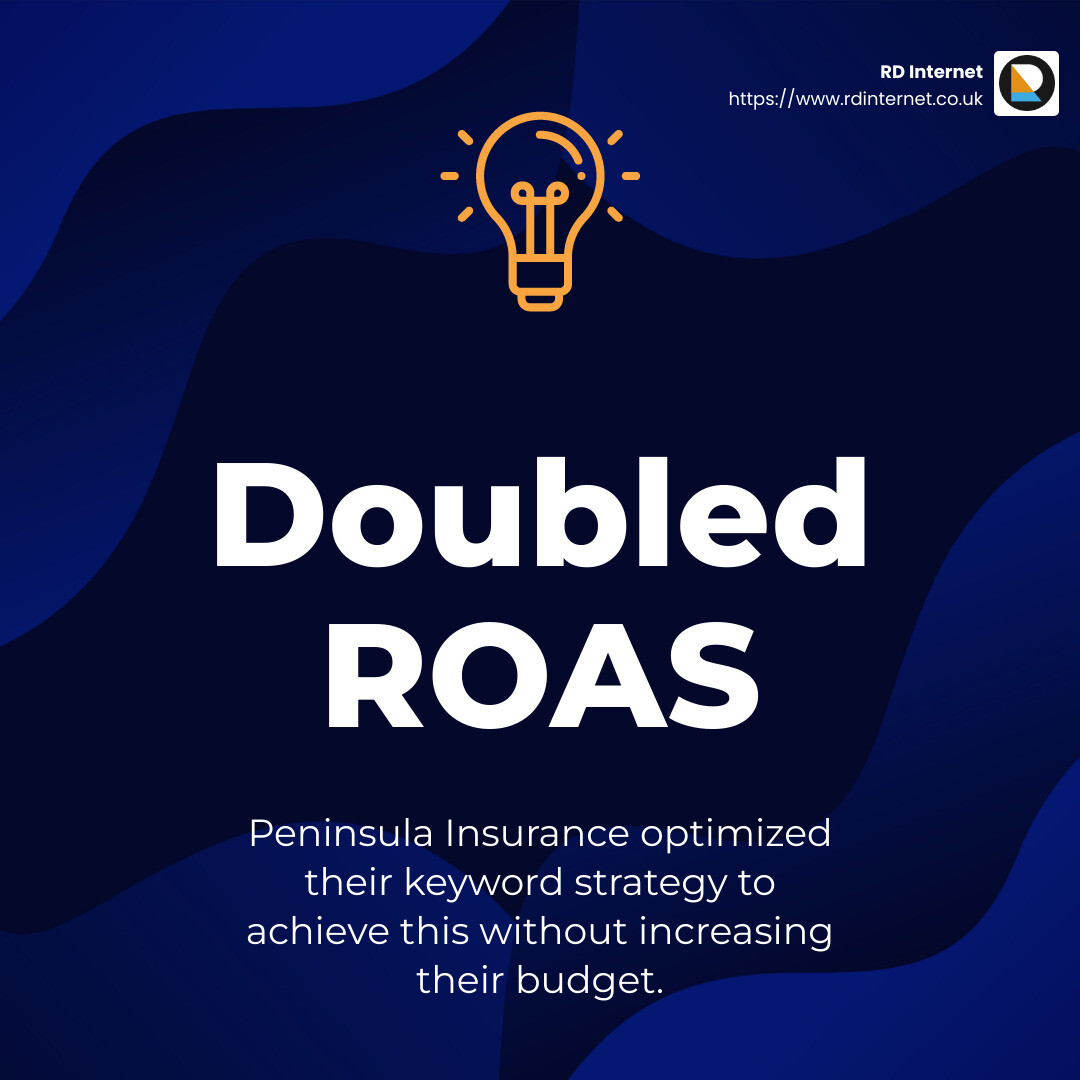
Many businesses have found success with PPC. For example, a case study showed how Peninsula Insurance doubled their return on ad spend (ROAS) by optimizing their keyword strategy. This success was achieved without increasing their budget, highlighting the importance of effective keyword management.
Next, we’ll explore how to make PPC work for your business, from setting up your campaign to optimizing it for the best results.
How to Make PPC Work for Your Business
Setting Up Your PPC Campaign
Keyword Research
The foundation of a successful PPC campaign starts with thorough keyword research. Use tools like Google’s Keyword Planner to identify high-value keywords relevant to your business. Focus on a mix of short-tail and long-tail keywords to balance competition and search volume.
Ad Creation
Craft compelling ads that highlight the features and benefits of your product or service. Use clear, concise language and include a strong call-to-action (CTA). For instance, if you’re a local bakery, an ad like “Freshly Baked Bread Delivered Daily – Order Now!” can attract more clicks.
Landing Pages
Ensure your landing pages are optimized for conversions. A good landing page should be relevant to the ad, load quickly, and have a clear CTA. If your ad promises a discount, the landing page should prominently feature this offer.
Budget Setting
Set a realistic budget based on your goals and financial capacity. Start with a modest budget and adjust as you gather more data. Use tools like Google Ads’ budget recommendations but be prepared to tweak based on actual performance.
Optimizing Your PPC Campaign
Regularly analyze your campaign data to understand what’s working and what’s not. Key metrics to monitor include click-through rates (CTR), cost per click (CPC), and conversion rates. This data helps you make informed decisions about where to allocate your budget.
Performance Metrics
Keep a close eye on your Quality Score, which Google uses to rank ads. A higher Quality Score can lower your CPC and improve your ad placement. Factors influencing this score include ad relevance, landing page experience, and expected CTR.
Adjusting Bids
Bid adjustments are crucial for maximizing ROI. Increase bids for high-performing keywords and decrease them for underperforming ones. Tools like Google’s automated bidding strategies can help optimize bids based on your goals, such as maximizing conversions or target CPA.
Improving Ad Quality
Continuously improve your ad quality by testing different versions. Use A/B testing to compare different headlines, descriptions, and CTAs. For example, you might test whether “Buy Now” or “Shop Today” generates more clicks.
A/B Testing
A/B testing, or split testing, is essential for refining your ads. Test one variable at a time—such as the ad copy, image, or CTA—to see what drives better performance. For example, an A/B test might reveal that ads focusing on price outperform those emphasizing quality.
Tracking and Optimization
Use tracking tools like Google Analytics to monitor user behavior on your landing pages. This data can reveal drop-off points and areas for improvement. Implement changes based on these insights to continually optimize your campaign.
By following these strategies and continuously refining your approach, you can make PPC work effectively for your business. Next, we’ll explore frequently asked questions about PPC advertising to help you further understand its potential and limitations.
Frequently Asked Questions about PPC Advertising
How effective is pay per click advertising?
Pay per click (PPC) advertising can be highly effective when executed correctly. Success depends on several factors:
-
Targeting the Right Audience: PPC allows you to target specific demographics, locations, and even interests. For example, a local plumber should focus their ads within a 20-25 mile radius to attract nearby homeowners.
-
Ad Quality and Relevance: High-quality, relevant ads are crucial. Google uses a Quality Score to determine ad rank. Ads with higher scores get better placements and lower costs per click (CPC).
-
Landing Page Optimization: Your landing page must match the promise of your ad. If your ad offers a discount, the landing page should clearly display this offer. A well-optimized landing page can significantly boost conversion rates.
-
Continuous Monitoring and Adjustment: Regularly analyze metrics like click-through rates (CTR), CPC, and conversion rates. Use this data to tweak your ads and bids for better performance.
What is a downside of pay per click advertising?
While PPC advertising offers many benefits, it also has some downsides:
-
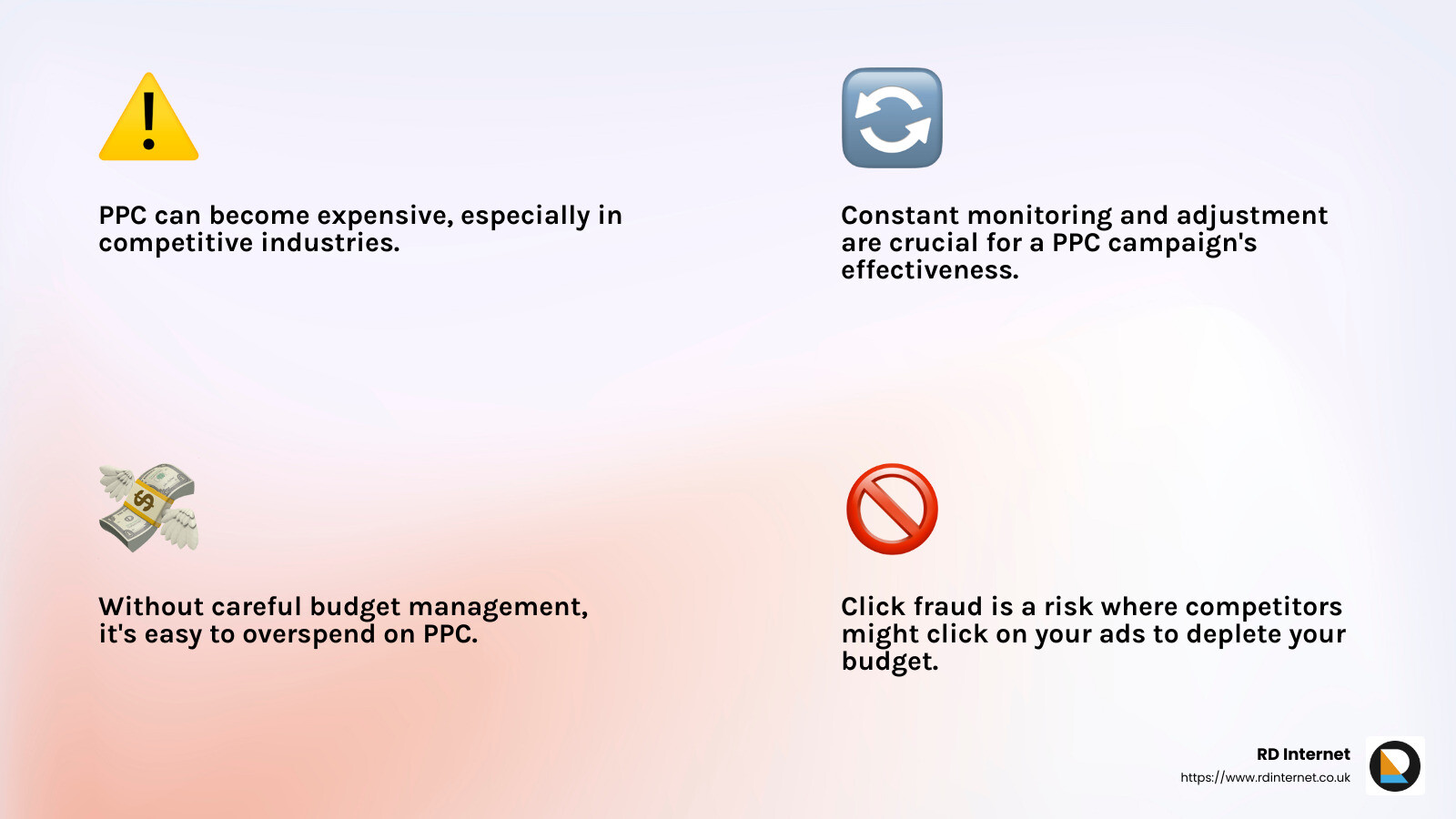
Costs Can Add Up: PPC can become expensive, especially in competitive industries. The cost per click can range from $1 to over $30, depending on various factors like keywords and competition.
-
Requires Ongoing Management: To be effective, PPC campaigns need constant monitoring and adjustment. This includes pausing underperforming keywords, adjusting bids, and optimizing landing pages.
-
Potential for Overspend: Without careful budget management, it’s easy to overspend. Set a daily budget and monitor your spending closely to avoid this pitfall.
-
Click Fraud: In some cases, competitors might click on your ads to deplete your budget. While platforms like Google Ads have measures to detect and prevent click fraud, it’s still a risk to be aware of.
Can you make money on pay per click ads?
Yes, you can make money with PPC ads, but it requires strategic planning and execution:
-
High Conversion Rates: Focus on converting clicks into sales. For instance, if you get five clicks and two of those convert into sales, you have a 40% conversion rate, which is quite good.
-
Cost Management: Ensure that your cost per acquisition (CPA) is lower than the lifetime value of a customer. If you spend $10 to acquire a customer who spends $100 over their lifetime, your PPC campaign is profitable.
-
Effective Use of Google Ads: Google Ads is a powerful tool for PPC advertising. Use features like automated bidding strategies and ad extensions to optimize your campaigns for better ROI.
-
A/B Testing: Continuously test different ad copies, headlines, and CTAs to find the most effective combinations. This can help improve your Quality Score and reduce CPC.
By understanding the effectiveness, potential downsides, and revenue generation possibilities of PPC advertising, you can make informed decisions about integrating it into your marketing strategy. Next, we’ll dig into the specifics of setting up and optimizing your PPC campaigns.
Conclusion
In summary, does pay per click advertising really work? The answer is a resounding yes, but with some caveats. PPC can be a powerful tool for driving traffic, generating leads, and boosting sales when executed correctly. However, it requires careful planning, continuous monitoring, and regular optimization to truly reap the benefits.
Final Thoughts
At RD Internet, we understand that PPC advertising can seem daunting. The key to success lies in targeting the right audience, creating high-quality ads, and optimizing your landing pages. PPC is not a “set it and forget it” strategy. It demands ongoing attention and adjustments to ensure you get the best return on your investment.
Decision-Making
When deciding whether to incorporate PPC into your digital marketing strategy, weigh the potential benefits against the risks and downsides. Consider your budget, industry competition, and your capacity to manage and optimize campaigns continuously. If you find that PPC aligns well with your business goals, it can be a game-changer for your online visibility and revenue.
For businesses ready to take the plunge into PPC advertising, RD Internet offers comprehensive pay-per-click advertising services designed to maximize your ROI. Our team of experts can guide you through every step, from keyword research and ad creation to campaign optimization and performance tracking.
The Takeaway
PPC advertising can deliver impressive results, but only when done right. Avoid common pitfalls like overspending and poor targeting, and focus on creating a well-structured, data-driven campaign. With the right approach, PPC can be a valuable addition to your digital marketing arsenal.
Ready to release the potential of PPC for your business? Contact RD Internet today, and let’s start driving the results you deserve.
Recent Comments