

The #1 Way to Become an In-Demand Social Media Manager in 2024
Starting Your Career as a Social Media Manager
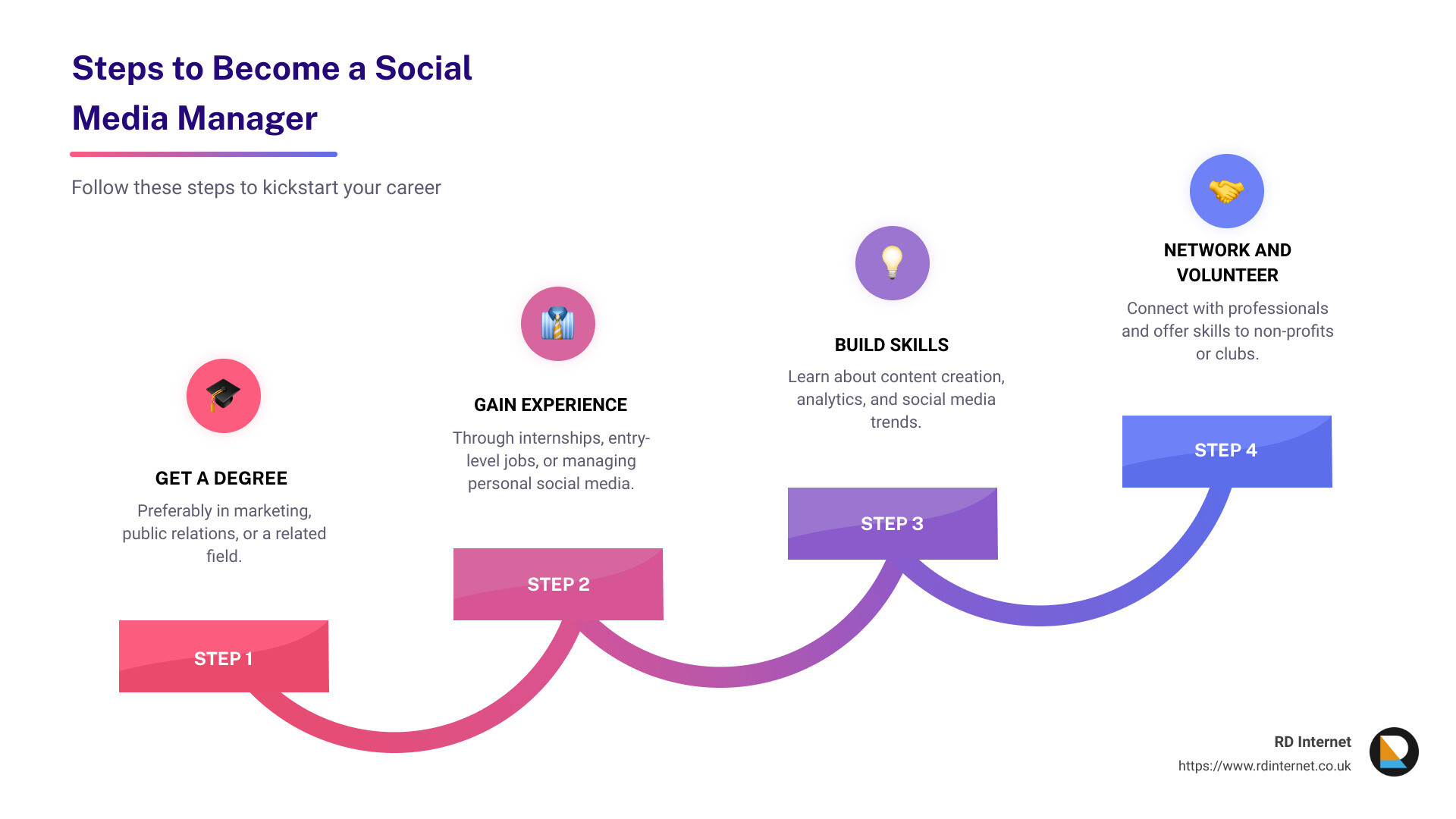
Are you curious about how do you become a social media manager? Let’s tackle that first:
- Get a Degree – Preferably in marketing, public relations, or a related field.
- Gain Experience – Through internships, entry-level jobs, or even managing your personal social media.
- Build Skills – Learn about content creation, analytics, and social media trends.
- Network and Volunteer – Connect with professionals in the field and offer your skills to non-profits or clubs.
Social media management offers a thrilling blend of creativity and data analysis, ideal for those with a knack for communication and a love for technology. As brands increasingly turn to online platforms to engage with their audiences, the demand for skilled social media managers is skyrocketing.
At RD Internet, we understand the nuances of this fast-evolving field. Our goal is to help you steer this career path, making the transition from novice to pro seamless. Whether you’re just starting or looking to pivot careers, we’ve got the insights to help you succeed.
What Does a Social Media Manager Do?
A social media manager wears many hats. They’re the strategists, creatives, analysts, and communicators all rolled into one. Let’s break down what this role entails.
Content Strategy
A social media manager is responsible for developing a content strategy that aligns with a company’s larger marketing goals. This involves planning what kind of content to post, when to post it, and which platforms to use. For instance, a social media manager might decide to post behind-the-scenes videos on Instagram Stories and detailed blog posts on LinkedIn.
Engagement
Boosting engagement is a key part of the job. This means increasing the number of likes, comments, shares, and followers on a company’s social media platforms. Social media managers often create interactive content, like polls or contests, to keep followers engaged.
Storytelling
Good storytelling is crucial. Social media managers craft compelling narratives that resonate with the audience. Whether it’s a heartfelt customer testimonial or a fun product demo, the goal is to make the audience feel connected to the brand.
Design
A keen eye for design is essential. Social media managers often oversee the creation of visual content, such as images, videos, and infographics. At smaller companies, they might even create this content themselves. Good design helps grab attention in crowded social feeds.
Analytics
Finally, social media managers spend a lot of time on analytics. They analyze data to understand what types of content perform best and why. Tools like Google Analytics and social media platform insights help them track metrics like engagement rates and follower growth. This data informs future content strategies, ensuring that the company’s social media efforts are effective.

By mastering these skills, you’ll be well on your way to becoming a successful social media manager. Next, let’s dive into the essential skills you’ll need to excel in this role.
Essential Skills for Social Media Managers
Social media managers do a lot of writing—sometimes more than a dozen posts each day. Each platform has its own style. For example, LinkedIn requires a professional tone, while Facebook can be more casual. Good writing creates messages that are quickly understood and promote positive sentiment. SEO copywriting is also helpful. Your writing should improve your brand and become the voice of the company.
Platform Knowledge
Knowing the ins and outs of different social media platforms is crucial. Each platform has its own features and best practices. For example, Instagram is great for visual content, while Twitter is ideal for quick updates. Familiarity with platform-specific tools and trends can set you apart.
Design Skills
Visual content is key to engaging posts. Basic design skills can help you create eye-catching graphics. Tools like Canva make it easier for non-designers to produce professional-looking visuals. Understanding design principles like colour theory and typography can also be beneficial.
Analytical Tools
Understanding analytics is essential for measuring the success of your social media efforts. This data informs future strategies, ensuring your social media efforts are effective. Aggregating data from multiple platforms can save time and provide a clearer picture of your performance.
Flexibility
The social media landscape changes quickly. New trends, features, and algorithms can appear overnight. Being flexible and willing to adapt is crucial. Regularly testing new ideas and formats can help you stay ahead. A/B testing, for example, can quickly show which types of images and copy work best for your audience.
Timeliness
Timeliness is vital in social media management. Responding quickly to comments and messages shows that your brand is engaged and attentive. Scheduling tools can help you post consistently, but real-time engagement is equally important. Keeping up with industry news and trends ensures that your content is relevant and timely.
How Do You Become a Social Media Manager?
So, how do you become a social media manager? Let’s break it down into actionable steps.
College Degree
Most social media managers have a bachelor’s degree in fields like marketing, communications, or journalism. According to the US Bureau of Labor Statistics, these areas provide a solid foundation in communication and business skills. College can also offer internships and part-time roles that give practical experience.
Online Community
Joining online communities can be incredibly helpful. Platforms like LinkedIn have groups dedicated to social media marketing. Engaging in these communities allows you to network, stay updated on industry trends, and even find job opportunities. Reddit, for instance, has a social media community where professionals share tips and advice.
Social Media Marketing Course
Enrolling in a social media marketing course can fill in any skill gaps. Courses like the Meta Social Media Marketing Professional Certificate or digital marketing boot camps offer in-depth training. These courses cover everything from content strategy to analytics tools, helping you build a robust skill set.
Research Tools
Knowing how to use research tools is crucial. Tools like Sprout Social and Hootsuite help you understand what works and what doesn’t. They provide insights into audience behavior and content performance. Familiarizing yourself with these tools will make you more efficient and effective in your role.
Networking
Networking is key. Attend industry conferences, webinars, and local business events. These settings provide opportunities to meet potential employers and learn from industry experts. Don’t be shy—introduce yourself, exchange business cards, and follow up with new contacts.
Volunteering
Volunteering is another great way to gain experience. Offer to manage social media accounts for local nonprofits or clubs. This not only builds your portfolio but also shows potential employers that you’re proactive and community-minded.
By following these steps, you can transition from a novice to a pro in social media management. Next, let’s explore how to build a strong portfolio that showcases your expertise.
Building Your Portfolio
Creating a strong portfolio is essential for showcasing your skills and experience as a social media manager. Here’s how you can build a portfolio that stands out:
Personal Social Media
Start with your own social media accounts. Demonstrate your ability to grow and engage an audience by creating and curating content that resonates. For example, GirlBossTown on TikTok gained recognition for her brand predictions, leading to behind-the-scenes work with brands. Show metrics like follower growth, engagement rates, and successful posts to highlight your effectiveness.
Small Business Accounts
Offer to manage social media for small businesses or friends who own businesses. You can even do this for free initially to gain experience and testimonials. Managing these accounts will allow you to showcase your strategic thinking and content creation skills. Highlight any growth in followers, engagement, and successful campaigns.
Analytics Reports
Keep a record of all your stats and make monthly analytics reports. These reports should include metrics like reach, clicks, views, and engagement. Use tools like Hootsuite or Sprout Social, which offer free trials, to gather and present this data. Even if a project didn’t perform as expected, explain what you learned and how you adapted. This shows potential employers your analytical skills and ability to learn from experience.
Design Skills
Proficiency in design tools like Photoshop, Premiere Pro, and Canva is crucial. Include examples of graphics, videos, and other visual content you’ve created. Show how your design skills contribute to effective social media campaigns. Engaging visuals can make your portfolio stand out and demonstrate your ability to create compelling content.
Content Calendar
A content calendar is a strategic tool that helps plan and organize your posts. Showcase a sample content calendar to demonstrate your ability to plan, schedule, and execute a cohesive content strategy. Include details on how you align content with marketing goals, key dates, and analytics to measure success.
By building a portfolio that includes these elements, you’ll be well-prepared to impress potential employers and clients. Next, let’s look at the tools and certifications that can further improve your qualifications.
Tools and Certifications to Consider
To become a successful social media manager, you need the right tools and certifications. These resources help you streamline your work, measure success, and stay ahead of the curve. Let’s dive into some key tools and certifications to consider.
Sprout Social
Sprout Social is a powerful social media management tool. It allows you to schedule posts, monitor engagement, and analyze performance across multiple platforms. With its user-friendly interface, you can easily manage all your social media accounts in one place. This tool also offers detailed analytics to help you understand what’s working and what’s not.
Hootsuite
Hootsuite is another essential tool for social media managers. It supports multiple social networks and provides robust scheduling features. Hootsuite’s analytics help you track your social media performance and adjust your strategy accordingly. It also integrates with other tools like Slack and Microsoft Teams, making team collaboration seamless.
HubSpot
HubSpot offers a comprehensive suite of marketing tools, including social media management. With HubSpot, you can schedule posts, monitor mentions, and track engagement. It also provides advanced analytics to measure the ROI of your social media efforts. HubSpot’s all-in-one platform makes it easier to manage your marketing activities from a single dashboard.
Google Analytics
Google Analytics is crucial for understanding your website traffic and how it relates to your social media efforts. This tool helps you track where your visitors are coming from, what they do on your site, and how your social media channels contribute to your overall goals. By mastering Google Analytics, you can make data-driven decisions to improve your social media strategy.
Frequently Asked Questions about Becoming a Social Media Manager
What qualifications do you need to be a social media manager?
To become a social media manager, you need a mix of formal education, practical skills, and hands-on experience. Here are some qualifications that can help:
- Advertising and Marketing: A background in advertising or marketing can give you a solid foundation in brand management and consumer behavior.
- Public Relations (PR): PR skills are invaluable for managing a brand’s image and handling crisis communications.
- Digital Marketing: Understanding digital marketing principles is key to running effective social media campaigns.
- Journalism: Strong writing and storytelling skills are crucial for creating engaging content.
- Business Management: Knowledge of business management can help you align social media strategies with company goals.
How do I become a social media manager with no experience?
Starting with no experience can be challenging, but it’s entirely possible. Here are some steps to get you started:
- College Degree: While not mandatory, a degree in marketing, PR, or a related field can be beneficial.
- Online Community: Join online communities and forums related to social media management to network and learn from others.
- Social Media Marketing Course: Enroll in courses to gain foundational knowledge. Platforms like HubSpot and Coursera offer valuable certifications.
- Research Tools: Familiarize yourself with tools like Google Analytics to track and analyze social media performance.
- Networking: Attend industry events and connect with professionals on LinkedIn. Networking can open doors to job opportunities.
- Volunteering: Offer your services to nonprofits or small businesses to gain practical experience and build your portfolio.
Can I be a social media manager without a degree?
Yes, you can become a social media manager without a degree. Here’s how:
- Marketing Principles: Understand the basics of marketing, such as targeting and segmentation.
- Communication Strategies: Learn how to craft messages that resonate with your audience.
- Experience: Practical experience is often more valuable than formal education. Start by managing your own social media accounts or those of a small business.
- Certifications: Obtain certifications in social media marketing to boost your credibility.
- Continuous Learning: Stay updated with the latest trends and best practices in social media.
By focusing on these areas, you can build a successful career in social media management, even without a degree.
Next, we’ll discuss how to build a compelling portfolio to showcase your skills and experience.
Conclusion
Starting a career as a social media manager is a journey filled with learning and growth. It requires a blend of creativity, analytical skills, and adaptability. At RD Internet, we understand the importance of a strong social media presence and offer comprehensive social media marketing services to help businesses thrive in the digital world.
In addition to social media management, we specialize in SEO and internet marketing. Our team, based in Cardiff, is dedicated to helping businesses increase their online visibility and, ultimately, their revenue. By leveraging our expertise, you can ensure your social media strategies are not only engaging but also optimized for maximum reach and impact.
Start on your journey to become a social media manager with confidence. Equip yourself with the right skills, build a robust portfolio, and stay updated with the latest trends. The digital landscape is changing, and continuous learning is key to staying ahead.
Thank you for taking the time to read our guide. If you’re ready to lift your social media game, explore our services and see how we can help you achieve your goals.
Recent Comments