
Understanding Click Fraud: Does PPC Advertising Count Same IP Clicks?

Does pay per click advertising count same IP clicks?
The short answer: it depends on the platform and its detection systems. Generally, PPC platforms like Google Ads use sophisticated algorithms to filter out multiple clicks from the same IP address to prevent click fraud.
That’s a good thing because click fraud is a major concern for online advertisers. So, let’s break it down.
Key Points:
– Click fraud: This is when someone repeatedly clicks on an ad with malicious intent, usually to drain the ad budget of a competitor.
– PPC advertising: This popular model charges advertisers each time their ad is clicked.
– IP addresses: These are numerical labels assigned to each device using the Internet, and they’re crucial in monitoring and detecting click fraud.
For a Cardiff small business owner like yourself, struggling with low website traffic and online visibility, understanding click fraud is crucial to ensuring your ad spend is effective.
At RD Internet, we focus on helping businesses just like yours to steer these complexities and improve their online presence.
Does pay per click advertising count same ip word list:
– how does pay per click advertising work
– how much does pay per click advertising cost
– ppc bid strategies
What is Click Fraud?
Click fraud is a black-hat technique used to manipulate the number of clicks on a pay-per-click (PPC) ad. This fraudulent activity can severely impact your advertising budget and performance metrics. Let’s explore how this works and why it happens.
Inflating Clicks to Increase Revenue Share
One of the most common forms of click fraud involves inflating the number of clicks on ads to increase revenue share. Websites that run PPC ads get paid based on how many visitors click on these ads. Fraudsters exploit this by using automated scripts or click farms to simulate legitimate clicks.
According to Wikipedia:
“Click fraud is a type of fraud that occurs on the Internet in pay-per-click (PPC) online advertising. In this type of advertising, the owners of websites that post the ads are paid an amount of money determined by how many visitors to the sites click on the ads. Fraud occurs when a person, automated script, or computer program imitates a legitimate user of a web browser, clicking on such an ad without having an actual interest in the target of the ad’s link.”
Draining Ad Budgets
Another reason click fraud occurs is to drain the ad budget of competitors. By repeatedly clicking on a competitor’s ad, fraudsters can quickly exhaust their daily budget, preventing the ad from showing to legitimate users. This tactic is particularly harmful because it not only wastes the competitor’s money but also reduces their visibility in search results.
Real-World Example
One of our customers noticed a significant discrepancy between their total clicks and unique clicks. Upon investigation, we found that certain IP addresses were clicking the same paid search ad repeatedly within a short time frame, consuming a large portion of the daily ad budget in seconds. This was a clear case of click fraud.
How to Identify Click Fraud
To help you identify click fraud, RD Internet offers a Paid Search Fraud Report. This report tracks suspicious IP addresses and provides a risk analysis. For example, if an IP address clicks on your ad dozens of times within a few seconds, it’s likely click fraud.
Key Takeaways
- Click fraud inflates ad clicks artificially, often through automated scripts or click farms.
- The primary motives are to increase revenue share or to exhaust a competitor’s ad budget.
- Identifying click fraud involves monitoring click patterns and using specialized reports to flag suspicious activity.
By understanding the mechanics and motives behind click fraud, you can better protect your advertising budget and ensure your PPC campaigns are reaching genuine users.
Next, let’s explore how IP addresses play a crucial role in detecting and preventing click fraud.
The Role of IP Addresses in PPC Advertising
IP Address Tracking
In PPC advertising, IP address tracking is essential. An IP address is a unique identifier assigned to each device connected to the internet. By tracking these addresses, PPC platforms can monitor the source of clicks on ads. This helps ensure that the clicks are coming from real users and not from automated systems or malicious actors.
Legitimacy of Clicks
Tracking IP addresses is crucial for determining the legitimacy of clicks. When an ad receives multiple clicks from the same IP address in a short period, it raises a red flag. These clicks might be from a single user repeatedly clicking on the ad or from a click farm—a group of people or automated bots generating fake clicks.
For example, if your ad gets 50 clicks from the same IP address within a few minutes, it’s likely not legitimate traffic. PPC platforms like Google Ads use sophisticated algorithms to identify and filter out such invalid clicks, ensuring that advertisers are not charged for them.
Fraud Prevention
Fraud prevention is a significant concern in PPC advertising. Click fraud can drain your ad budget and skew your performance metrics, making it hard to gauge the success of your campaigns. By monitoring IP addresses, PPC platforms can detect patterns indicative of fraud, such as:
- High click frequency from a single IP
- Unusual click behavior (e.g., very short time spent on the landing page)
- Clicks from known blacklisted IPs
When such patterns are detected, the platform can take action, such as blocking the IP address or flagging the activity for further review.

Real-World Example
Consider a scenario where an e-commerce company noticed a sudden spike in clicks on their PPC ads. Upon analyzing the IP data, they found that a single IP address was responsible for a large portion of these clicks. By filtering out this IP, they were able to save their ad budget and focus on legitimate traffic, improving their overall return on investment (ROI).
Key Takeaways
- IP address tracking helps identify legitimate clicks and detect fraudulent activity.
- Monitoring click patterns and behaviors from specific IP addresses is crucial for fraud prevention.
- Sophisticated algorithms used by PPC platforms can filter out invalid clicks to protect advertisers.
By understanding the role of IP addresses in PPC advertising, you can better safeguard your campaigns against click fraud. Next, let’s dive deeper into how PPC platforms handle clicks from the same IP address.
Does Pay Per Click Advertising Count Same IP Clicks?
How PPC Platforms Handle Same IP Clicks
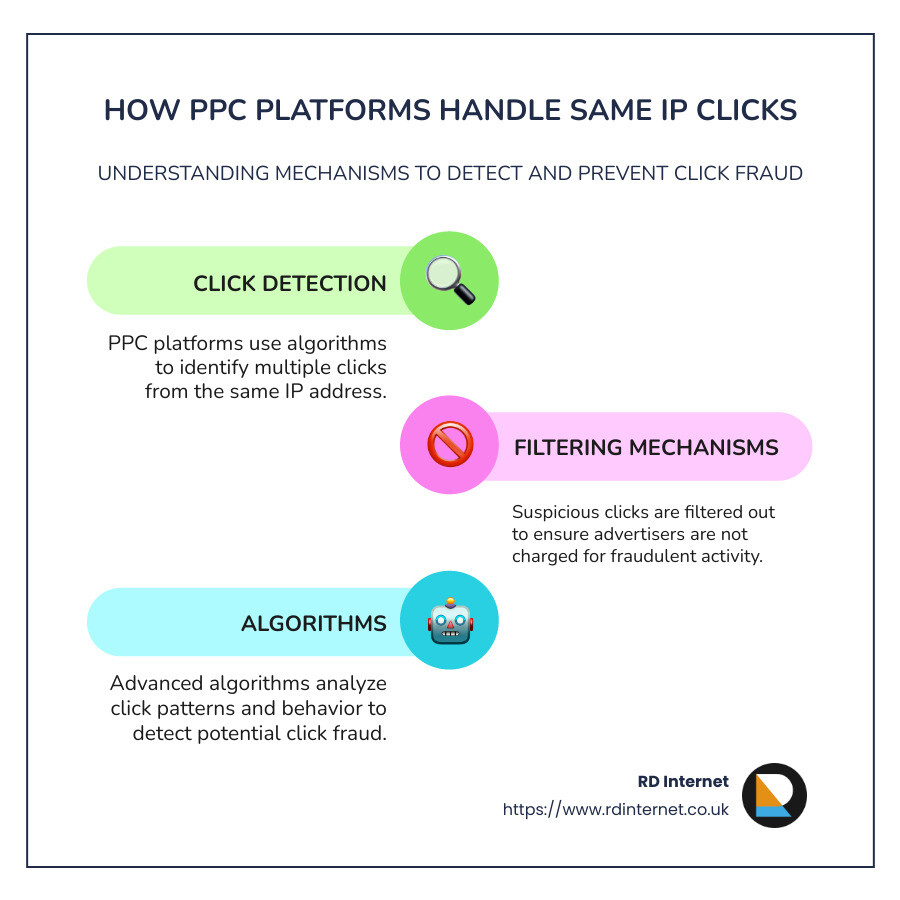
When it comes to does pay per click advertising count same IP clicks, PPC platforms like Google Ads have sophisticated systems in place to manage and filter these clicks. Here’s how they do it:
Click Detection and Invalid Clicks
PPC platforms use click detection mechanisms to identify and analyze every click on an ad. If multiple clicks originate from the same IP address within a short period, these are flagged as invalid clicks. These clicks are typically disregarded, ensuring that advertisers are not charged for potentially fraudulent activity.
For instance, if an ad receives 10 clicks from the same IP within a few seconds, Google Ads’ algorithms will likely recognize this pattern as suspicious and not count those extra clicks.
Filtering Mechanisms and Algorithms
PPC platforms deploy advanced filtering mechanisms and algorithms to detect and handle suspicious clicks. These systems analyze various factors, such as:
- Frequency of clicks from the same IP
- Time intervals between clicks
- User behavior on the landing page (e.g., time spent, actions taken)
By examining these factors, the algorithms can differentiate between legitimate and fraudulent clicks. Suspicious clicks are filtered out, preventing them from affecting campaign metrics and costs.
Implications of Multiple Clicks from the Same IP Address
Inflated Costs and Inaccurate Metrics
Multiple clicks from the same IP address can lead to inflated costs for advertisers. If not properly detected and filtered, these clicks can consume a significant portion of the ad budget without delivering genuine user engagement. This also results in inaccurate metrics, such as misleading click-through rates (CTR) and conversion rates.
For example, an ad campaign might appear to be performing well based on the number of clicks received. However, if many of these clicks are from the same IP address, the actual user interest and engagement might be much lower than reported.
Impact on User Experience
Repeated clicks from the same IP can also distort the user experience. If the same user or a group of users keeps clicking on an ad, it can lead to irrelevant ads being displayed more frequently. This can frustrate users and reduce the effectiveness of ad targeting.
For instance, if a click farm is generating multiple clicks on an ad, genuine users might see the ad repeatedly, even if it’s not relevant to them. This not only wastes the advertiser’s budget but also degrades the overall user experience on the platform.
Key Takeaways:
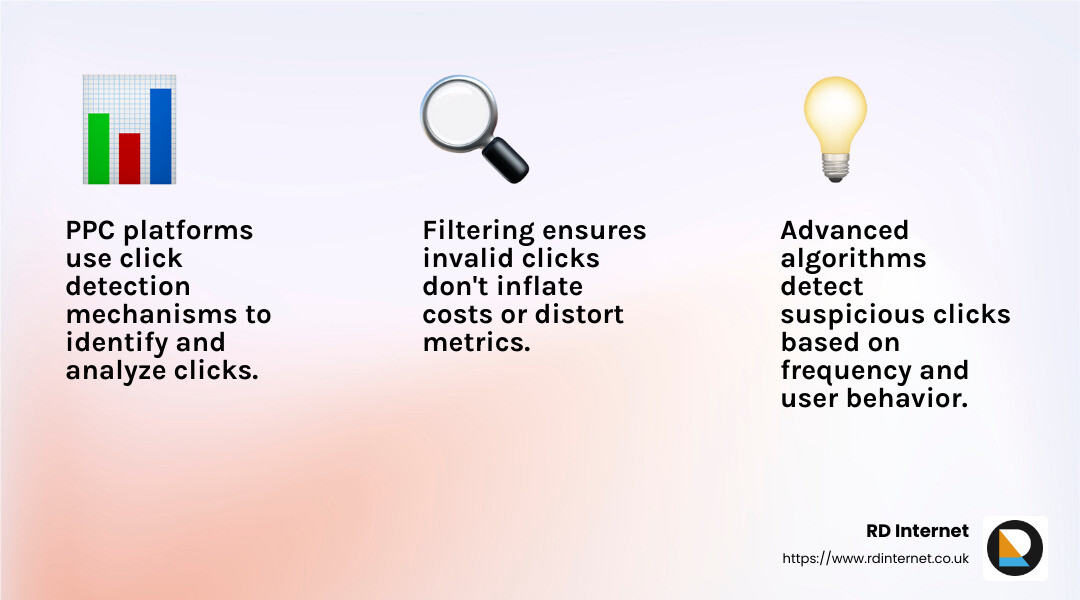
- Click detection systems and algorithms are crucial for filtering out invalid clicks from the same IP.
- Multiple clicks from the same IP can lead to inflated costs and inaccurate performance metrics.
- Ensuring accurate click tracking helps maintain a positive user experience and effective ad targeting.
Understanding how PPC platforms handle clicks from the same IP address can help advertisers protect their campaigns from click fraud. Next, we’ll explore how to detect and prevent click fraud effectively.
How to Detect and Prevent Click Fraud
Tools and Software for Click Fraud Detection
Detecting click fraud is crucial for maintaining the integrity of your PPC campaigns. There are several tools and software solutions available that specialize in identifying and mitigating click fraud. These tools monitor click patterns and use advanced algorithms to detect suspicious behavior.
Click Fraud Detection Tools:
-
DailyStory’s Paid Search Fraud Report: This tool helps identify IP addresses that exhibit suspicious behavior, such as multiple clicks within a short time frame. It provides a risk analysis and additional details about the IP address to help determine if it’s legitimate.
-
ClickCease: A popular tool that monitors your ads for fraudulent clicks and blocks them in real-time. It provides detailed reports and analytics to help you understand the extent of click fraud on your campaigns.
-
PPC Protect: This tool uses machine learning to detect and block fraudulent clicks. It offers real-time monitoring and reporting, helping you save on ad spend and improve campaign performance.
Implementing IP Filtering and Click Limits
Once you’ve identified suspicious IP addresses, the next step is to implement IP filtering and set click limits to prevent further fraudulent activities.
IP Filtering:
Most PPC platforms, like Google Ads, allow you to exclude specific IP addresses from your campaigns. Here’s how you can do it:
- Sign in to Google Ads and select the campaign you want to manage.
- Steer to Settings for the campaign.
- Click Additional Settings and find the IP exclusions option.
- Add the IP addresses you want to exclude.
This process helps ensure that clicks from known fraudulent IP addresses are not counted, protecting your ad budget.
Setting Daily Click Limits:
Another effective strategy is to set daily click limits per IP address. This can help prevent excessive clicks from a single source, which is often a sign of click fraud.
- Go to your PPC platform’s settings and find the option to set daily click limits.
- Specify the maximum number of clicks allowed from a single IP address within a day.
- Monitor and adjust these limits based on the performance and click patterns observed.
Campaign Settings:
Regularly reviewing and adjusting your campaign settings can also help mitigate click fraud. Here are some tips:
- Monitor click timestamps and user engagement to identify abnormal patterns.
- Use location exclusions to block regions known for high levels of click fraud.
- Collaborate with your PPC platform to stay updated on the latest fraud detection features and best practices.
By using these tools and strategies, you can effectively detect and prevent click fraud, ensuring that your PPC campaigns are both cost-effective and accurate.
Next, we’ll address some frequently asked questions about click fraud and multiple clicks from the same IP address.
Frequently Asked Questions about Click Fraud and Same IP Clicks
Are there legitimate reasons for multiple clicks from the same IP address?
Yes, there are legitimate reasons for multiple clicks from the same IP address. For example, multiple users within a household or organization may interact with the same ad. If a family shares a single internet connection, different members might click on the same ad. Similarly, employees in a company might click on an ad if it’s relevant to their work.
However, while these clicks are genuine, they can still skew your campaign metrics. That’s why it’s important to monitor click patterns and differentiate between legitimate and suspicious clicks.
How can advertisers detect click fraud originating from the same IP address?
Advertisers can use detection tools and software to identify click fraud. These tools monitor various data points, including:
- Click timestamps: By analyzing when clicks occur, you can spot unusual patterns. For instance, multiple clicks within a few seconds might indicate fraud.
- Conversion rates: If many clicks from the same IP address do not lead to conversions, it could be a sign of click fraud.
Popular tools like ClickCease and PPC Protect use advanced algorithms to detect and block fraudulent clicks in real-time. They provide detailed reports, helping you understand the extent of the issue and take action.
What actions can advertisers take to mitigate the impact of multiple clicks from the same IP address?
There are several strategies to mitigate the impact of multiple clicks from the same IP address:
1. IP Filtering:
Most PPC platforms, like Google Ads, allow you to exclude specific IP addresses. This prevents clicks from known fraudulent sources from affecting your campaign.
Steps to Implement IP Filtering:
- Sign in to Google Ads and select the campaign you want to manage.
- Steer to Settings for the campaign.
- Click Additional Settings and find the IP exclusions option.
- Add the IP addresses you want to exclude.
2. Setting Daily Click Limits:
Setting daily click limits per IP address can help prevent excessive clicks from a single source.
Steps to Set Daily Click Limits:
- Go to your PPC platform’s settings and find the option to set daily click limits.
- Specify the maximum number of clicks allowed from a single IP address within a day.
- Monitor and adjust these limits based on the performance and click patterns observed.
3. Regular Monitoring:
Regularly review your campaign settings and performance metrics.
- Monitor click timestamps and user engagement to identify abnormal patterns.
- Use location exclusions to block regions known for high levels of click fraud.
- Collaborate with your PPC platform to stay updated on the latest fraud detection features and best practices.
By implementing these strategies, you can protect your ad budget and ensure accurate performance metrics for your PPC campaigns.
Next, we’ll discuss the conclusion and summarize the key points about click fraud prevention in PPC advertising.
Conclusion
Click fraud is a significant challenge in pay-per-click (PPC) advertising, but understanding and addressing it can protect your budget and improve your campaign performance.
Preventing click fraud involves a multi-faceted approach. By using IP filtering and setting daily click limits, advertisers can reduce the impact of multiple clicks from the same IP address. Regular monitoring and the use of advanced click fraud detection tools are also essential in identifying and mitigating fraudulent activities.
At RD Internet, we specialize in helping businesses steer the complexities of PPC advertising. Our team employs the latest strategies and tools to ensure your campaigns run smoothly and effectively. We focus on improving your search engine rankings and online visibility, ultimately leading to increased revenue.
If you’re ready to optimize your PPC campaigns and safeguard against click fraud, contact us today. Let’s work together to achieve your advertising goals.
By understanding and implementing these strategies, you can protect your ad budget and ensure accurate performance metrics for your PPC campaigns.
Recent Comments