

In the fiercely competitive world of digital marketing, it’s not enough to simply drive traffic to your website. As a small business owner in Cardiff, you know that the real challenge lies in turning that traffic into tangible results – leads, sales, and revenue. This is where Conversion Rate Optimisation (CRO) becomes a game-changer.
Unlocking Success: Conversion Rate Optimisation Report Secrets is your ultimate guide to understand, implement, and reap the benefits of CRO. This comprehensive resource will empower you to transform your website into a potent tool for business growth. You’ll learn not only the fundamentals of CRO, but also how to create and interpret CRO reports, the secrets of successful CRO strategies, and real-world case studies of businesses that have seen their profits soar through effective CRO.
Whether you’re looking to boost your online visibility, increase website traffic, or simply gain a deeper understanding of digital marketing strategies, this guide is designed to address your pain points and propel your business to new heights. So, let’s dive into the world of Conversion Rate Optimisation and unlock the secrets to your digital success.
Understanding Conversion Rate Optimisation (CRO)
In the bustling marketplace of the digital world, simply attracting visitors to your website is not enough. The key to sustainable growth and success lies in Conversion Rate Optimisation (CRO), a data-driven approach designed to transform your website visitors into loyal customers.
What is Conversion Rate Optimisation (CRO)?
Conversion Rate Optimisation (CRO) is the methodical process of improving the percentage of website visitors who perform a desired action, thereby increasing your conversion rate. These desired actions could range from clicking an ‘add to cart’ button, filling out a contact form, signing up for a newsletter, or making a purchase. At its core, CRO is all about understanding how users interact with your website and making calculated changes to enhance their experience and drive conversions.
How to Calculate Conversion Rate
Calculating your conversion rate is a straightforward mathematical process. It’s achieved by taking the total number of conversions and dividing it by the total number of website visitors. For instance, if your website received 1,000 visitors in a month and made 50 sales, your conversion rate would be 5% (50 ÷ 1,000 x 100). This calculation provides a baseline metric to gauge the effectiveness of your website and marketing campaigns, and identifies areas for improvement.
The Role of CRO in Digital Marketing
In the realm of digital marketing, CRO plays a pivotal role in enhancing the return on investment (ROI) of your marketing campaigns. By focusing on optimising the conversion rate, businesses can drive more value from existing traffic without spending more on customer acquisition. This means that even the smallest increase in conversion rate can have a significant impact on your bottom line. Not only does CRO improve your profitability, it also offers valuable insights into customer behaviour and preferences, enabling you to tailor your marketing efforts for maximum effectiveness.
Whether you’re a small business owner in Cardiff or an international corporation, understanding and implementing CRO strategies can provide a competitive edge in the digital landscape, turning your website into a powerful tool for customer conversion and business growth.
The Power of CRO Reports
Having a firm grasp on Conversion Rate Optimisation (CRO) strategies sets the foundation for digital marketing success. However, the power of these strategies lies in their continuous assessment and improvement, a process made possible through effective CRO reporting.
What is a CRO Report?
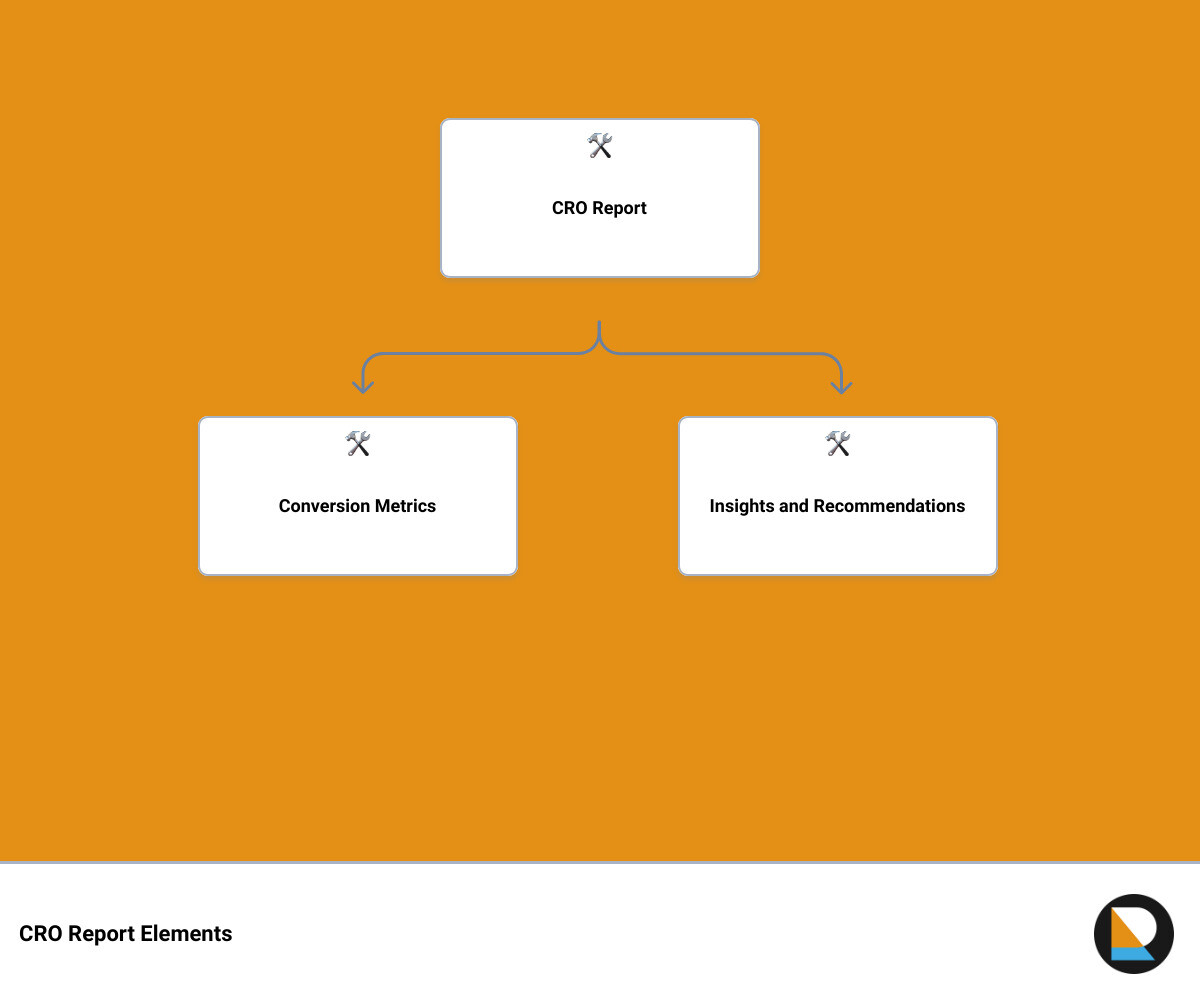
A CRO report is a comprehensive document that provides an overview of your website’s performance in terms of converting visitors into customers. It is a crucial tool for tracking the effectiveness of your CRO strategies and identifying areas for improvement. A well-constructed CRO report encompasses various data points, including the total number of conversions, conversion rate, user behaviour, and the performance of individual web pages or marketing campaigns.
How to Create a CRO Report
Creating a CRO report starts with identifying the key metrics relevant to your business objectives. These could be the number of form completions, sign-ups, product purchases, or any other actions that align with your business goals.
Next, collect and analyse data from your website using tools like Google Analytics, which provides valuable information about traffic sources, user behaviour, and conversion rates. Monitor these data points closely throughout your campaign to keep track of your performance.
Finally, organise and present your findings in a clear, concise manner. This could be in the form of graphs, tables, or charts that highlight trends and patterns. Remember, the aim of your report is not only to present data but also to provide insights that can inform decision-making and strategy refinement.
Interpreting a CRO Report: Key Metrics and Insights
Interpreting a CRO report requires a keen eye for detail and a solid understanding of your business objectives. Key metrics to look out for include the conversion rate, which is the ratio of visitors who complete a desired action, and the bounce rate, which is the percentage of visitors who leave your site after viewing only one page.
A high conversion rate indicates that your website is effectively persuading visitors to take desired actions, while a low bounce rate suggests that your content is engaging enough to keep visitors on your site. Conversely, a low conversion rate or a high bounce rate may indicate issues with your site’s user experience, content, or overall design.
However, these metrics should not be viewed in isolation. Consider other factors such as traffic sources, user demographics, and on-site behaviour to gain a holistic view of your website’s performance.
Interpreting a CRO report is not just about understanding what the numbers say, but also about gleaning insights on how to improve your conversion rate. By continuously monitoring, analysing, and optimising, you can turn the insights from your CRO report into tangible actions that boost your conversions and ultimately, your bottom line.
Strategies for Successful Conversion Rate Optimisation
Unlocking the secrets to success in conversion rate optimisation (CRO) is akin to finding the golden key to your digital growth. It’s not just about getting people to your website but persuading them to take the action you want. Let’s delve into the strategies that can catapult your CRO to new heights.
Improving User Experience (UX) for Higher Conversion Rates
User Experience (UX) is the backbone of any successful CRO strategy. A compelling, intuitive, and seamless user experience can drive your visitors to take desired actions on your website. From navigation simplicity to the clarity of information, every facet of your website design impacts the user experience.
As an expert, I can’t stress enough the importance of tools like heatmaps and clickmaps that can provide insights on which site sections visitors spend more time on. Other tools such as user session recordings and session replays can help understand their overall experience. These insights are vital in making the necessary tweaks for an optimal user experience, which in turn, can pave the way for conversions.
The Role of A/B Testing in CRO
A/B testing is the heart of conversion rate optimisation. It’s a method where you set up two slightly different versions of a webpage and split your traffic between them to see which one performs better. The difference could be as simple as a change in the call-to-action button color or a tweak in the headline.
The power of A/B testing lies in its ability to give you hard data on what works and what doesn’t. It’s not about guessing or assuming – it’s about making data-driven decisions. And remember, even a slight change can have a significant impact on your conversion rate.
Leveraging Buyer Behaviour for CRO
Understanding your customers is paramount in CRO. Having a clear picture of your customer’s journey provides you with valuable insights into their pain points, motivations, and behavior. This understanding allows you to make strategic adjustments to your website or marketing approach to better align with customer needs and preferences.
Customer journey analysis, surveys, and feedback systems are all crucial tools that can help you gain these insights. Remember, the more data you have about your customers, the better you can optimise your website to meet their needs and, consequently, increase your conversion rate.
The Importance of Website Personalisation in CRO
In today’s digital landscape, personalisation is no longer a luxury, but a necessity. Customers expect a personalised experience when they visit your website. By tailoring your website to your visitors’ geography, device, local time, or past browsing history, you can create a relevant and engaging experience that can significantly boost conversions.
In conclusion, successful conversion rate optimisation is a blend of user experience, A/B testing, understanding buyer behaviour, and website personalisation. Employing these strategies can help you unlock the full potential of your website and drive your conversions through the roof.
Case Studies: Successful Implementation of CRO
How Businesses Have Increased Conversions Through CRO
Businesses across various sectors have leveraged the power of Conversion Rate Optimisation (CRO) to boost their conversions and increase their revenue. Let’s take a closer look at how some of them have made it work.
For instance, clothing retailer hush, in collaboration with Tryzens, redesigned their mobile checkout page, resulting in a notable increase in mobile conversions. This move didn’t just reduce abandoned transactions but also significantly boosted the brand’s projected annual revenue.
Deliveroo, the food delivery company, also made waves with their global app optimisation strategy. Partnering with SYZYGY, they adapted their app creative to each market, employing a granular, ongoing test-and-learn process that led to an impressive 11.5% increase in new users.
In the financial sector, wealth accumulation firm Killik worked with digital agency Receptional to optimise their LinkedIn messaging through split-testing. This targeted approach not only increased their conversion rate but also lowered their cost per lead.
The Impact of CRO on Ecommerce Revenue
CRO can have a transformative impact on ecommerce revenue, as demonstrated by Express Doors Direct. Collaborating with Boom Online, they optimised their site content using a Natural Language Processing focused search strategy. The result? A significant increase in their revenue.
Similarly, an online eCommerce company could enhance its conversion rate by even 3% through running an A/B test, leading to 3% extra revenue daily. For a company with high volume sales, this seemingly small improvement can translate into hundreds and thousands of extra dollars for their business.
These case studies highlight the power of CRO in driving conversions and boosting revenue across different sectors. Whether it’s redesigning a checkout page, optimising app creative, tweaking LinkedIn messaging, or enhancing site content, the right CRO strategies can unlock significant growth potential for businesses.
As we delve deeper into optimising conversions throughout the customer journey, it’s clear that CRO isn’t just a tool—it’s an essential element of any digital marketing strategy, capable of delivering lasting, impactful results.
Practical Guide: Optimising Conversions Throughout the Customer Journey
Delving into the practical side of Conversion Rate Optimisation (CRO), we’ll explore four proven strategies that could revolutionise your digital marketing efforts. By focusing on these areas, you can improve your website’s performance, increase user engagement, and ultimately, boost conversions.
Creating Text-Based CTAs Within Blog Posts
An effective way to boost conversions is by embedding text-based call-to-actions (CTAs) within your blog posts. The beauty of this strategy lies in its subtlety; it doesn’t interrupt the user’s reading flow, but rather, it seamlessly guides them towards the desired action. Consider this: at HubSpot, text CTAs at the bottom of blog posts generated 121% more leads than CTAs in the sidebar. In fact, a text-based CTA within a blog post about press releases, offering an inbound press release template, led to a whopping 240% increase in conversions. Craft your CTAs to be compelling and relevant to the blog content, guiding your readers towards conversion.
Running Tests on Landing Pages
Landing pages are conversion hotspots. They’re the point at which a visitor decides to engage more deeply with your brand or bounce away. But how do you know if your landing page is doing its job effectively? Enter A/B testing. This involves comparing two versions of a landing page (or other marketing material) to see which performs better. For instance, China Expat Health managed to increase its lead conversion rate by 79% through A/B testing. A simple headline change, from “Health Insurance in China” to “Save Up to 32% on Your Health Insurance in China,” significantly boosted conversions.
Optimising High-Performing Blog Posts
Your high-performing blog posts are gold mines waiting to be tapped. At HubSpot, the majority of monthly blog views and leads come from posts published over a month ago. To leverage this, identify the posts with high traffic but low conversion rates and optimise them. This could involve improving SEO, tweaking the content offer, or adjusting the CTA. Also, focus on driving more traffic to your high-converting posts through search engine results page (SERP) optimisation or content updates.
Leveraging Retargeting to Re-Engage Website Visitors
The reality is, most visitors to your website won’t take the action you want them to on their first visit. But, retargeting can help you re-engage these visitors. This strategy works by tracking visitors to your website and serving them online ads as they visit other sites. United’s retargeting campaign is a perfect example of this strategy’s effectiveness. They managed to achieve 52% of conversions directly from the ad within just one month.
By implementing these strategies, you’ll be well on your way to optimising conversions throughout the customer journey, turning more visitors into leads, and more leads into customers.
Conclusion: The Future of Conversion Rate Optimisation
The digital landscape is ever-evolving, and with it, the realm of Conversion Rate Optimisation (CRO) continues to adapt and grow. As we peer into the future of CRO, one thing remains crystal clear: CRO will continue to be a game-changer in the world of digital marketing.
The future of CRO will see a heightened focus on user experience, with businesses striving to create seamless, intuitive, and personalised journeys for their users. AI and machine learning will play an increasingly crucial role in this, helping to predict user behaviour and preferences for a hyper-personalised experience.
Furthermore, as traffic sources continue to diversify, CRO will need to accommodate the different behaviours and expectations of users coming from various channels. This will involve a more granular approach to A/B testing, segmenting not only based on user demographics but also on their source of traffic.
In addition, while CRO currently focuses heavily on the initial conversion, the future will see more emphasis on customer retention and lifetime value. Businesses will be looking to optimise not just the first conversion, but the entire customer journey, ensuring repeat business and referrals.
Lastly, data will continue to be at the heart of CRO. The future will see more sophisticated and comprehensive CRO reports, offering deeper insights and more actionable recommendations. The use of tools like Google Analytics will continue to be vital, enabling businesses to closely monitor data and make informed decisions.
The future of Conversion Rate Optimisation is bright. With a focus on user experience, diverse traffic sources, customer lifetime value, and data-driven decisions, businesses in Cardiff and beyond can look forward to a future where every visitor is a potential customer, and every customer is an ambassador for their brand.
In conclusion, a well-planned, data-driven, and continually evolving Conversion Rate Optimisation strategy is key to digital marketing success. By staying ahead of the CRO curve, businesses can turn more website visitors into customers and drive sustainable growth in the digital age.
Recent Comments