
In the buzzing digital market space, standing out can often feel like an uphill battle. Especially for small business owners, the competition is fierce and the need for a prominent online presence is paramount. Amid this cut-throat competition, how can your business rise to the top? The key lies in boosting your website’s performance and engagement.
The digital face of your business, your website, is often the first point of contact for potential customers. However, a well-designed site alone isn’t enough. Without visitors, even the most aesthetically pleasing and content-rich website can fail to generate leads or drive sales. This is why enhancing your website’s performance and engagement is crucial.
Website performance refers to how quickly your site loads, its responsiveness to user interactions, and its reliability in terms of uptime. A high-performing website ensures a seamless and enjoyable experience for your users, making them more likely to stay longer, explore more, and eventually convert into customers.
On the flip side, website engagement refers to how your site is able to captivate and hold the attention of your users. It’s about creating an immersive and valuable user experience that encourages visitors to interact with your site, whether it’s by reading your blog posts, signing up for your newsletter, making a purchase, or sharing your content on social media.
Boosting your website’s performance and engagement isn’t just about driving more traffic to your site, it’s about attracting the right traffic. It’s about strategically targeting potential customers who are most likely to be interested in your products or services and who are more likely to convert into actual customers.
In this guide, we will delve into proven strategies to improve site engagement and boost your website’s performance. We’ll explore everything from understanding your users and planning intentionally, to implementing responsive designs and crafting high-quality content.
Are you ready to transform your website into a high-performing, user-engaging platform that drives business growth? Let’s dive in!
Understanding Your Users: The First Step to Improve Site
In the dynamic digital landscape, the first step towards a high-performing website is developing a deep understanding of your users. In fact, understanding your users could be your secret weapon to improve site engagement and drive growth. It all starts with identifying user needs and preferences and analyzing user behavior and interaction.
Identifying User Needs and Preferences
To improve site engagement, you need to get inside the minds of your users. Who are they? What are their needs, preferences, and pain points? Are they busy professionals seeking time-saving solutions or retirees looking for leisure activities? Do they prefer affordable solutions or premium services?
To answer these questions, you need to conduct diligent research. Start by analyzing your existing customer base. Consider conducting surveys or using online tools and analytics to gain insights into their preferences and pain points. This information will help you tailor your website content, products, and services to meet their specific needs, thus leading to better engagement and increased conversions.
Analyzing User Behavior and Interaction
Understanding how your users interact with your website is just as crucial as knowing who they are. By analyzing user behavior, you can gain valuable insights about what works and what doesn’t on your website. This involves looking at metrics like bounce rates, page views, time spent on your site, and the paths users take through your site.
One of your greatest allies in understanding user behaviour is Google Analytics. This powerful tool provides valuable insights about your website visitors such as their demographics, interests, behavior, and geographical location. By analyzing this data, you can understand what makes your users tick and tailor your digital marketing strategies accordingly.
For instance, if you discover that a significant portion of your audience comprises of women aged between 25-34, who have an interest in DIY projects and home décor, you can optimize your website and content to cater specifically to this demographic. By doing so, you’re not just improving your search engine rankings, but also building a connection with your audience, encouraging them to visit your site more frequently and boosting your online visibility.
In conclusion, understanding your users is not a one-time activity but a continuous process. By regularly identifying user needs and preferences and analyzing user behavior, you can adapt to the changing needs of your audience and make data-driven decisions that improve site engagement and drive growth. Up next, we’ll delve deeper into how strategic planning can further boost your website’s performance.
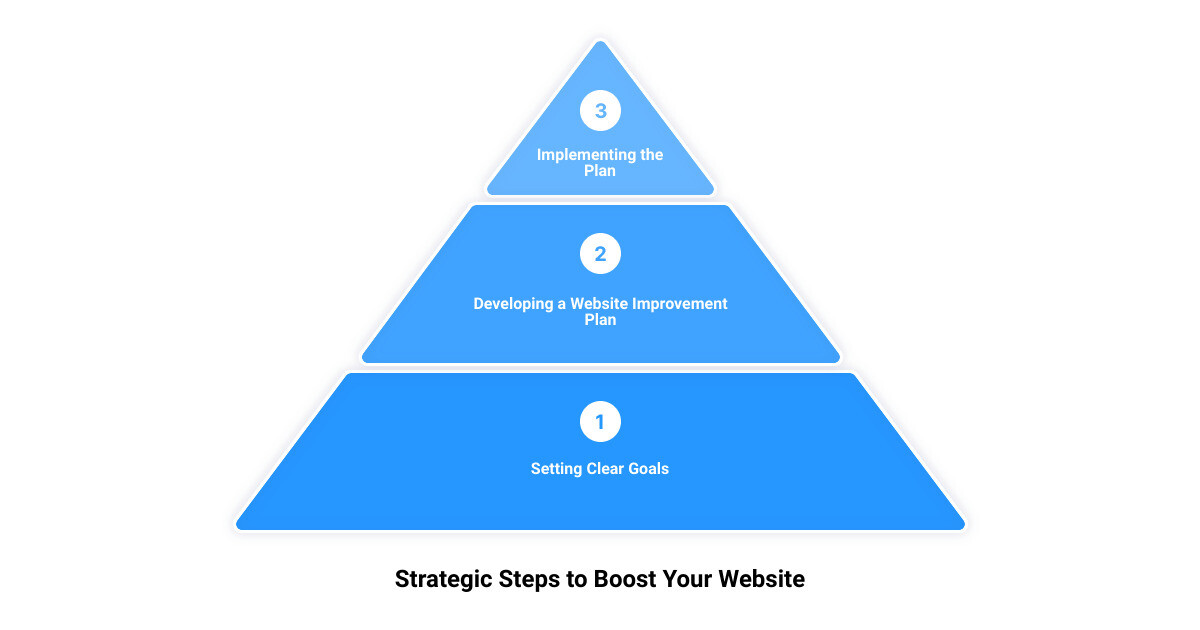
Planning Intentionally: Strategic Steps to Boost Your Website
In the digital realm, intentional planning is a key ingredient to success. A well-thought-out strategy not only gives direction but also sets the stage for measurable growth. This is particularly true for website enhancement where every tweak and modification should serve a clear purpose.
Setting Clear Goals for Your Website
In order to plan effectively, first, set clear and measurable goals for your website. Ask yourself, what do you want to achieve? Are you aiming to generate more leads, boost sales, enhance user experience, or increase your site’s visibility through SEO? Your answer will act as the cornerstone upon which all subsequent strategies will be built.
Each goal should be SMART – Specific, Measurable, Achievable, Relevant, and Time-bound. For instance, instead of aiming to ‘increase traffic’, your goal could be to ‘increase website traffic by 20% over the next three months’. This gives a clear target to aim for and allows for progress tracking over time.
Developing a Comprehensive Website Improvement Plan
Once you have your goals in place, it’s time to formulate a comprehensive website improvement plan. This plan should outline the steps you need to take to achieve your goals, from content creation and SEO optimization to user interface improvements and responsive design implementation.
One effective strategy is creating a content calendar. A content calendar ensures a consistent flow of fresh content, keeping your audience engaged and improving SEO. Regularly updating blog posts, adding new products or services, and sharing customer success stories are all ways to keep your content dynamic and relevant.
Moreover, your plan should include a strategy for optimizing business listings. Platforms like Google My Business can boost your local SEO efforts and attract more visitors. Making sure your profile is complete, up-to-date, and optimized with relevant keywords can significantly enhance your online visibility.
Lastly, leverage the power of email newsletters and paid advertising to drive targeted traffic to your site. These tactics can keep your brand at the forefront of your customers’ minds and expand your reach to new audiences.
In conclusion, intentional planning involves setting clear goals and developing a comprehensive improvement plan that caters to your unique objectives. By doing so, you set your website up for a performance boost that leads to improved site engagement and business growth. Up next, we delve into the importance of consistency and organization in creating a user-friendly website.
Consistency and Organization: Key Elements for a User-Friendly Website
As we navigate through the digital world, you might have noticed how you gravitate towards websites that feel familiar and easy to use. This is no coincidence. Two pivotal elements that contribute to a user-friendly website are consistency and organization. These elements not only enhance the user experience but also help to establish your brand identity and boost your SEO performance. Let’s delve deeper.
Maintaining Consistency in Design and Content
Imagine entering a brick-and-mortar store where products are randomly placed, with no semblance of order or categorization. It would be difficult, wouldn’t it? Similarly, inconsistency in a website’s design and content can leave users feeling lost and frustrated.
Consistency means making everything match – from heading sizes, font choices, colouring, button styles, to design elements, and photo choices. All aspects should follow a uniform theme to provide a coherent experience across all pages. As a small business owner in Cardiff, when your potential customers land on your website, they should immediately identify your brand’s unique style and personality.
Not only does consistency enhance user experience, but it also builds trust. When users navigate through your website and find a uniform layout and design, they feel more assured of the quality of your products or services. Remember, inconsistencies in design can inadvertently lower the perceived quality of your offerings.
Organizing Your Website for Easy Navigation
A key aspect of a user-friendly website is its navigability. A well-structured, organized website enables users to find the information they need quickly and effortlessly. This involves having a clear, intuitive navigation menu, properly categorized content, and a clean, clutter-free layout.
Pay attention to your website’s information architecture. This includes the organization of content, the site navigation structure, and the methods used to label and categorize information. A well-organized website not only enhances user engagement but also improves your website’s crawlability, which is a boon for your SEO efforts.
One effective way to improve navigation is by using clear and descriptive labels for your menus and content categories. Avoid industry jargon or creative, ambiguous terms. Your priority should be on clarity and user-friendliness. Remember, users should be able to reach their desired information within a few clicks.
In conclusion, maintaining consistency in design and content, coupled with a well-organized layout, can significantly enhance your website’s user experience. It not only helps in retaining existing users but also in attracting potential customers. In the following sections, we will discuss more strategies to boost your website’s performance and engagement. Stay tuned!
Responsive Design: Adapting to User Devices for Better Engagement
In today’s digitized world, adapting to user devices is no longer an option—it’s a necessity. From desktops and laptops to smartphones and tablets, your website must provide a seamless experience across all platforms. This is where responsive design steps in, acting as a catalyst to enhance user engagement and, consequently, improve site performance.
Importance of Mobile-Friendly Design
Did you know that 9 out of 10 people access the internet from a mobile device? With such a massive shift toward mobile browsing, having a mobile-unfriendly website is like having a shop that’s closed for business most of the day.
Google, the world’s leading search engine, has acknowledged this change in user behaviour and prioritizes mobile-friendly sites in search rankings. Hence, ignoring mobile optimization can lead to reduced visibility, fewer visitors, and a decline in engagement. On the flip side, a mobile-friendly website not only offers a better user experience but also increases your website’s dwell time, a key metric Google considers when determining search rankings.
Moreover, a mobile-optimized site is more likely to gain social shares, amplifying your online presence and visibility. So, if you want to improve your site and boost engagement, embracing a mobile-first approach is crucial.
Implementing Responsive Design Practices
Thankfully, embracing responsive design doesn’t require you to be a tech whizz. Many Content Management Systems (CMS) offer mobile-optimized templates that can help you build a mobile-friendly website with ease. They ensure your website is clean, easy to navigate, and operates seamlessly on all devices.
However, just passing Google’s Mobile-Friendly Test doesn’t guarantee an excellent mobile user experience. You also need to consider factors such as loading speed. Remember, a slow-loading site can frustrate users and increase your bounce rate.
It’s also crucial to test your website’s mobile functionality using different devices and browsers to ensure all features work properly. Pay attention to factors like navigation ease, content clarity, and loading speed. And don’t forget about touch-screen friendliness—ensure clickable elements are not too close together, as it could hamper user experience.
In conclusion, optimizing your website for mobile users is a crucial step to improve site engagement. It not only enhances the user experience but also boosts your search engine visibility. By prioritizing responsive design, you can effectively reach a broader audience, thereby improving your website’s overall performance and engagement.
Frequent Testing: Ensuring Optimal Website Performance
Picture yourself as a ship’s captain sailing through the digital ocean. To ensure a smooth voyage, you need the right tools to constantly check the health of your vessel—your website. Frequent testing is the compass that guides your journey, helping you navigate potential pitfalls and improve your site engagement.
Regular Website Performance Checks
In the realm of the digital world, information is power. Knowing how your website performs in real-time helps you make informed decisions. Enter Google Analytics. This free tool catapults you into the driver’s seat by providing insights into how users interact with your site. It reveals which pages perform well, where your traffic comes from, and much more. These insights can be used to refine your SEO strategies and improve user experience.
In a similar vein, Google Search Console helps you understand how Google perceives your site. It gives you a glimpse of your site’s overall health and can alert you to any issues that might affect your rankings. It also allows you to submit sitemaps, making it easier for Google to crawl and index your pages.
Utilizing Website Improvement Checkers
In the ever-evolving digital landscape, staying proactive is paramount. Utilizing website improvement checkers can help you keep your site in top shape. These tools can scan your website for potential issues, such as broken links, slow load times, and SEO problems.
For instance, conducting A/B testing is a proven method to ensure your website is performing at its best. This involves comparing two versions of a web page, ad, or other marketing material to see which performs better. By examining how small changes influence user behaviour, you can refine your strategies and offer a more satisfying user experience. This tactic is particularly useful in reducing your site’s bounce rate, which in turn can boost your search engine rankings.
The key to success is continuous improvement. In the digital world, the only constant is change. Regular performance checks and the use of website improvement tools enable you to stay ahead of the competition, adapt to changes, and ensure that your website offers an engaging and seamless experience to your users. Testing and optimizing are not one-off tasks, but an ongoing process that contributes significantly to improving your site engagement and overall website performance.
Speeding Up Your Page: Enhancing User Experience and SEO
In the digital world, every second counts. A slow-loading website can make your visitors bounce before they even get a chance to engage with your content. But fear not, as there are proven strategies to improve your site speed and give your visitors the fast, seamless experience they expect.
Techniques to Improve Website Loading Speed
Optimizing your website’s speed might seem like a daunting task, but it can be broken down into manageable steps. First and foremost, it’s essential to compress all your images before loading them onto your website. Large image file sizes are one of the leading culprits of slow page speed. Using websites like compressor.io can help you reduce image sizes without compromising on quality, making your webpages load significantly faster.
Another crucial step is leveraging browser caching. When a web browser loads a page, it also loads numerous resources. Browser caching stores these resources locally on users’ devices, so when they navigate to a new page, these resources don’t have to be loaded again, reducing load times substantially. For WordPress users, free plugins like WP SuperCache can simplify this process.
Impact of Page Speed on SEO and User Engagement
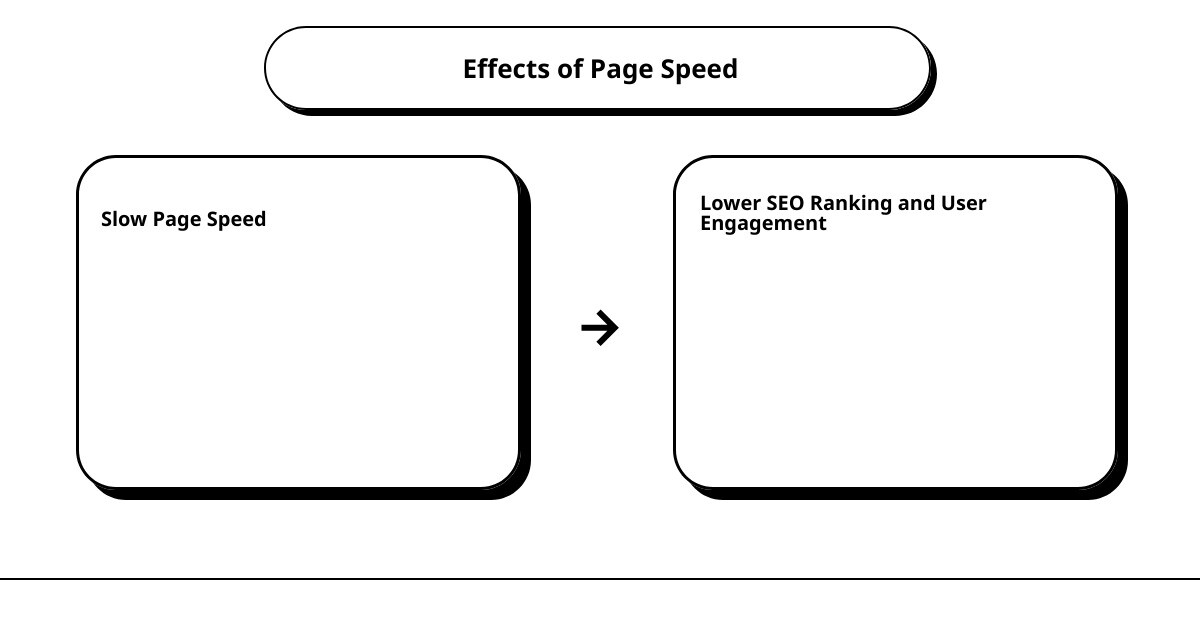
But why is page speed so crucial? Well, the answer lies in its significant impact on both SEO and user engagement. According to Section.io, an extra five seconds of page load time can increase your website’s bounce rate by more than 20%. High bounce rates can negatively impact your site’s SEO, as Google interprets a high bounce rate as a sign that your website is not providing valuable content to visitors.
Furthermore, slow page speed is an interrupting experience for the user, leading to frustration and a lack of time to wait for your content to load. This diminishes user engagement, as visitors are less likely to interact with your content, share it, or return to your website in the future.
Google has recognized the importance of page speed and has made it a notable ranking factor. Therefore, optimizing your page speed is not just beneficial for your users, but also essential for your website’s visibility in search engine results.
In conclusion, by implementing these techniques to improve page speed, you not only enhance the user experience but also boost your website’s SEO and overall performance. It’s a win-win situation that can significantly improve site engagement.
High-Quality Content: Captivating Your Audience
In the digital landscape, the adage “Content is King” reigns supreme. High-quality content is not only the heart of your website but also a powerful magnet that attracts visitors and keeps them engaged. Let’s delve into the art of crafting engaging content and the role of SEO tools in content optimization.
Crafting Engaging and Relevant Content
Creating content that resonates with your audience requires a blend of expertise, understanding of your users’ needs, and a dash of creativity. This process begins with understanding what your potential customers are looking for. Your content should address their queries clearly, concisely, and in an engaging manner, serving as a beacon of knowledge guiding users to the answers they seek.
One of the most effective ways to keep your audience engaged is to create evergreen content. This type of content withstands the test of time, driving traffic to your site year after year. Topics that are always in demand, like “How to Start a Business” or “Top 10 SEO Tips”, are perfect examples of evergreen content. However, it’s essential to keep this content updated regularly with the latest information to ensure it remains accurate and useful.
Adding visuals and videos can significantly enhance user engagement. They break the monotony of text-heavy pages, making your content more digestible. Short-form video content such as tutorials, guides, or product information are highly shareable across various social media platforms, driving significant traffic back to your website.
Remember, your headlines are the first thing your visitors see and can make or break their decision to engage with your content. Therefore, ensure your headlines are both intriguing and informative, providing a clear idea of what the content will cover and why it’s worth the reader’s time.
Utilizing SEO Tools for Content Optimization
Crafting high-quality content is just half the battle. The other half lies in optimizing your content for search engines. This is where SEO tools come into play. They help in researching the right keywords, improving the structure of your content, and ensuring readability.
Content clusters can significantly improve your SEO performance. A content cluster consists of a main pillar page covering a broad topic and several cluster pages delving deeper into specific aspects of that topic. This strategy helps demonstrate topical relevance, making it easier for search engines to understand and rank your content.
Remember, Google loves fresh content. Regularly updating your content signals that your website is active, providing current and relevant information to your users. Use SEO tools to identify areas of your content that can be updated or improved.
Finally, optimize your content for featured snippets. These are excerpts of your content that appear at the top of Google’s search results. This can significantly improve your visibility and click-through rates, driving more traffic to your website.
In conclusion, high-quality, engaging content, when combined with effective SEO practices, can significantly improve site engagement, boost your search engine rankings, and increase your online visibility.
Conclusion: The Continuous Journey of Website Improvement
Improving your website isn’t a one-time project but a continuous journey that requires consistent effort and adaptability. As the digital landscape shifts and evolves, so too should your strategies for site improvement. From SEO techniques to high-quality content creation, social media engagement, and more, every facet of your online presence requires ongoing attention and fine-tuning.
SEO isn’t a one-off task, but a constant game of staying ahead of algorithm changes, keeping up with industry trends, and adapting to new SEO best practices. The keywords you target, the backlinks you build, the speed of your website, and its mobile responsiveness are all factors you need to continually monitor and improve.
Content creation goes beyond hitting ‘publish’. Updating your blog posts regularly, producing fresh content, and repurposing existing material are all crucial for maintaining and increasing traffic. Remember, high-quality, engaging content is key to establishing your business as an industry expert and providing value to your audience.
Social media isn’t just about posting updates. It’s about fostering engagement, building communities, and leveraging the influence of industry leaders. Regularly promoting your content on various platforms, interacting with your audience, and running paid ad campaigns can significantly boost your site’s traffic.
Website design isn’t static. It needs to be responsive and mobile-friendly to cater to a variety of user devices. And with Google now penalizing sites that aren’t optimized for mobile devices, having a responsive design is more crucial than ever.
Website performance is another key factor that needs regular check-ups. Utilize tools like Google’s PageSpeed Insights to check and improve your website’s loading speed. After all, a slow-loading website can hamper user experience and deter potential customers.
In conclusion, the road to digital success is always under construction. It requires strategic planning, continuous effort, and a willingness to learn, adapt, and improve. As a small business owner in Cardiff looking to enhance your online presence and outshine the competition, these proven strategies serve as your map. Remember, the journey to website improvement is continuous, but with a strategic approach, the destination is well within reach.
About RD Internet: Your Partner in Boosting Website Performance and Engagement
In the ever-evolving digital landscape, staying competitive demands expertise, creativity, and a relentless focus on user experience. RD Internet, a trusted leader in internet marketing, provides bespoke solutions tailored to your unique needs, helping you navigate the complex world of SEO and elevate your online presence.
RD Internet’s Expertise in SEO and Internet Marketing
RD Internet’s strength lies in its commitment to understanding your business and your audience. They don’t offer one-size-fits-all solutions. Instead, they deliver personalized strategies designed to enhance your visibility, attract high-quality traffic, and drive revenue growth. Their team stays current with the latest SEO trends, employing advanced techniques such as Snippet Bait for Featured Snippets and Broken Link Building Strategy. These methodologies have proven to significantly boost search engine rankings.
In addition to their SEO prowess, RD Internet also excels in other vital aspects of digital marketing. From managing your social media presence to designing and implementing highly targeted Google AdWords (PPC) campaigns, they provide a comprehensive solution to elevate your online visibility and engagement.
How RD Internet Can Help Improve Your Site Engagement
Improving site engagement goes beyond mere traffic increase. It involves attracting the right kind of visitors – those who are not only interested in what you offer but are also ready to take action. RD Internet achieves this by optimizing every facet of your digital presence.
Their approach starts with a thorough analysis of your website, identifying areas for improvement and opportunities for growth. They then work on optimizing each piece of content for your target audience, eliminating friction from the user experience, and ensuring your website is not only accessible but also enjoyable to use.
Through continuous performance checks and regular use of website improvement checkers, RD Internet ensures your site remains in optimal condition, providing a smooth and satisfying experience for your users. They also focus on maintaining consistency in design and content, and organizing your website for easy navigation – both crucial factors in boosting user engagement and satisfaction.
RD Internet’s goal is to turn your website into your biggest money-making channel. They’ve helped industry leaders like Openreach elevate their content and improve their website performance, and they’re ready to do the same for your business.
So, if you’re a small business owner in Cardiff looking to boost your website performance and engagement, RD Internet is the partner you need. They’re not just an SEO company; they’re your trusted ally in the digital world, committed to helping your business thrive.
Recent Comments