

Introduction
What is web design and development? It’s the art and science of making websites. Web design focuses on the visual aspect and user experience of a website, meaning it covers how a site looks and how easy it is to use. Web development is about making that design work smoothly through coding and technology.
If you’re a small business owner looking to enhance your online presence, understanding the basics of web design and development can be crucial. It helps not only in creating an attractive website but also in ensuring it functions well, providing your customers with a seamless experience whether they’re browsing on a laptop or a mobile device.
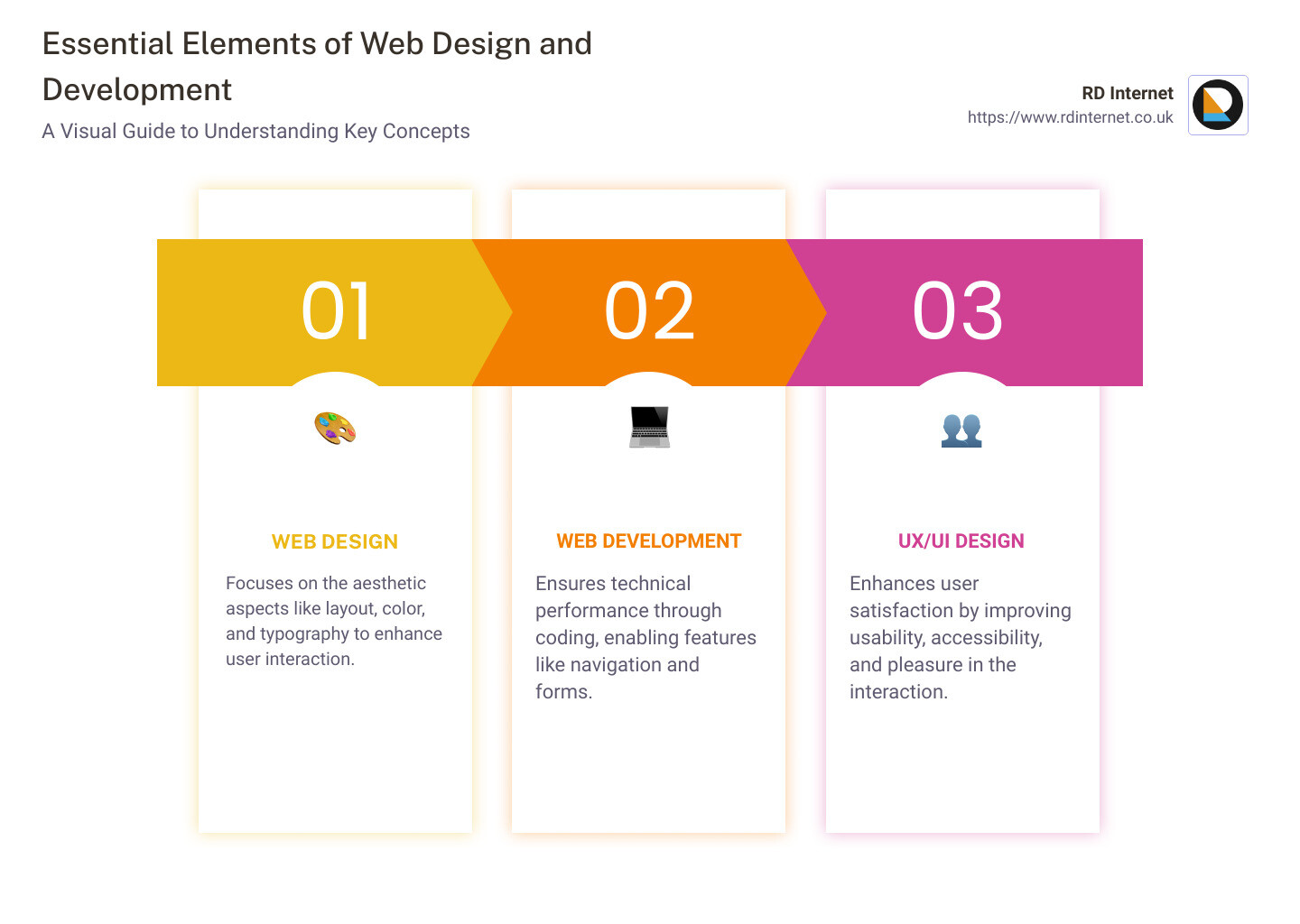
- Web design takes care of the look and feel of your website, utilizing elements like layout, color, and typography to capture the essence of your brand.
- Web development ensures that the website operates efficiently, with solid coding to support features like forms, navigation menus, and shopping carts.
- User experience (UX) is about how visitors interact with your website. A good UX design ensures that visitors find what they need easily and leave satisfied.
- User interface (UI) complements UX by focusing on the presentation and interactivity of the website. It involves designing good interfaces that users find intuitive and straightforward to use.
Understanding these elements can dramatically improve your site’s visibility and effectiveness, helping you stand out in the digital marketplace.
Understanding Web Design and Development
When we talk about what is web design and development, we’re diving into two crucial areas that work hand-in-hand to create functional, attractive websites that engage and retain visitors. Let’s break down these concepts to understand their roles, differences, and how they collaborate to bring digital experiences to life.
Web Design vs. Development
Web design focuses on the look and feel of a website. It encompasses everything that impacts user experience directly through visual elements. Designers choose color schemes, layout, and typography that reflect the brand’s personality and meet the users’ needs. They use tools and software to create engaging designs that promise user-friendly navigation and aesthetic pleasure.
On the other hand, web development takes these designs and turns them into a functioning website. Developers use coding languages like HTML, CSS, and JavaScript to build the structure, implement features, and ensure the site operates smoothly on various devices and browsers. Development is split into two main categories:
– Front-end development deals with what users interact with directly on the website.
– Back-end development focuses on the server-side, dealing with database interactions, user authentication, and server logic.
Visual Appeal
The visual appeal of a website is crucial as it’s often the first thing a visitor notices. Good design can make a site appear more trustworthy and professional. Web designers use principles of design like balance, contrast, and emphasis to create a site that not only looks good but also aligns with the brand’s identity. Effective web design is not just about beauty; it’s about creating a navigable, intuitive interface that enhances the user experience.
Functionality
While design focuses on the visual aspects, functionality is about the practical aspects of the website. Does the site load fast? Is it easy to navigate? Can users accomplish their goals easily? Web developers work to answer these questions positively by writing clean, efficient code and ensuring the site’s architecture supports its function without compromising performance.
Collaboration
Collaboration between designers and developers is vital for a successful website. The process typically starts with designers creating mockups or prototypes of the site. These serve as a blueprint for developers who then code these ideas into reality. Throughout this process, continuous communication is key to ensure that the final product matches the original vision while staying functional and bug-free.
Understanding these core aspects of web design and development helps clarify how websites are built from concept to launch. Both roles are essential, and their effective collaboration ensures that the final website not only looks great but also performs well, providing a seamless user experience that meets modern digital standards. This synergy is crucial for businesses looking to establish a robust online presence in today’s competitive digital landscape.
The Evolution of Web Design and Development
The journey from the first website in 1991 to today’s dynamic digital landscape showcases a dramatic transformation in web design and development. Initially, websites were simple, text-based pages with minimal graphics. However, the first website, created by Tim Berners-Lee, was just the beginning. It served primarily to explain what the World Wide Web was, how to access it, and how to set up a web server. It was a far cry from the interactive and visually engaging websites we see today.
Modern websites are vastly more complex. They integrate multimedia, dynamic content, and real-time communication, catering to the demands of an increasingly sophisticated online audience. The evolution hasn’t just been technological but also conceptual, with the roles involved in web development expanding and diversifying.
The ecosystem of roles within web design and development has become rich and varied. Originally, a single webmaster might handle everything from design to development to maintenance. Now, we see a broad array of specialized roles including UX/UI designers, front-end developers, back-end developers, content strategists, and more. Each role focuses on specific aspects of the website creation process, yet all must collaborate effectively to ensure a cohesive end product.
The skill sets required in this field have also expanded. Early web designers and developers needed a basic understanding of HTML and web server configuration. Today, professionals in the industry must navigate a landscape populated with a wide array of languages and tools including JavaScript, Python, CSS, React, and many others that address various functionalities from the server side to the client side.
This evolution reflects not just technological advancements but also a deeper understanding of user needs and behaviors. As websites have become a critical component of business strategy, the stakes in web design and development have risen. Professionals in the field are expected to continuously update their skills in line with new tools, technologies, and best practices.
In sum, the evolution of web design and development is a testament to the rapid pace of digital innovation. From a single, simple website to a complex ecosystem involving diverse skills and roles, this field continues to evolve, offering endless opportunities for those willing to learn and adapt. As we look to the future, the only constant in web design and development is change, driven by both technological advancement and changing user expectations.
Key Components of Web Design
Layout
The layout of a website is like the blueprint of a building. It’s where everything begins in web design. A well-thought-out layout ensures that the website’s content is arranged in a way that is both visually appealing and functional. Depending on the website’s purpose, the layout can vary dramatically. For example, a news site might have a layout that prioritizes text content, while a photography site would focus on showcasing large images.
Visual Hierarchy
Visual hierarchy is crucial in guiding visitors’ attention to the most important parts of a website. It involves arranging and sizing elements so that the eye naturally flows from one component to another. This can be achieved by using different sizes for headings and text, contrasting colors, or by placing key content in strategic locations. This technique helps users quickly understand what the website is about and what action they are expected to take.
Navigation
Navigation should be intuitive and straightforward. A good navigation system helps users find information quickly without frustration. It often includes a navigation bar, a search box, and sometimes a sidebar. Simplicity in navigation design can significantly enhance the user experience, making it easy for visitors to explore and interact with the site.
Color
The use of color in web design does more than just make the site look attractive; it can also influence mood and user behavior. Colors should align with the brand’s identity and the emotions the website intends to evoke. Consistent use of a color palette across all pages helps to create a cohesive look that reinforces brand recognition.
Graphics
Graphics, including icons, logos, and images, play a significant role in web design. They should complement the website’s color scheme and layout, and effectively communicate the intended message. Graphics should be optimized for fast loading times without sacrificing quality, as they significantly impact the overall user experience.
Speed
Website speed is a critical component. As noted in the research, a delay in page loading can increase bounce rates significantly. Optimizing image sizes, minimizing code, and using fast hosting solutions are all strategies to ensure quick load times. According to a report by Akamai, even a one-second delay can greatly affect user satisfaction.
Accessibility
Accessibility means making sure the website can be used by everyone, including those with disabilities. This includes providing text alternatives for images, ensuring keyboard navigability, and using sufficient color contrast. By prioritizing accessibility, web designers create an inclusive environment, thus reaching a wider audience and improving the site’s SEO.
Each of these components plays a pivotal role in the creation of a successful website. They work together to not only attract visitors but also provide them with a seamless and engaging experience. As the digital landscape evolves, keeping these key elements in mind will help ensure that your website remains effective and popular among users.
The Web Development Process Explained
Web development is a complex process that involves multiple stages and skill sets. It is crucial for creating functional, efficient, and visually appealing websites. Here, we break down the essential components of the web development process: front-end development, back-end development, coding languages, frameworks, and server management.
Front-end Development
Front-end development focuses on what users interact with on the website. It includes everything the users see and interact with directly in their web browsers, from the layout and design to buttons and images. The main goal is to ensure the website is engaging, intuitive, and accessible.
Key technologies used in front-end development are:
– HTML (HyperText Markup Language): the backbone of any website, defining the structure.
– CSS (Cascading Style Sheets): for styling and designing the website.
– JavaScript: adds interactivity to web pages, making them dynamic and engaging.
Front-end developers often use tools like Adobe Photoshop for designing and frameworks like React or Angular to streamline the development process.
Back-end Development
While front-end development is about what users see, back-end development is about the underlying logic and database interactions on the server-side. This part of the development process is focused on how the website functions, data storage, and security.
Back-end developers use programming languages such as:
– PHP: widely used for server-side scripting.
– Python: known for its readability and efficiency.
– Ruby: favored for its elegant syntax.
They also utilize frameworks like Django (Python) and Rails (Ruby) to build robust web applications.
Coding Languages
Coding languages are the building blocks of web development. They are used to create the scripts and applications that run our websites. As mentioned, HTML, CSS, and JavaScript are staples for front-end development, while languages like PHP, Python, and Ruby are common for back-end development.
Frameworks
Frameworks are tools that help developers build applications faster and more efficiently. They provide a structure and set of standards to follow, which can simplify the coding process. Popular frameworks include:
– React (JavaScript framework for building user interfaces)
– Angular (a platform for building mobile and desktop web applications)
– Bootstrap (a framework for developing responsive and mobile-first websites)
Server Management
Server management involves hosting and managing web server operations. It ensures that the server is properly configured, secure, and capable of handling the website’s traffic. Server management tasks include installing software, setting up firewalls, and monitoring traffic loads.
Server-side technologies include:
– Apache and Nginx: Popular web servers known for their stability and efficiency.
– Node.js: Allows developers to use JavaScript on the server.
– MySQL and PostgreSQL: Database systems for storing and retrieving data.
Understanding the roles of both front-end and back-end development, along with the tools and languages used, is crucial for anyone involved in building or managing websites. This knowledge ensures that all parts of the web development process work harmoniously to create secure, functional, and accessible websites.
As we continue to delve deeper into the intricacies of web design and development, it becomes clear how dynamic and interconnected each aspect of this field is. The seamless integration of design and development practices is essential for the creation of digital experiences that users find both useful and delightful.
Types of Web Design
In the realm of what is web design and development, understanding the different types of web design is crucial. Each type serves specific purposes and caters to varying needs, from basic informational websites to complex e-commerce platforms. Here’s a breakdown of the three primary types of web design: Static web design, Dynamic web design, and eCommerce web design.
Static Web Design
Static web design is the simplest form of web design. Websites created with static design are fixed and display the same content for every user. These websites are typically built using HTML and CSS, and they do not require web programming or database design. A static website might be suitable for smaller websites with a limited number of pages and basic functionality.
For example, a local bakery might use a static website to provide information about its location, hours, and menu, as these elements are unlikely to change frequently.
Dynamic Web Design
Dynamic web design is more complex and suitable for websites requiring frequent updates and interactions. These websites use both client-side and server-side scripting to generate content dynamically. Languages like JavaScript, PHP, or ASP.NET are used to modify the content on the webpage in response to user actions or events.
A great example of dynamic web design would be a news portal, where content updates regularly and might include user interaction elements like comments or live feeds.
eCommerce Web Design
eCommerce web design is specialized and tailored for online stores and transactions. This type of design incorporates all functionalities needed to conduct business online, including a product catalog, shopping cart, and checkout process, along with the integration of payment systems.
Amazon is a prime example of an eCommerce website where the design focuses on user experience (UX), encouraging browsing, selection, and purchase of products in a seamless manner.
Each type of web design serves a unique purpose and choosing the right one depends largely on the specific needs and goals of the business or individual. Whether it’s providing static information, engaging with users through dynamic content, or selling products online, understanding these types will help in creating more effective and targeted web experiences.
We’ll explore the integral roles that web designers and developers play in today’s digital world, highlighting how they contribute to creating these varied types of websites.
The Role of Web Designers and Developers in Today’s Digital World
In the digital landscape, the roles of web designers and developers have become crucial in shaping the way we interact with the online world. Their responsibilities vary widely, encompassing everything from the aesthetic appeal to the functional backbone of websites. Here, we’ll break down these roles and their importance in today’s tech-driven environment.
User Experience Design
User Experience (UX) Design is all about making the website pleasant and efficient for users to navigate. UX designers focus on understanding user behaviors and needs, and they design the workflow of the website accordingly. They aim to create a path that is intuitive and leads to a satisfying user experience. This could mean simplifying the checkout process on an eCommerce site or organizing information on a blog to ensure it’s easy to read and interact with.
User Interface Design
User Interface (UI) Design is closely tied to UX but focuses more on the look and feel of the website. UI designers are responsible for designing each screen or page with which a user interacts and ensuring that the UI visually communicates the path that a UX designer has laid out. They decide the color schemes, button shapes, and the layout of any interactive elements. As Paul Rand noted, design is a “problem-solving activity,” and UI designers are vital in solving visual and interactive problems for users.
Front-end Coding
Front-end developers bring the designs to life with HTML, CSS, and JavaScript. They build the visible parts of the website, everything the user interacts with directly. They implement responsive design to ensure the site works well on various devices and screen sizes. This role is a bridge between design and technology, requiring both aesthetic sensitivity and coding skills.
Back-end Coding
Back-end developers work on the server-side of the web. They manage the database and server integration, ensuring that the data the front-end sends to the server is processed correctly and securely. Languages like Ruby, PHP, and Python, along with frameworks such as Ruby on Rails and Django, are commonly used. These developers are crucial for enabling the functionality that front-end developers implement.
Maintenance
Maintaining a website is an ongoing task that involves both designers and developers. They work together to ensure the site adapts to user needs, incorporates new technologies, and remains free from bugs. Regular updates and testing are part of this process, which helps in keeping the website relevant and efficient over time.
Security
Security is a paramount concern in web development. Developers must safeguard websites against threats like data breaches and cyber attacks. This involves implementing secure coding practices, using updated software, and regularly checking for vulnerabilities. A secure website builds trust with its users, which is crucial for any online presence.
In summary, web designers and developers play a multifaceted role in today’s digital ecosystem. They not only create visually appealing and functional websites but also ensure that these platforms are secure, maintainable, and optimized for a superior user experience. As the digital landscape evolves, the collaboration between these roles becomes more integrated, highlighting the importance of a cohesive approach to web design and development. This synergy is essential for crafting successful online platforms that meet the dynamic needs of users today.
Frequently Asked Questions about Web Design and Development
What is the difference between web design and development?
Web design and web development are two sides of the same coin, crucial for creating a functional website, but they focus on different aspects of the building process.
-
Web Design: This is about the look and feel of a website. Designers use tools like Adobe Photoshop to create the layout and other visual elements of the site. Their main goal is to ensure the site is visually appealing and offers a great user experience, focusing on aesthetics, user-friendly interfaces, and engaging content.
-
Web Development: This involves taking the designer’s prototypes and turning them into a working website using coding languages. Developers focus on the functionality of the site, using languages like HTML, PHP, and Java to build the structure, create interactive features, and ensure the site operates smoothly on various platforms and devices.
What are the most common coding languages used in web development?
Several coding languages are fundamental in web development, each serving different purposes:
- HTML (HyperText Markup Language): The backbone of any web page, used to create the basic structure and content.
- CSS (Cascading Style Sheets): Used for styling and designing the HTML elements.
- JavaScript: Adds interactivity to web pages, from pop-ups to sliding menus.
- PHP: A server-side scripting language used to create dynamic page content and manage databases.
- Java: Known for its versatility, used in web development to build complex web applications.
These languages are the building blocks for creating websites and applications that are both functional and engaging.
How does responsive web design work?
Responsive web design is a technique used to make websites look good on all devices, whether you’re viewing them on a phone, tablet, laptop, or desktop monitor. The goal is to ensure that elements such as text, images, and layouts automatically adjust to fit the device’s screen size and orientation.
- Fluid Grids: A key feature of responsive design, where page elements are sized in relative units like percentages, rather than absolute units like pixels.
- Flexible Images: Images that resize within their containing elements.
- Media Queries: CSS techniques that allow designers to apply styles based on the device’s characteristics, such as its width, height, or orientation.
This approach to web design ensures that users have a seamless experience across different devices, improving accessibility and user satisfaction.
Moving forward, understanding the intricacies of what is web design and development is crucial for anyone involved in the creation of digital content and platforms. As we delve deeper into the components and processes that make up effective web design and development, it’s clear that the field is both dynamic and critically important in today’s digital age.
Conclusion
As we’ve explored the dynamic and essential field of what is web design and development, it’s evident that this area is not just about creating aesthetically pleasing digital spaces but also about ensuring functional, user-friendly, and accessible platforms. At RD Internet, we are committed to leading the charge in this changing industry, providing top-tier web design and development services that cater to the diverse needs of our clients.
Career Opportunities
The digital landscape is booming, and with it, the demand for skilled web designers and developers continues to soar. Careers in web design and development offer not only versatility and creativity but also stability and a promising future. Whether you’re interested in the artistic aspects of web design or the technical challenges of web development, there’s a place for you in this industry.
Continuous Learning
One of the most exciting aspects of web design and development is the constant evolution of technologies and methodologies. Continuous learning is part of the job. Staying updated with the latest tools, languages, and best practices is crucial. At RD Internet, we emphasize ongoing education and professional development, ensuring that our team is always at the cutting edge, ready to tackle the next challenge.
Industry Demand
As more businesses recognize the importance of having a robust online presence, the demand for professional web design and development services has skyrocketed. This trend is not just a temporary surge but a long-term shift in how businesses operate and engage with their customers. RD Internet is at the forefront, helping businesses navigate this digital transformation effectively.
In conclusion, the field of web design and development is a cornerstone of the modern digital economy. It offers a plethora of opportunities for creative and technical professionals alike. At RD Internet, we are proud to contribute to this vibrant industry, empowering our clients and employees to achieve their digital aspirations. Join us in shaping the future of the digital world, where innovation, design, and technology converge to create magical web experiences.
Recent Comments