

Introduction
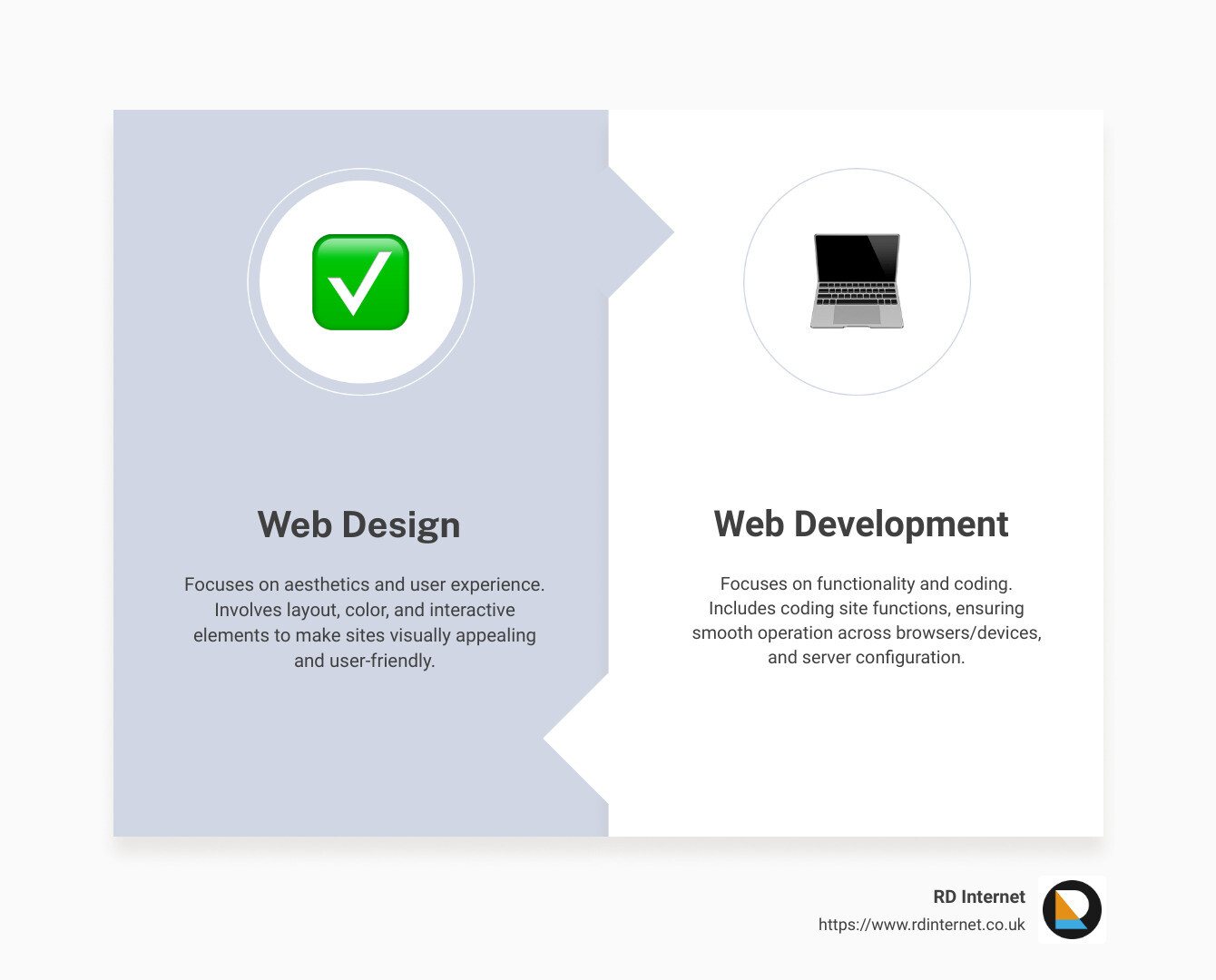
What is the difference between web design and development? Both are crucial for creating effective websites, but they focus on different aspects of the process. Web design is about making the site look good and ensuring it is easy to use. This involves layout, color, and interactive elements. Web development, on the other hand, is about making the site work. This includes coding the site functions and ensuring it operates smoothly across various browsers and devices.
For small business owners in Cardiff looking to boost their online presence, understanding the distinction between web design and development is key. An attractive site (design) that is also functional (development) can significantly enhance user experience, potentially converting more visits into sales.
RD Internet specializes in integrating both web design and development to optimize your digital strategy effectively. We ensure that your business not only looks inviting but performs excellently in an increasingly competitive digital marketplace.
Understanding Web Design
When we talk about web design, we’re focusing on the elements that make websites not only functional but also visually appealing and engaging. This is crucial because the first impression of a website can determine whether a visitor stays or leaves. Here, aesthetics, user experience, and various design elements come into play, making web design a cornerstone of creating successful online spaces.
Aesthetics
The aesthetic aspect of web design involves creating a visually appealing interface. This includes the right choice of colors, typography, and layout that aligns with the brand’s identity and appeals to the target audience. A well-designed website uses aesthetics to enhance its theme, message, and user engagement.
User Experience (UX)
User experience is all about how visitors interact with the website. A good UX design ensures that the website is easy to navigate, intuitive, and accessible to all users, including those with disabilities. It focuses on streamlining the journey from the landing page to the final action, like making a purchase or signing up for a newsletter.
Visual Elements
Visual elements are the graphics, photos, and videos that are used to enhance the look of the website. These elements play a key role in storytelling and can guide users through the site flow while providing necessary information in an engaging way.
Adobe Photoshop and Corel Draw
Tools like Adobe Photoshop and Corel Draw are essential for web designers. They are used to create and edit visual content that makes the site appealing. These tools help designers manipulate images, create graphic overlays, and design elements that are both attractive and in line with the brand’s visual identity.
UI & UX Design
UI design (User Interface design) focuses on the layout and the interactive elements of a website, like buttons and menus. It’s closely tied to UX design as it plays a huge role in the usability of a site. Good UI design helps users accomplish their goals with efficiency and satisfaction.
Color Palettes
Choosing the right color palette is vital as colors not only enhance the visual appeal but also influence how a brand is perceived. Colors can evoke emotions, communicate messages, and even affect conversion rates. Web designers use color theory to choose colors that align with the brand’s identity and goals.
Brand Imagery
Brand imagery involves all the visual elements that represent the brand’s identity. This includes logos, favicons, typographic details, and image styles. These elements should be consistent across all pages to strengthen brand recognition and convey the brand’s values effectively.
In conclusion, web design is a critical aspect of creating a website that is not only pleasing to look at but also easy to use and effective in meeting the goals of both the business and its users. At RD Internet, we understand the importance of integrating beautiful design with optimal functionality to ensure your online presence is both inviting and efficient. This seamless integration is what sets apart successful digital strategies in today’s competitive landscape. Moving forward, let’s explore how these design elements come to life through web development.
Exploring Web Development
Web development is the engine under the hood of a website. It’s all about making that beautiful design actually work and perform tasks. Let’s dive into the nuts and bolts of web development, from coding languages to how the back and front ends of a website operate.
Functionality
The main role of web development is to ensure that a website functions properly. This includes everything from loading speed to user interactions like clicking buttons or submitting forms. A functional website can process data, execute server-side scripts, and display content dynamically.
Coding: The Building Blocks
Coding is the backbone of web development. Developers use various programming languages to create and maintain websites. Here are some of the key languages:
- HTML (HyperText Markup Language): The skeleton of all web pages, HTML is used to structure content on the web.
- JavaScript: This language makes websites interactive. It allows developers to add dynamic elements to the static HTML.
- PHP (Hypertext Preprocessor): A server-side scripting language used to create dynamic web pages that interact with databases.
- Python: Known for its readability and efficiency, Python is often used for backend web development to handle data and server configurations.

Front-end Development
Front-end development focuses on what users see on their screens. Front-end developers use HTML, CSS, and JavaScript to build the visual and interactive aspects of a website. They take the design mockups and turn them into a functioning website that looks good on all devices.
Back-end Development
While the front-end is what users interact with, the back-end is where the data processing happens. Back-end developers work with server-side languages like PHP, Python, and databases to ensure that the server, the application, and the database run smoothly together. They handle data storage, security, and data retrieval mechanisms.
Databases
Databases are crucial for storing, retrieving, managing, and processing data. Web developers often work with databases like MySQL, MongoDB, or PostgreSQL to handle data across various applications.
Server Configuration
Lastly, server configuration is an essential part of web development. Developers need to set up and maintain the infrastructure that hosts the website. This includes managing the servers, configuring network security, and ensuring that the website can handle traffic without crashing.
Web development is a field that requires a deep understanding of both technical skills and creative problem-solving. At RD Internet, we ensure that our web development practices are top-notch, integrating seamlessly with the design to create websites that are not only visually appealing but also robust and functional.
Moving forward, let’s discuss the Key Differences Between Design and Development to better understand how these roles complement each other in creating successful websites.
Key Differences Between Design and Development
When exploring web creation, understand the distinct roles that web design and web development play. Each discipline brings unique skills and perspectives to the table, shaping the way websites look and function. Here, we break down the primary differences between these two critical areas.
Visual vs. Functional
- Web Design: Focuses on the visual aspects of a website. Designers are concerned with how a site looks and how users interact with it visually. This includes everything from color schemes and typography to layout and overall aesthetic appeal.
- Web Development: Centers on the functional aspects of a website. Developers take the designer’s visions and turn them into a fully functioning site. This involves writing code and creating the site’s architecture to ensure it operates smoothly and meets the intended user needs.
Mockups vs. Coding
- Web Design: Designers use tools like Adobe Photoshop and Sketch to create mockups—these are the initial visual representations of a website’s design. These mockups are crucial for visualizing the end product.
- Web Development: Developers take these mockups and translate them into live, functional websites using coding languages such as HTML, CSS, and JavaScript. This step is where the design comes to life and becomes usable.
Creativity vs. Technicality
- Web Design: Highly creative, focusing on user experience and visual communication. Designers must think about how a site feels to a visitor and how effectively it communicates the brand’s message visually.
- Web Development: Highly technical, requiring a deep understanding of programming languages and software development principles. Developers must solve complex problems related to site functionality and performance.
Design Tools vs. Programming Languages
- Web Design: Designers utilize a variety of graphic design software and tools to create compelling visuals. Common tools include Adobe Illustrator, Photoshop, and web design frameworks that help in crafting the user interfaces.
- Web Development: Developers use programming languages and frameworks to build the backend and frontend of websites. Tools and languages commonly used include Python, Java, Ruby on Rails, and JavaScript frameworks like React and Angular.
User Interface vs. Server-side
- Web Design: Primarily focused on the user interface (UI) and user experience (UX) design. Designers ensure that the website is intuitive, accessible, and engaging from the user’s perspective.
- Web Development: While front-end development deals with what users interact with, back-end development focuses on the server-side of the application. This includes server and database management, API integration, and ensuring that user data is processed and stored securely.
Understanding these differences highlights how web design and development work in tandem. While designers craft the visual and interactive experience, developers build the underlying systems that make the website functional. At RD Internet, we value the seamless integration of both to deliver websites that are not only striking but also robust and user-friendly. Moving forward, let’s delve into how collaboration between designers and developers enhances web creation.
Bridging the Gap: Collaboration in Web Creation
In the web creation process, effective teamwork between web designers and developers is crucial. Here’s a closer look at how collaboration fosters the creation of successful websites.
Teamwork
The magic of a great website happens when designers and developers work closely together. Designers bring the visual and usability aspects, while developers focus on making these designs functional. At RD Internet, we encourage regular team meetings and open communication channels to ensure everyone is aligned with the project goals.
Designer-Developer Workflow
The workflow between designers and developers can often determine the success of a web project. Designers start with mockups and prototypes using tools like Adobe XD or Sketch. Once these are approved, developers step in to turn these designs into live, functional websites using coding languages such as HTML, CSS, and JavaScript. Tools like GitHub and Jira are essential in this phase, helping track progress and manage code changes efficiently.
Communication
Clear communication is the backbone of successful web projects. Designers and developers need to discuss and understand each other’s constraints and requirements. Regular updates, feedback sessions, and brainstorming meetings help prevent misunderstandings and ensure that both sides can effectively address challenges.
Project Management
Project management tools play a pivotal role in bridging the gap between web design and development. Using platforms like Jira or Trello, project managers can assign tasks, set deadlines, and monitor project progress in real-time. This helps in ensuring that the project stays on track and meets the set timelines and budgets.
Agile Systems Analysis
Adopting an Agile approach to web development promotes flexibility and iterative progress through regular sprints and reviews. This methodology allows both designers and developers to adapt quickly to changes and continuously improve the product based on real user feedback.
GitHub
GitHub is more than just a code repository. It facilitates collaboration, allowing developers to merge their code into the main project seamlessly. It also provides designers a way to view progress and understand how their designs are translated into functional elements.
Jira
Jira is instrumental in managing complex web projects. It allows teams to create user stories, prioritize sprint items, and track issues all in one platform. This integration ensures that both designers and developers are aware of the project’s scope and any adjustments that need to be made.
By fostering strong collaboration between web designers and developers, RD Internet ensures that the final product is not only visually appealing but also robust, functional, and user-friendly. This teamwork is essential in turning creative visions into real-world applications that users can interact with effectively. Moving forward, understanding the role of SEO in enhancing a website’s visibility online becomes crucial.
The Role of SEO and Online Visibility
When we talk about what is the difference between web design and development, we must also consider how these elements interact with Search Engine Optimization (SEO) and overall online visibility. Let’s explore the key components that make websites not only functional and beautiful but also optimized for the best performance in search engine results.
Search Engine Optimization (SEO)
SEO is the process of making your website more visible on search engines like Google. It involves using specific keywords, creating quality content, and optimizing your website’s backend and frontend features. For instance:
– Keywords: These are terms that people type into search engines. Both web designers and developers must understand how to incorporate these strategically throughout the site.
– Content Quality: High-quality, relevant content keeps visitors on your site longer, reducing bounce rates and increasing the chances of conversion.
– Site Speed: Developers can optimize code and reduce load times, while designers can ensure images are optimized for quick loading.
Mobile Responsiveness
With more than half of all internet traffic coming from mobile devices, having a mobile-responsive website is no longer optional. Web designers focus on creating layouts that look good on small screens, using responsive design techniques. Developers then implement these designs into functioning code that adapts to various devices, ensuring that navigation and interface elements work seamlessly on any device.
Google Rankings
Your website’s position in Google search results can significantly affect your visibility and traffic. Google uses algorithms that favor websites optimized for fast performance, mobile responsiveness, and high-quality content. Both designers and developers need to work together to meet these criteria, ensuring that the website adheres to SEO best practices and technical SEO requirements.
User Engagement
Engaged users are more likely to convert into customers or followers. Designers play a crucial role in creating an intuitive and enjoyable user experience, which keeps users engaged. Developers ensure that interactive elements of the site function smoothly, supporting the design’s intent without technical glitches.
Content Strategy
A robust content strategy is essential for SEO and involves planning, creating, delivering, and managing content. Content must be valuable and relevant to the audience, encouraging them to engage with the site longer. Both designers and developers must understand the strategy behind content placement and presentation, ensuring it aligns with user needs and behaviors.
By integrating SEO strategies with web design and development, RD Internet ensures that websites are not just visually appealing or functional but also optimized for maximum online visibility. This holistic approach helps businesses attract more visitors, engage users effectively, and achieve higher conversions from their online presence. As we move into discussing potential career paths and industry demands, a deep understanding of both design and development, coupled with SEO knowledge, is crucial for success in the digital space.
Conclusion
As we wrap up our exploration of the differences between web design and development, it’s clear that both fields offer robust career paths and are in high demand. The digital landscape is rapidly evolving, and with it, the need for skilled professionals who can craft compelling, functional websites continues to grow.
Career Paths
Web design and development are fields with depth and diversity in career opportunities. Whether you are drawn to the creative aspects of web design or the technical challenges of web development, there is a pathway that fits your skills and interests. Designers can evolve into senior creative roles, overseeing entire brand aesthetics or diving deep into user experience design. Developers have pathways that can lead to specialized areas such as front-end, back-end, or full-stack development, and even into project management or systems architecture.
Industry Demand
The demand for skilled designers and developers is underscored by the continuous growth of e-commerce and an increasing reliance on mobile technology. With the U.S. Bureau of Labor Statistics projecting a growth of 13% in the field of web development from 2018 to 2028, the opportunities are abundant. This is much faster than the average for all other occupations, highlighting the critical need for professionals in this space.
RD Internet’s Role in Enhancing Online Presence
At RD Internet, we understand the importance of integrating both design and development in creating successful web solutions. Our approach ensures that websites are not only visually appealing but also robust, functional, and optimized for search engines. This comprehensive strategy helps businesses enhance their online presence, ensuring they are not only seen but also able to effectively engage and convert their audience.
In conclusion, whether you aim to become a web designer or a web developer, the future is bright. The key to success lies in continuous learning and adapting to new technologies and trends. At RD Internet, we are committed to guiding and supporting aspiring professionals and businesses alike, ensuring they thrive in the digital ecosystem. Join us in shaping the future of the web.
Recent Comments