

Web Design Apprenticeships in Wales: Getting Started
If you’re looking to jumpstart a career in web design while living in Wales, web design apprenticeships wales offer a fantastic way to gain practical experience and earn while you learn. Let’s dive right in.
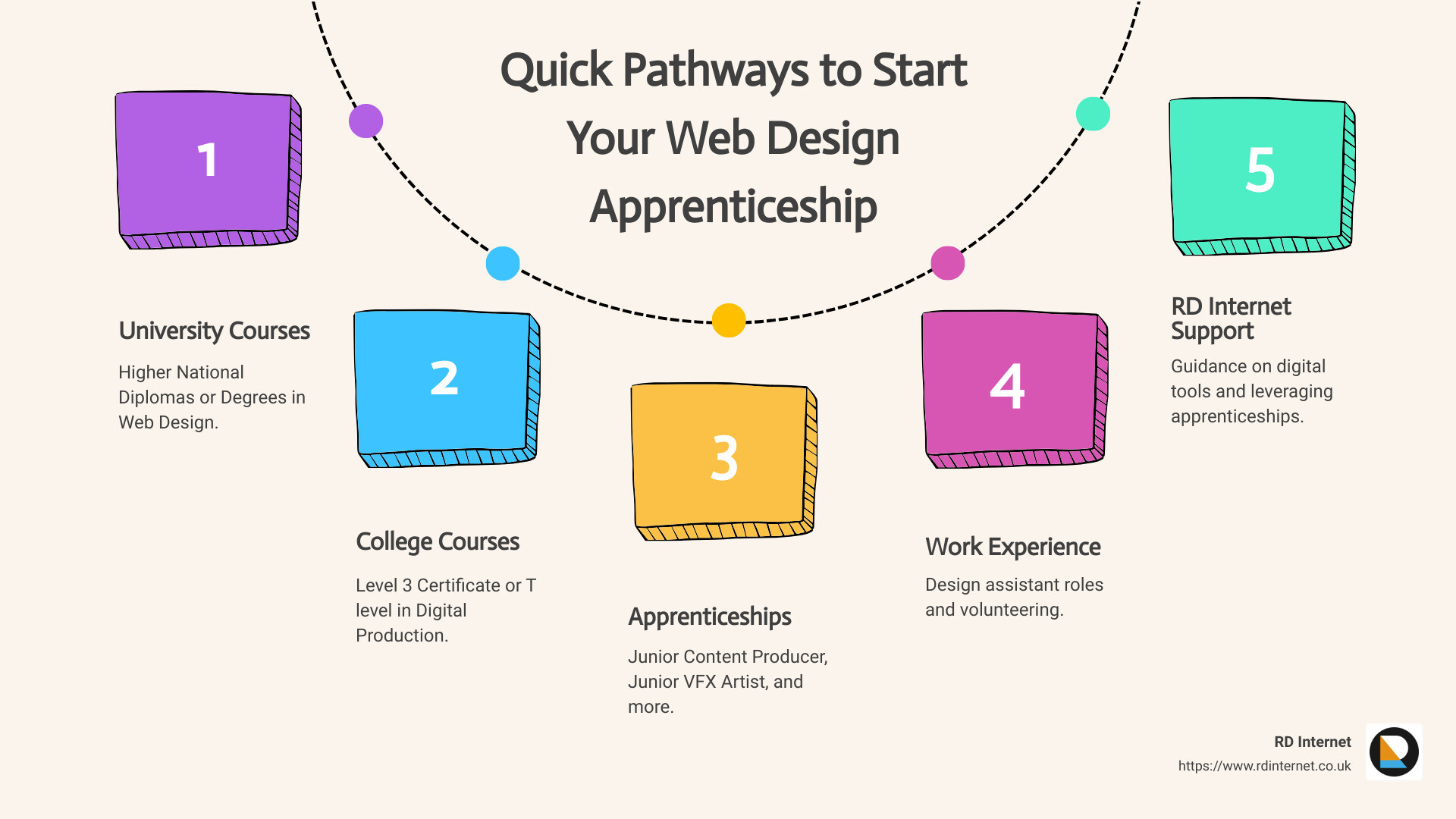
Quick Pathways to Start Your Web Design Apprenticeship
- University Courses: Higher National Diplomas or Degrees in Web Design.
- College Courses: Level 3 Certificate or T level in Digital Production.
- Apprenticeships: Junior Content Producer, Junior VFX Artist, and more.
- Work Experience: Design assistant roles and volunteering.
RD Internet is here to help small business owners like you harness the power of digital tools to lift your online presence. Whether it’s mastering web design or leveraging apprenticeships, we’re committed to guiding your path.
Basic web design apprenticeships wales terms:
– freelance web designer south wales
– business web design north wales
– web design and hosting wales
What is a Web Design Apprenticeship?
A web design apprenticeship is a hands-on training program that allows you to learn web design skills while working. You get to combine practical experience with theoretical knowledge, making it a great way to start a career in web design without needing a university degree.
Types of Web Design Apprenticeships
There are several types of web design apprenticeships available, each catering to different aspects of digital design:
- Level 3 Junior Content Producer: Focuses on creating engaging content for websites, including text, images, and videos.
- Level 3 Junior VFX Artist (Generalist): Specializes in visual effects, perfect for those interested in adding dynamic elements to web pages.
- Creative Digital Design Degree Apprenticeship: Offers a comprehensive curriculum covering various aspects of digital design, including web design.
- Digital and Technology Solutions Professional Degree Apprenticeship: Provides advanced training in digital technologies and solutions, ideal for those looking to dig deeper into technical aspects.
Benefits of a Web Design Apprenticeship
Hands-on Experience: One of the biggest advantages of an apprenticeship is the opportunity to gain real-world experience. You’ll work on actual projects, which will help you build a strong portfolio.
Earn While You Learn: Unlike traditional education routes, apprenticeships allow you to earn a salary while you learn. This can make it easier to support yourself financially during your training.
Industry Connections: Working alongside professionals in the field helps you build a network of industry contacts. These connections can be invaluable when you’re looking for job opportunities later on.
Career Progression: Completing an apprenticeship can open doors to various career paths. You could move into design team management, become a web content manager, or even start your own web design business.

RD Internet is committed to helping you steer web design apprenticeships. Whether you’re just starting out or looking to expand your skills, we provide the guidance you need to succeed.
Ready to Get Started?
Stay tuned as we explore the qualifications you need and how to apply for web design apprenticeships wales in the next section.
How to Qualify for a Web Design Apprenticeship in Wales
Educational Requirements
To qualify for a web design apprenticeship in Wales, you’ll need to meet certain educational requirements. These can vary depending on the level and type of apprenticeship you’re aiming for.
Level 3 Apprenticeships: For Level 3 apprenticeships such as the Junior Content Producer or Junior VFX Artist, you’ll typically need 4 or 5 GCSEs at grades 9 to 4 (A* to C), including English and Maths.
Level 4 and Higher Apprenticeships: For more advanced apprenticeships like the Creative Digital Design Degree Apprenticeship or the Digital and Technology Solutions Professional Degree Apprenticeship, you’ll usually need A-Levels or equivalent qualifications. Specifically, 1 or 2 A-Levels for a higher national diploma, and 2 to 3 A-Levels for a degree.
College Courses: Alternatively, you can take college courses to build your skills. Options include:
– Level 3 Certificate in Web Design and Development
– T Level in Digital Production, Design and Development
– Level 4 Certificate in Digital Media Design
These courses often require similar GCSE and A-Level qualifications.
Skills and Knowledge Needed
To thrive in a web design apprenticeship, you’ll need a combination of technical skills and personal attributes.
Technical Skills:
– Knowledge of Computer Operating Systems, Hardware, and Software: Understanding how these systems work is crucial for web design.
– Programming Skills: You’ll need to know how to write computer programs. Languages like HTML, CSS, and JavaScript are commonly used.
– Design Software Proficiency: Familiarity with tools such as Adobe XD, Figma, and Sketch can be beneficial.
Personal Attributes:
– Attention to Detail: Small mistakes can have big impacts in web design, so being thorough is essential.
– Analytical Thinking: You’ll need to solve complex problems and think critically about design choices.
– Persistence and Determination: Web design can be challenging, so resilience is key.
– Flexibility: The tech world is always changing, so being adaptable is important.
Relevant Experience:
– Volunteering: Building a portfolio by creating websites for local community groups or charities can be a great way to gain experience.
– Online Courses and Webinars: Staying updated with the latest trends and software through free online resources is highly recommended.
RD Internet is committed to supporting you through every step of your journey into web design. Whether you’re meeting educational requirements or building essential skills, we provide the resources you need to qualify for web design apprenticeships wales.
Next, we’ll dive into the application process and how to find apprenticeship opportunities.
How to Apply for a Web Design Apprenticeship in Wales
Finding Apprenticeship Opportunities
Finding the right web design apprenticeships in Wales can seem daunting, but there are several effective ways to locate opportunities:
Job Boards: Websites like gov.uk and Indeed often list apprenticeship vacancies. Regularly check these platforms to stay updated.
Company Websites: Many companies advertise apprenticeship roles directly on their websites. Check the careers section of businesses known for hiring web designers.
Networking: Use your connections. Attend industry events, join web design forums, and connect with professionals on LinkedIn. Networking can open doors to hidden opportunities.
RD Internet: As a leading company in web design, RD Internet offers various apprenticeship programs. Keep an eye on their careers page for the latest openings.
Preparing Your Application
Once you’ve found an apprenticeship that interests you, it’s time to prepare a strong application. Here’s how:
Resume: Your resume should be clear and concise. Highlight your relevant skills and experiences. Include any volunteer work, online courses, or projects that showcase your web design abilities.
Cover Letter: Tailor your cover letter to each application. Explain why you’re interested in the apprenticeship and how your skills make you a good fit. Mention any specific projects or experiences that demonstrate your capabilities.
Portfolio: A strong portfolio is crucial for web design roles. Include examples of your work, such as websites you’ve designed or projects you’ve contributed to. Make sure to showcase a variety of skills and styles.
References: Gather references from teachers, mentors, or previous employers who can vouch for your skills and work ethic. Having strong references can give you an edge over other candidates.
Interview Tips
If your application is successful, you’ll likely be invited for an interview. Here are some tips to help you prepare:
Research the Company: Understand the company’s mission, values, and recent projects. This shows that you’re genuinely interested and have done your homework.
Practice Common Questions: Be ready to discuss your skills, experiences, and why you want the apprenticeship. Practice answering questions about your portfolio and design choices.
Prepare Questions: Have a few questions ready to ask the interviewer. This demonstrates your interest in the role and helps you learn more about the company and the apprenticeship.
Dress Appropriately: Dress in professional attire, even if the interview is virtual. First impressions matter.
Follow-Up: After the interview, send a thank-you email to express your appreciation for the opportunity. This leaves a positive impression and shows good manners.
RD Internet is here to support you through every step of the application process. Whether you’re crafting your resume, building your portfolio, or preparing for an interview, we provide the resources and guidance you need to succeed.
Next, let’s explore what a typical day looks like for a web design apprentice and the tools you’ll use.
Day-to-Day Responsibilities of a Web Design Apprentice
As a web design apprentice, you’ll be involved in various tasks that help you build your skills and contribute to real projects. Here’s what you can expect:
Site Maintenance
One of your primary responsibilities will be maintaining websites. This includes updating content, fixing bugs, and ensuring the site runs smoothly. Regular maintenance keeps the site user-friendly and functional.
Client Meetings
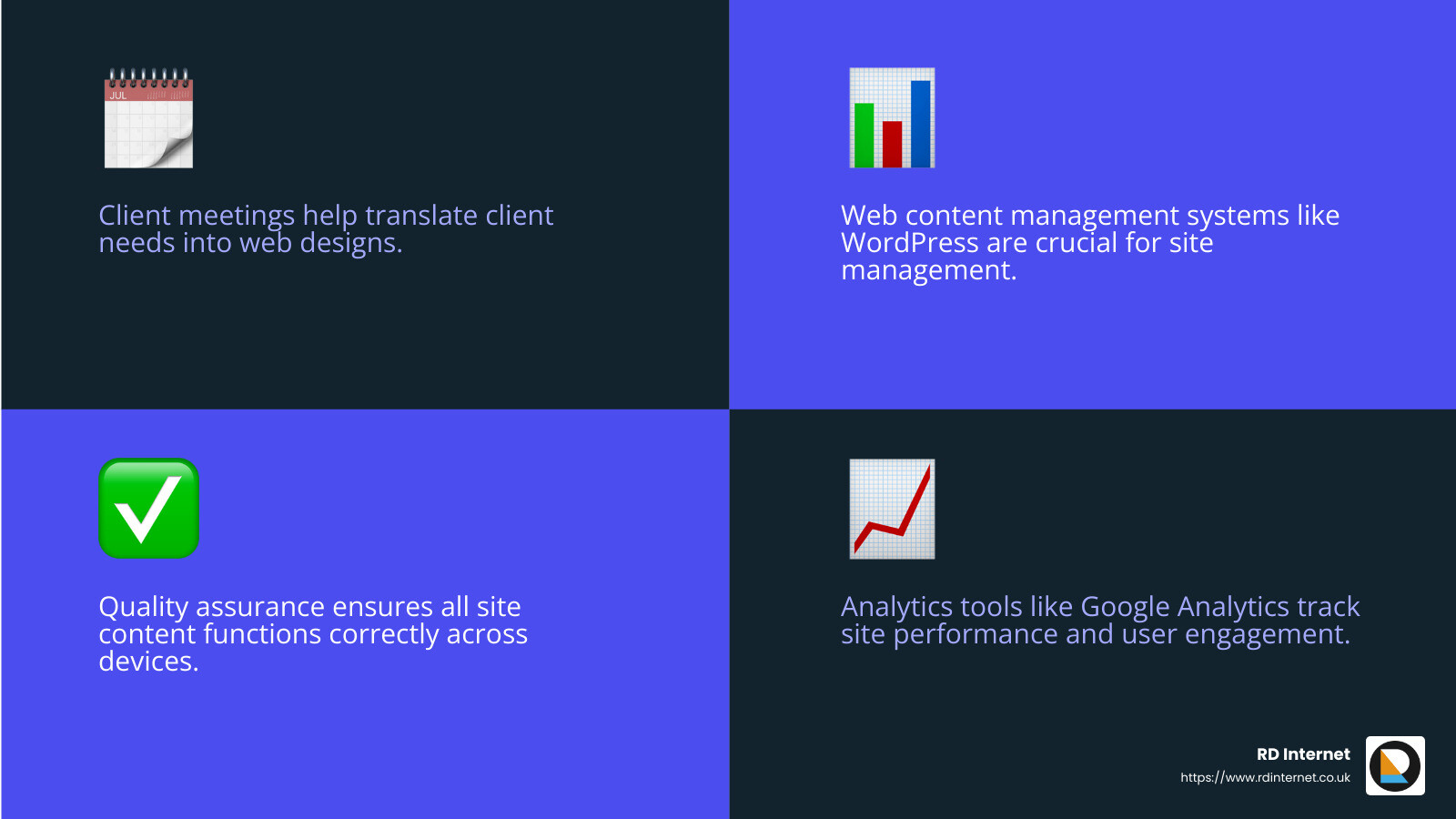
You’ll attend meetings with internal and external clients to plan and develop site content, style, and appearance. This is a great way to understand client needs and translate them into effective web designs.
Content Management Systems (CMS)
You’ll use web content management systems like WordPress, Joomla, or Drupal to manage and update website content. Learning to steer these systems is crucial for efficient site management.
Quality Assurance
Part of your role involves carrying out quality assurance checks on content. This ensures that everything on the site meets the required standards and functions correctly across different devices and browsers.
Reporting
You’ll also be responsible for analyzing website usage statistics and writing reports for senior managers, clients, and partnership organizations. These reports help track the performance of the site and identify areas for improvement.
Tools and Technologies Used
Web Content Management Systems
Systems like WordPress, Joomla, and Drupal will be your go-to tools for managing website content. They allow you to update text, images, and other media easily.
Analytics Tools
Google Analytics and similar tools will help you understand how users interact with the site. You’ll use these tools to track metrics like page views, bounce rates, and user engagement.
Design Software
You’ll work with design software such as Adobe XD, Sketch, and Figma to create design prototypes and wireframes. These tools are essential for visualizing your ideas and presenting them to clients or team members.
Using these tools and technologies, you’ll gain hands-on experience that is invaluable for your future career in web design.
Next, let’s explore the career path and progression opportunities available to web design apprentices.
Career Path and Progression
Long-term Career Opportunities
Starting a web design apprenticeship in Wales opens up several exciting career paths. Here’s what you can look forward to:
Career Advancement
With experience, you can move up from an apprentice to a senior web designer. This role involves more responsibility and often includes mentoring junior designers. You’ll also have more say in project decisions and design strategies.
Design Team Management
If you enjoy leadership, you could aim for a design team manager position. In this role, you’ll oversee a team of designers, coordinate projects, and ensure everything aligns with the client’s vision. Effective management skills are crucial here.
Web Content Manager
Another path is becoming a web content manager. This role focuses on managing the content that appears on websites. You’ll ensure that all content is up-to-date, relevant, and engaging for users. It’s a mix of technical know-how and content strategy.
Freelance Opportunities
Many web designers choose to go freelance. This path offers flexibility and the chance to work on a variety of projects. You’ll be your own boss, setting your rates and choosing your clients. Freelancing can be rewarding, but it also requires good time management and business skills.
Business Management
With enough experience, you might decide to move into business management. This could involve managing a web design agency or taking on a more strategic role within a larger company. Business management roles require a good understanding of both design and business operations.
Starting Your Own Business
For those with an entrepreneurial spirit, starting your own web design business is an option. You’ll have full control over your projects and business direction. This path can be challenging but also highly rewarding if you’re willing to put in the effort.
Expanding Skills
The tech industry is always evolving, so expanding your skills is vital. You could learn new programming languages, explore UX/UI design, or dive into digital marketing. Continuous learning keeps you competitive and opens up new career opportunities.
Web design apprenticeships in Wales offer a solid foundation for a variety of career paths. Whether you want to climb the corporate ladder, manage a team, or start your own business, the skills you gain will be invaluable.
Next, let’s dive into some frequently asked questions about web design apprenticeships in Wales.
Frequently Asked Questions about Web Design Apprenticeships in Wales
Can you do an apprenticeship in Wales?
Yes, you can absolutely do an apprenticeship in Wales. To qualify, you need to be over 16, living in Wales, and not in full-time education. Apprenticeships are a fantastic way to earn while you learn, gaining hands-on experience in web design.
What qualifications do I need to be a web designer in the UK?
To become a web designer in the UK, you have several educational pathways:
-
Degree: You could pursue a higher national diploma or a degree in fields like web design and development, multimedia design, or digital media development. Typically, you’ll need 2 to 3 A-Levels or equivalent qualifications.
-
Level 3 Qualifications: Courses such as the Level 3 Certificate in Web Design and Development or a T level in Digital Production, Design, and Development are great starting points. These usually require 4 to 5 GCSEs at grades 9 to 4 (A* to C), including English and maths.
-
Apprenticeships: Options include Level 3 Junior Content Producer, Creative Digital Design Degree Apprenticeship, and Digital and Technology Solutions Professional Degree Apprenticeship. These often require 5 GCSEs at grades 9 to 4 (A* to C) and A-Levels for higher or degree apprenticeships.
-
Non-University Training Courses: Many bootcamps and online courses also offer valuable training. These can be a quicker and more flexible way to gain the skills needed for a career in web design.
How can I get into web design with no experience?
Getting into web design with no experience is totally possible. Here are some steps to help you get started:
-
Web Design Bootcamps: These intensive courses offer immersive training in a short period. You’ll learn essential skills and often create a portfolio by the end of the bootcamp.
-
Online Courses: Platforms like Coursera, Udemy, and LinkedIn Learning offer courses in web design, coding, and related fields. These can be a great way to learn at your own pace.
-
Volunteering: Offer to create or update websites for local community groups or charities. This gives you practical experience and something to add to your portfolio.
-
Portfolio Building: Start building a portfolio of your work. Include any projects you’ve done, even if they are personal or volunteer projects. A strong portfolio showcases your skills to potential employers.
By following these steps, you can kickstart your career in web design, even without prior experience.
Conclusion
Web design apprenticeships in Wales offer a fantastic pathway to a rewarding career in a dynamic field. Whether you’re just starting out or looking to switch careers, these apprenticeships provide hands-on experience, industry connections, and the opportunity to earn while you learn.
RD Internet can help you steer this journey. Based in Cardiff, we specialize in SEO and internet marketing, including web design. Our goal is to help businesses improve their search engine rankings and online visibility, ultimately leading to increased revenue. With our expertise, you can gain the skills and knowledge needed to succeed in web design.
Career opportunities in web design are vast. With experience, you could move into design team management, become a web content manager, or even start your own business. Freelance opportunities abound, offering flexibility and the chance to work on diverse projects.
For more information on how we can support your journey in web design, visit our Web Design and Development page.
By choosing a web design apprenticeship in Wales, you’re setting yourself up for a bright future in a high-demand field. We at RD Internet are here to support you every step of the way.
Recent Comments