

If you’re looking for a comprehensive guide on web design and development courses, you’ve come to the right place. Whether starting from scratch or aiming to enhance your skills, this guide highlights a range of courses suitable for beginners and professionals.
Web design and development is an changing field that combines creativity and technical skills to create and maintain websites. It’s crucial for businesses to have an impressive online presence in today’s digital age, especially for small business owners in Cardiff who are striving to stand out and attract more customers. Understanding and leveraging web design can significantly improve your site’s visibility and functionality, attracting more traffic and potentially increasing revenue.
Courses range from basic introductions to HTML, CSS, and JavaScript, to advanced programs focusing on UX design, front-end development, and more specialized skills like using WordPress or Canva for web and mobile-friendly pages. Whether it’s through self-paced online platforms like Coursera and Udemy or interactive, project-based learning, there’s a resource to suit your pace and preferences.
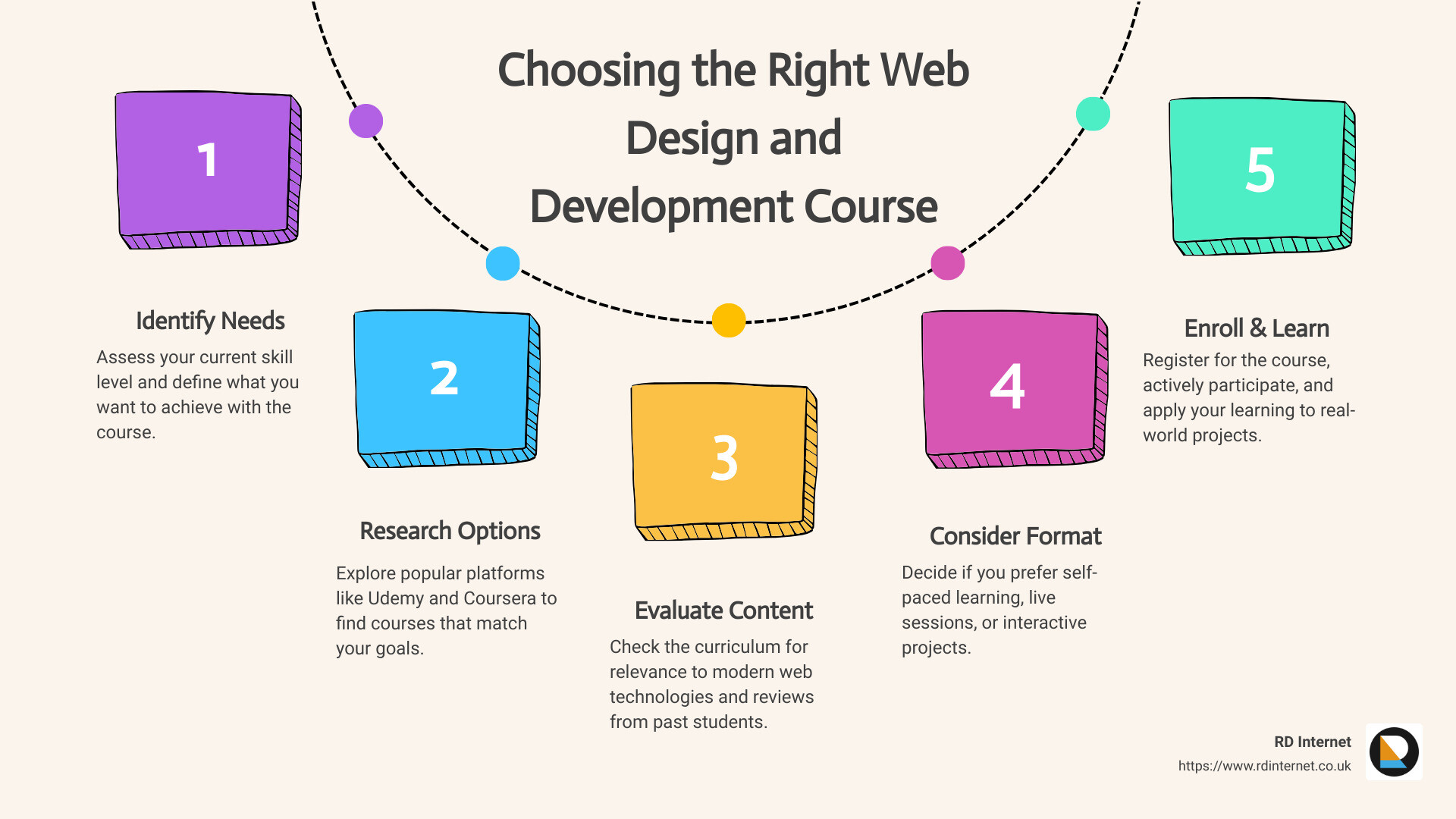
Understanding Web Design and Development
Web design and development is a field that combines creativity with technical skills to build and maintain websites. It is crucial for anyone looking to enter the digital space, whether you’re starting from scratch or aiming to upgrade your skills. Let’s break down the basics: HTML, CSS, and JavaScript.
HTML (HyperText Markup Language)
HTML is the backbone of any web page. It’s used to create the structure of a page—think of it as the skeleton. It organizes content with tags, such as <h1> for main headings, <p> for paragraphs, and <img> for images.
Example:
“`html
This is a Heading
This is a paragraph.
“`
This code results in a web page displaying a heading followed by a paragraph.
CSS (Cascading Style Sheets)
If HTML is the skeleton, CSS is the clothing. It styles the visual presentation of web pages. CSS allows you to set colors, fonts, spacings, and even complex layouts. It works by “selecting” HTML elements and applying styles to them.
Example:
css

p {

    color: blue;

    font-size: 20px;

}
This CSS code will style all <p> elements to have blue text of 20px size.
JavaScript
JavaScript adds interactivity to web pages. It’s what makes web pages dynamic. For instance, JavaScript can be used to create interactive forms, pop-up messages, and even games.
Example:
javascript

document.getElementById("demo").innerHTML = "Hello JavaScript!";
This JavaScript code finds an HTML element with the ID demo and changes its content to “Hello JavaScript!”.
These three technologies form the cornerstone of web development. They are the first step for anyone looking to become a proficient web developer. Through various courses and resources, you can gain a deep understanding of these tools.
Courses like Web Design for Everybody from the University of Michigan provide a comprehensive introduction to these core technologies. They cover the basics of web development and coding, ensuring a strong foundation. Additionally, the course emphasizes building responsive and accessible websites, crucial for a wide audience including those with disabilities.
For those looking to practice and enhance their understanding, platforms like Coursera offer interactive lessons and projects that allow you to apply what you’ve learned in real-world scenarios. By the end of such courses, learners can create well-structured, styled, and interactive web pages.
In summary, understanding the basics of HTML, CSS, and JavaScript is essential for anyone entering the field of web design and development. These technologies are the building blocks of the internet, and mastering them is the first step towards becoming a skilled web developer. With numerous online courses and resources, learning these skills has never been more accessible.
Best Online Platforms for Web Design and Development Courses
When you’re ready to dive into web design and development, choosing the right platform for your education is crucial. Here, we’ll explore some of the best online platforms that offer web design and development courses for all skill levels.
Udemy
Udemy is a popular choice for learners worldwide, offering a vast array of courses across various disciplines, including web development. What makes Udemy stand out is its affordability and the frequency of discounts, making learning accessible to everyone. Courses like “The Complete 2023 Web Development Bootcamp” by Dr. Angela Yu offer comprehensive training for beginners. This course covers everything from HTML and CSS to advanced topics like Web3 development.
Coursera
Partnering with leading universities and companies, Coursera provides professionally curated courses that often include certification. For example, the “Web Design for Everybody” course by the University of Michigan teaches the basics of coding and design, ensuring a solid foundation. Coursera also offers specialization tracks that can lead to full certification, enhancing your resume and professional credibility.
Quora
While not a traditional learning platform, Quora is an invaluable resource for learners. It’s a place to ask questions and receive detailed answers from experienced professionals and fellow learners. This direct line to experts can be particularly helpful when you’re stuck or need advice tailored to your specific situation in web development.
Reddit hosts a variety of communities (subreddits) where you can find resources, course recommendations, and support from other learners. Subreddits like r/web_design are perfect for discovering new trends, tools, and tutorials. It’s also a great platform for feedback on your projects, which is crucial for improvement.
Each of these platforms offers unique benefits, whether it’s the structured learning of Coursera, the vast course options of Udemy, the community support of Reddit, or the Q&A style of Quora. Depending on your learning style and needs, you might find one more suitable than the others. By leveraging these resources, you can build a comprehensive learning path that suits your pace and preferences in the changing field of web design and development.
Continuing your education in this field is not just about learning the basics but also about keeping up with new technologies and methodologies. The next section will delve into the top courses for beginners, setting you on the right path from the start.
Top Courses for Beginners
When starting your journey in web design and development, choosing the right course can set a solid foundation for your future growth. Here are some of the best beginner courses that have helped thousands of students worldwide.
The Web Developer Bootcamp by Colt Steele
- Platform: Udemy
- Focus: HTML5, CSS3
- What You’ll Learn: This course is a comprehensive dive into modern web development, covering both front-end and back-end technologies. You start with the basics of HTML5 and CSS3, learning how to create structured and styled web pages. The course then transitions into advanced topics such as JavaScript, Node.js, and MongoDB, allowing you to build dynamic websites.
Colt Steele, a seasoned developer and instructor, uses real-world examples to teach you how to build several projects from scratch. This hands-on approach not only boosts your confidence but also prepares you for actual job tasks.
Web Design for Everybody by University of Michigan
- Platform: Coursera
- Focus: Basics of Web Development & Coding
- What You’ll Learn: This specialization covers everything you need to create basic web sites and engage with users through interactivity. The University of Michigan’s course emphasizes accessibility and responsive design, ensuring that websites you build can be used by everyone, including those with disabilities.
The course sequence starts from scratch, introducing you to HTML and CSS to structure and style your pages. Later, it introduces JavaScript to add interactivity. This course is perfect for those who want to understand the complete picture of web development.
HTML, CSS, and Javascript for Web Developers by Johns Hopkins University
- Platform: Coursera
- Focus: HTML, CSS, JavaScript
- What You’ll Learn: Offered by Johns Hopkins University, this course is tailored for those who want to learn how to build functional web applications. The instructor, Yaakov Chaikin, breaks down the essentials of HTML, CSS, and JavaScript, teaching you how to integrate these technologies to create responsive and interactive web applications.
What sets this course apart is its practical approach, which includes assignments that challenge you to apply what you’ve learned in real-world scenarios. By the end of this course, you’ll be able to build a fully functional web application that looks great on both desktop and mobile devices.
Each of these courses provides a unique approach to learning web design and development, catering to different learning styles and career goals. Whether you prefer a structured academic approach from top universities or practical, hands-on learning from experienced developers, there’s a course here to meet your needs.
Embracing these foundational courses will not only equip you with the necessary skills but also boost your confidence as you prepare for more advanced studies in web design and development. As you progress, the field is always evolving, and continuous learning will be key to your success.
Advanced Courses for Professionals
As you build on your foundational knowledge, taking your skills to the next level involves diving into more complex and specialized areas of web design and development. These advanced courses are designed for professionals looking to sharpen their expertise and stay ahead in the competitive tech landscape.
Google UX Design by Google
- Focus: User Experience
- Platform: Coursera
- Overview: This course offers an in-depth exploration into user experience design, taught by industry experts at Google. It covers the fundamentals of UX principles, user-centered design, and practical applications in real-world scenarios. You’ll learn how to create intuitive and engaging user interfaces that enhance user satisfaction.
- Why It Stands Out: Google’s reputation for excellence in the tech world makes this course a must-have for professionals aiming to specialize in UX design. The course is project-based, allowing learners to gain hands-on experience by working on projects that can be added to their professional portfolio.
Meta Front-End Developer by Meta
- Focus: Front-End Development
- Platform: Coursera
- Overview: Meta offers this comprehensive course focusing on all aspects of front-end development. It includes HTML, CSS, JavaScript, and React, with a strong emphasis on building responsive and accessible web applications.
- Why It Stands Out: Directly from the tech giant Meta, this course provides insights into industry-standard tools and practices. It’s designed to make you job-ready, equipping you with the skills needed to tackle modern web development challenges effectively.
Graphic Design by California Institute of the Arts
- Focus: Design Principles
- Platform: Coursera
- Overview: This course delves into the core principles of graphic design, including typography, color theory, and layout. It’s ideal for web designers who want to enhance the visual impact of their websites.
- Why It Stands Out: Taught by experienced professionals from the renowned California Institute of the Arts, this course blends theory with practical assignments. Learners gain a deep understanding of how good design influences user engagement and brand perception.
Why Choose These Courses?
These advanced courses are tailored for professionals who are already familiar with the basics of web development and design but wish to specialize further. Each course is structured to provide not only theoretical knowledge but also practical skills through real-world projects and assignments. Whether you’re looking to master user experience design with Google, develop cutting-edge front-end skills with Meta, or understand the intricate details of graphic design with CalArts, these courses offer a pathway to mastering your chosen area of expertise.
Continued Learning
As the digital landscape evolves, so should your skills. These advanced courses represent a significant step towards becoming a leader in the field of web design and development. By committing to continuous learning and staying updated with the latest technologies and practices, you ensure your professional growth and relevance in a industry.
In the next section, we will explore specialized courses that focus on niche skills within web design and development, helping you further tailor your learning path to your career aspirations.
Specialized Courses for Niche Skills
As the digital landscape continues to evolve, it’s crucial to hone specific skills that can set you apart in the web design and development industry. Here, we delve into specialized courses that cater to niche areas, perfect for those looking to expand their expertise in targeted fields.
Build a Full Website using WordPress
Offered by the Coursera Project Network, this course is ideal for beginners and intermediate developers who want to leverage WordPress, the world’s most popular content management system. Throughout the course, you’ll learn how to:
– Set up WordPress and configure basic settings.
– Customize themes and plugins to enhance functionality and aesthetics.
– Implement SEO best practices to increase site visibility.
This hands-on project will not only teach you the ins and outs of WordPress but also allow you to create a fully functional website by the end of the course. It’s a practical approach to learning, highly recommended for those aspiring to become proficient in managing web content.
Get Started with Figma
Figma has revolutionized UI/UX design with its powerful, collaborative interface. This course is tailored for designers looking to master digital product design. Key takeaways include:
– Learning the fundamentals of Figma, from basic tools to advanced features.
– Designing responsive and interactive user interfaces.
– Collaborating in real-time with team members and stakeholders.
Figma not only enhances your design skills but also prepares you to work effectively in modern design environments that demand teamwork and flexibility.
Use Canva to Create Desktop and Mobile-friendly Web Pages
Canva is known for its simplicity and effectiveness in graphic design. This course, available through the Coursera Project Network, focuses on using Canva for web design, particularly in creating designs that are responsive across all devices. You will:
– Explore Canva’s user-friendly interface to design web pages.
– Understand the principles of responsive design to ensure your pages look great on any device.
– Learn to implement design elements that are both functional and visually appealing.
This course is particularly beneficial for marketers, bloggers, and small business owners who aim to create attractive, functional web pages without diving deep into coding.
Each of these courses is designed to provide practical skills and real-world applications, ensuring that you not only learn but also apply your knowledge effectively. Whether you’re looking to build websites, design user interfaces, or create responsive designs, these specialized courses will help you achieve your goals and advance your career in web design and development. Let’s address some common questions about web design and development courses to help clarify any doubts and ensure you choose the best path for your learning journey.
Frequently Asked Questions about Web Design and Development Courses
Is it worth paying for a professional web development course?
Deciding whether to invest in a professional web development course involves considering your personal goals and learning style. The value of such courses often depends on what you aim to achieve. As noted in discussions on platforms like Quora, professional courses are not a one-size-fits-all solution. They provide structured learning and access to updated resources, which can be extremely beneficial for those starting out or looking to specialize further.
However, as some users have pointed out, these courses can sometimes lag behind the very latest technologies due to the time it takes to develop curriculum. It’s crucial to choose courses known for quality content and up-to-date materials, even if they might cover some older topics that can still provide a solid foundation in web development principles.
What is the best path for learning web development?
The best path for learning web development varies from person to person, but generally includes a mix of structured education and self-directed learning. Starting with a foundational course such as Web Design for Everybody by the University of Michigan can give you a solid grounding in the basics of HTML, CSS, and JavaScript. From there, engaging with more specialized courses like Meta Front-End Developer or Google UX Design can help deepen your skills in specific areas.
It’s also beneficial to supplement formal courses with practical experiences, such as building your own projects or contributing to open-source projects. This hands-on practice is invaluable and can help solidify your learning while building your portfolio.
How long does it take to complete a web development course?
The completion time for a web development course can vary widely based on the course’s scope and depth, as well as your own pace of learning. Basic courses might take a few weeks to complete, while more comprehensive programs, like bootcamps, can last several months. For example, a broad course such as the Practical Web Design & Development: 7 Courses in 1 on Udemy covers multiple aspects of web development and might take longer to complete than a course focusing solely on HTML and CSS.
It’s important to set realistic expectations and allocate time for practice beyond just watching videos or reading texts. Real-world application of the skills learned is crucial to truly mastering web development.
As you consider these frequently asked questions, your journey in web design and development might include a combination of different learning methods and courses. What’s most important is choosing a path that aligns with your career goals and learning preferences. Let’s continue exploring how to make the most of these opportunities in the next section.
Conclusion
At RD Internet, we understand that the landscape of web design and development is changing. This is why we emphasize the importance of continuous learning as a core component of your professional journey. Whether you are just starting out or looking to enhance your existing skills, the right web design and development course can significantly impact your career trajectory.
Continuous Learning: The field of web development is dynamic, with new technologies, standards, and practices emerging regularly. To stay relevant and competitive, it’s crucial to keep learning. This doesn’t just apply to beginners but also to seasoned professionals who need to update their skills. Engaging in ongoing education helps you stay on top of trends and meet the changing demands of the tech landscape.
Career Advancement: Investing in your education through comprehensive web design and development courses can open up numerous opportunities for career advancement. By acquiring new skills or honing existing ones, you position yourself as a valuable asset to any team. This can lead to promotions, new job opportunities, and the ability to lead larger, more complex projects.
At RD Internet, we support your growth and career development through resources and guidance that align with industry standards and innovations. By choosing to learn and grow with us, you’re not just gaining skills; you’re building a foundation for a thriving career in a field that shows no signs of slowing down.
Explore further how RD Internet can assist you in achieving your career goals in web design and development on our service page.
The journey of learning and professional growth is continuous. As technologies evolve, so should your skills. Let’s embrace the path of continuous learning together, ensuring that we not only meet the demands of today but are also prepared for the innovations of tomorrow.
Recent Comments