
In the bustling digital marketplace, the importance of organic traffic cannot be overstated. If you’re a small business owner in Cardiff, like most of RD Internet’s clientele, you’ve likely experienced the challenge of staying visible online. You’re competing against countless other businesses, all vying for the attention of potential customers. So, how can you stand out in this crowded space? One of the most effective ways is to build organic traffic to your website.
Organic traffic refers to the visitors that reach your website through unpaid search results. These are individuals who discover your site after using a search engine like Google, not those who arrive via paid ads or direct links. The beauty of organic traffic lies in its ability to boost your website’s visibility and ranking on search engine results pages (SERPs). The higher your website ranks on these pages, the more likely potential customers will click through to your site.
But more than just a numbers game, the value of organic traffic extends to the quality of your visitors. Organic visitors are typically genuinely interested in your business or products, leading to higher conversion rates and a better return on your SEO investment. In essence, strong organic traffic is a powerful tool in increasing your online presence, driving more customers to your business, and ultimately increasing revenue.
While organic traffic can significantly enhance your website’s rank, it’s not a solo player in the game. Search engines use hundreds of different factors to rank websites. Therefore, a comprehensive understanding and strategic application of SEO are crucial to capitalizing on the benefits of organic traffic.
In this article, we will delve deeper into how to build organic traffic to your website, outlining proven strategies and sharing insightful tips. Whether you’re a seasoned digital marketer or just starting out, this guide will equip you with the knowledge and tools to unlock the secrets of driving organic traffic to your website. So, let’s dive in and start building a strong, organic online presence for your business.
Understanding Organic Traffic and Its Benefits
Think of organic traffic as the lifeblood of your online business. Without it, your digital presence may remain invisible in a sea of competitors. But what exactly is organic traffic and why does it pack such a punch in the world of digital marketing?
What is Organic Traffic?
Organic traffic refers to the visitors who land on your website through unpaid search engine results. They’re the ones who stumble upon your site after typing in a keyword relevant to your business into a search engine like Google. Unlike visitors from paid ads or direct links, organic traffic finds your website naturally, making their visit a potentially valuable opportunity for your business.
Why is Organic Traffic Important for Your Website?
The significance of organic traffic is twofold. Firstly, it directly influences your website’s visibility and ranking on search engine results pages (SERPs). The more organic traffic your site attracts, the more favorably search engines view your site, pushing it higher up in the SERPs. This increased visibility can lead to a higher click-through rate, driving more potential customers to your business.
Secondly, organic traffic isn’t just about quantity – it’s about quality too. Organic visitors are usually those who are genuinely interested in your business or products. They’ve actively sought out what you offer, leading to higher conversion rates and better return on your SEO investment. This means that organic traffic can significantly enhance both the quantity and quality of your website visitors.
Organic Traffic vs. Other Types of Website Traffic
While organic traffic plays a solid role in boosting your website’s visibility, it’s just one piece of the traffic puzzle. Websites can also attract direct traffic (visits that come directly by entering the URL in the browser’s search bar), referral traffic (visits that come from links on other websites), and social traffic (visits that originate from social media posts, both organic and paid).
However, the beauty of organic traffic is that it’s free and it can reach people worldwide. It can be targeted and scaled with a strategic content/SEO strategy, and it can build your credibility in your industry. Remember though, organic traffic growth can be slow compared to paid search traffic, and investment in terms of SEO and content creation is required to see meaningful results.
In the next sections, we’ll delve deeper into how SEO drives organic traffic and reveal proven strategies to increase organic traffic to your website. So, let’s move forward and unlock the potential of organic traffic for your business.
How SEO Helps Drive Organic Traffic
In the digital world, visibility is everything. And the key to visibility is Search Engine Optimization (SEO). But what is SEO, really? And more importantly, how does it help drive organic traffic to your website? Let’s dive into these questions and shed some light on the role of SEO in organic traffic.
The Role of SEO in Organic Traffic
SEO is the lighthouse in the vast sea of the Internet, guiding potential customers straight to your website. Like a magnet, it pulls in organic traffic – that is, visitors who come to your site from unpaid search engine results.
The power of SEO lies in its ability to make your website more attractive to search engines like Google. When done correctly, it can significantly improve your website’s visibility on search engine results pages (SERPs), making it easier for potential customers to find you. An impressive 68% of online experiences start with a search engine, and SEO is the key to tapping into this massive pool of potential visitors.
But SEO is not just about making your website more visible; it’s about attracting the right kind of traffic – the kind that’s likely to convert into customers. By targeting the search terms your audience uses on Google, you can reach them the moment they’re looking for something specific.
How Google’s Ranking Algorithm Works
Google’s ranking algorithm is a complex beast that takes into account hundreds of factors to determine the relevance and quality of web pages. It’s important to understand that this algorithm isn’t static; it’s constantly evolving, with Google making regular updates to deliver the most accurate and relevant results to its users.
The algorithm evaluates elements such as the quality of your content, the number of high-quality backlinks pointing to your site, and the technical health of your website. The more you align with these criteria, the higher your site will rank in the SERPs, and the more organic traffic you’ll attract.
Case Studies: Success of SEO Strategies in Increasing Organic Traffic
There are countless examples of businesses leveraging SEO to boost their organic traffic. One case study showed that by implementing a solid SEO strategy, an e-commerce company managed to increase their organic traffic by a remarkable 28% within 12 months.
Another example is a small business in Cardiff that utilized a local SEO strategy to target their specific geographical region. They saw a significant increase in organic traffic, which resulted in a 30% rise in online sales.
These case studies demonstrate the power of SEO in driving organic traffic. But remember, SEO is not a one-time task but a continuous process. It requires regular tracking, tweaking, and a good dose of patience.
In the following sections, we’ll delve into the specific strategies you can use to increase organic traffic to your website. From conducting a technical audit of your website to leveraging the power of long-tail keywords, there’s a lot to uncover. Stay tuned!
Strategies to Increase Organic Traffic to Your Website
Unleashing the potential of your website begins with a clear understanding of how to drive organic traffic effectively. Implementing the right strategies can make your website climb the search engine rankings, ultimately leading to increased visibility and revenue. Let’s delve into these strategies.
Conducting a Technical Audit of Your Website
Before you jump into the depths of SEO, getting a clear picture of your website’s current status is crucial. A technical audit can identify areas of your site that need improvement. This can include the functionality of third-party plugins, your site’s load speed, or how mobile-responsive it is. Remember, a slow-loading or non-responsive website is a traffic repellent. Google values page load speed as a ranking factor and, in the era where most online searches come from mobile devices, a mobile-responsive website is a must.
Keyword Research: The Foundation of Organic Traffic
Strategically placing your target keywords in your content is the first step towards making your site more visible in relevant searches. Instead of targeting broad keywords with high search volumes, focus on long-tail keywords. These are specific phrases that are easier to rank for and bring in the most relevant traffic to your site. Quality trumps quantity when it comes to web traffic.
Content Creation and Optimization: The Key to Attracting Organic Traffic
Now that you have your keywords, it’s time to create and optimize content around them. These keywords should be included in your title tag, H1 heading, at least two H2 headings, naturally in the body, the first 100 words, image file names and alt text, and meta description. Furthermore, make your SERP (Search Engine Results Page) appearance appealing by optimizing your meta description and meta title. Remember, content freshness is a ranking factor, so keep your content up-to-date and relevant.
Building Links: Establishing Authority and Trust
Backlinks are like a vote of confidence in the eyes of search engines. The more high-quality links you have from credible sites with high Domain Authority, the more your website’s Domain Authority increases. This, in turn, improves your rank and drives more traffic. Reach out to authoritative websites and offer valuable content they might want to link to.
Local SEO: Setting Up a Google Business Profile
Finally, don’t forget the power of local SEO. For small businesses in Cardiff, setting up a Google Business Profile can significantly improve your local visibility. It helps your business show up in local search results and on Google Maps, which is a surefire way to drive more organic traffic to your site.
By leveraging these SEO strategies, you’re well on your way to boosting your website’s visibility and attracting more organic traffic. Remember, increasing organic traffic is not a one-time task but a continuous process that requires regular tracking, tweaking, and a good dose of patience. Let’s explore some advanced techniques next.
Advanced Techniques to Boost Organic Traffic
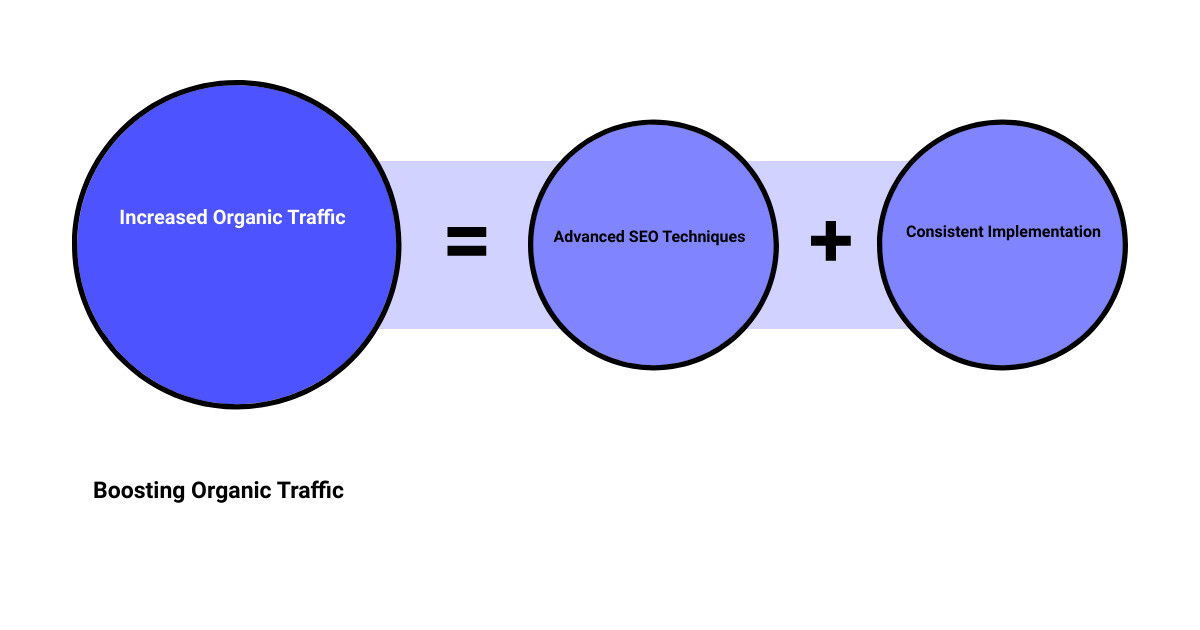
After laying a solid foundation with basic SEO strategies, it’s time to level up your game. This section delves into advanced techniques that can significantly elevate your organic traffic and set you apart from the competition.
Leveraging Long-Tail Keywords
Long-tail keywords are specific phrases that are highly relevant to your niche and have lower search volumes. This makes them easier to rank for compared to broad, highly competitive keywords.
Using long-tail keywords in your content helps you attract a more specific audience. The more specific your audience, the higher the likelihood of conversion. It might be a slower process, but it’s an effective strategy to build steady, quality traffic.
Influencer Marketing: A Powerful Tool for Organic Traffic
Influencer marketing is another potent technique to boost organic traffic. Partnering with a relevant influencer in your industry can expose your brand to a larger audience.
When an influencer shares your content or mentions your brand, their followers will likely visit your website. This not only increases your traffic but also enhances your brand’s credibility and trustworthiness.
On-Page SEO Optimization
On-page SEO optimization is critical for improving your website’s visibility in search results. This includes optimizing your title tags, URLs, and meta descriptions with relevant keywords, structuring your content for featured snippets, and regularly updating your website content.
Remember to strategically place your target keyword in your title tag, H1 heading, at least two H2 headings, naturally in the body, the first 100 words, image file names and alt text, and meta description for maximum impact.
Guest Blogging: A Strategy for Brand Recognition and Traffic
Guest blogging allows you to publish content on other relevant blogs, extending your reach to a wider audience. This not only increases visibility but also drives more traffic to your site as readers are likely to click through to learn more about your brand.
However, ensure that you’re guest blogging on reputable sites that have a higher domain authority than yours for maximum benefit.
Video Content: Engaging Users and Driving Traffic
In a digital world that’s increasingly becoming visual, video content is a powerful tool to engage users and drive traffic.
Creating and sharing high-quality videos related to your niche on platforms like YouTube can help attract and engage new subscribers. Moreover, embedding these videos on your website can increase the time users spend on your site, thus improving your SEO.
Social Media Promotion: Increasing Traffic and Brand Awareness
Active and strategic social media promotion can significantly boost your website traffic. Regularly posting engaging content and participating in relevant discussions can increase your brand visibility, attracting more visitors to your site.
Remember, social media algorithms favour active users, so consistency and engagement are key.
Google’s People Also Ask: A Goldmine for Organic Traffic
Lastly, Google’s “People Also Ask” section is a treasure trove of opportunities. By crafting content that provides clear, concise answers to these commonly asked questions, you can increase the chances of your site being featured in this section, driving more organic traffic to your site.
In conclusion, these advanced techniques, when combined with basic SEO strategies, can significantly enhance your organic traffic, putting you on the path to digital success. Don’t forget, SEO is a long-term game. Consistency, quality, and patience are key to seeing your organic traffic grow.

Monitoring Your Organic Traffic: Tools and Techniques
Just as a gardener monitors the growth of their plants, you need to keep an eye on your website’s organic traffic. By accurately tracking your performance, you can discover what’s working, what isn’t, and adjust your strategies accordingly. Thankfully, there are powerful tools available to make this task a breeze. Let’s delve into three of them: Google Analytics, Google Search Console, and Semrush’s Organic Research Tool.
Google Analytics: Tracking Your Organic Traffic
Described as the Swiss Army knife of website traffic tools, Google Analytics is a must-have in your digital toolbox. It provides a wealth of insights about your website’s performance, from your most popular pages to user demographics. You can track key metrics like the number of page views, sessions, and users, as well as user behaviour such as bounce rate and session duration.
With Google Analytics, you can uncover which topics resonate most with your visitors, where your traffic comes from, and what demographic profiles characterize your audience. This invaluable resource empowers you to enhance what’s working and adjust what isn’t, ultimately driving more targeted traffic to your site.
Google Search Console: Understanding Your Website’s Performance
Google Search Console is another indispensable tool for your website’s organic traffic monitoring and optimization. It provides a wealth of information about how Google views your site, which queries lead people to your site, and how your pages are performing in search results.
Google Search Console helps you ensure your pages are ranking for the keywords you’re targeting and can reveal potential new keywords to add to existing pages or to target in new content. Regularly reviewing your performance in Google Search Console can help you fine-tune your SEO strategy for increased website traffic.
Semrush’s Organic Research Tool: A Comprehensive SEO Tool
Last but not least, Semrush’s Organic Research Tool is a robust tool that allows you to uncover any website’s organic keyword rankings and estimate their organic traffic based on those rankings. This tool enables you to check the organic traffic for any website, not just your own.
You can see how many organic keyword rankings a site holds in the top 100 results on Google and estimate how many monthly visits the keywords bring to the site. It’s a great way to keep an eye on your competitors and adjust your SEO strategy accordingly.
In conclusion, monitoring your organic traffic is vital in the ever-changing digital landscape. Regularly reviewing and acting on the insights these tools provide will help you continually optimize your SEO strategy, ultimately leading to increased visibility, more website traffic, and explosive growth for your small business.
Conclusion: Consistency, Quality, and Patience in Building Organic Traffic
In the ever-evolving digital landscape, unlocking the secrets to building organic traffic to your website requires a delicate balance of consistency, quality, and patience.
Consistency is about regularly updating your website with high-quality content that provides value to your audience. Remember, success in digital marketing isn’t achieved overnight. It requires regular effort and a steady stream of engaging content, whether it’s blog posts, videos, infographics, or podcasts.
Quality is at the heart of attracting and retaining organic traffic. From keyword research, content creation, and link building to on-page SEO optimization, each tactic in your SEO strategy should aim for excellence. For instance, when conducting keyword research, focus on long-tail keywords that are specific to your business. In content creation, prioritize providing value to your audience over simply adding keywords. For link building, aim for high-quality backlinks that establish authority and trust. Similarly, for on-page SEO, ensure that all elements – images, HTML tags, headlines – support your content and are optimized for search engines.
Patience is a virtue in the world of SEO. It takes time for SEO efforts to generate results, but the payoff is worth it. Organic traffic is highly targeted, meaning the users who visit your website have a specific intent and are more likely to convert. So, even though paid advertising may yield immediate results, the long-term benefits of organic traffic cannot be overstated.
In essence, building organic traffic is a marathon, not a sprint. It’s about creating a strategic blend of perseverance, patience, and persistence. It’s about learning, implementing, analyzing, and refining your strategies over time. It’s about staying on top of changes in search engine algorithms, consumer behaviour, and marketing trends. It’s about building relationships and fostering loyalty and trust among your audience.
As a small business owner, remember that your journey to increase website traffic isn’t about taking shortcuts. It’s about strategic planning, continuous effort, and adapting to the ever-changing dynamics of the digital landscape. Stay the course, and you’ll see your organic traffic grow, leading to increased visibility, more leads, and explosive growth for your business.
Recent Comments