

When searching for social media tools, it’s crucial to find options that not only save you time but also increase your brand’s presence online efficiently. Here’s a quick overview to get you started:
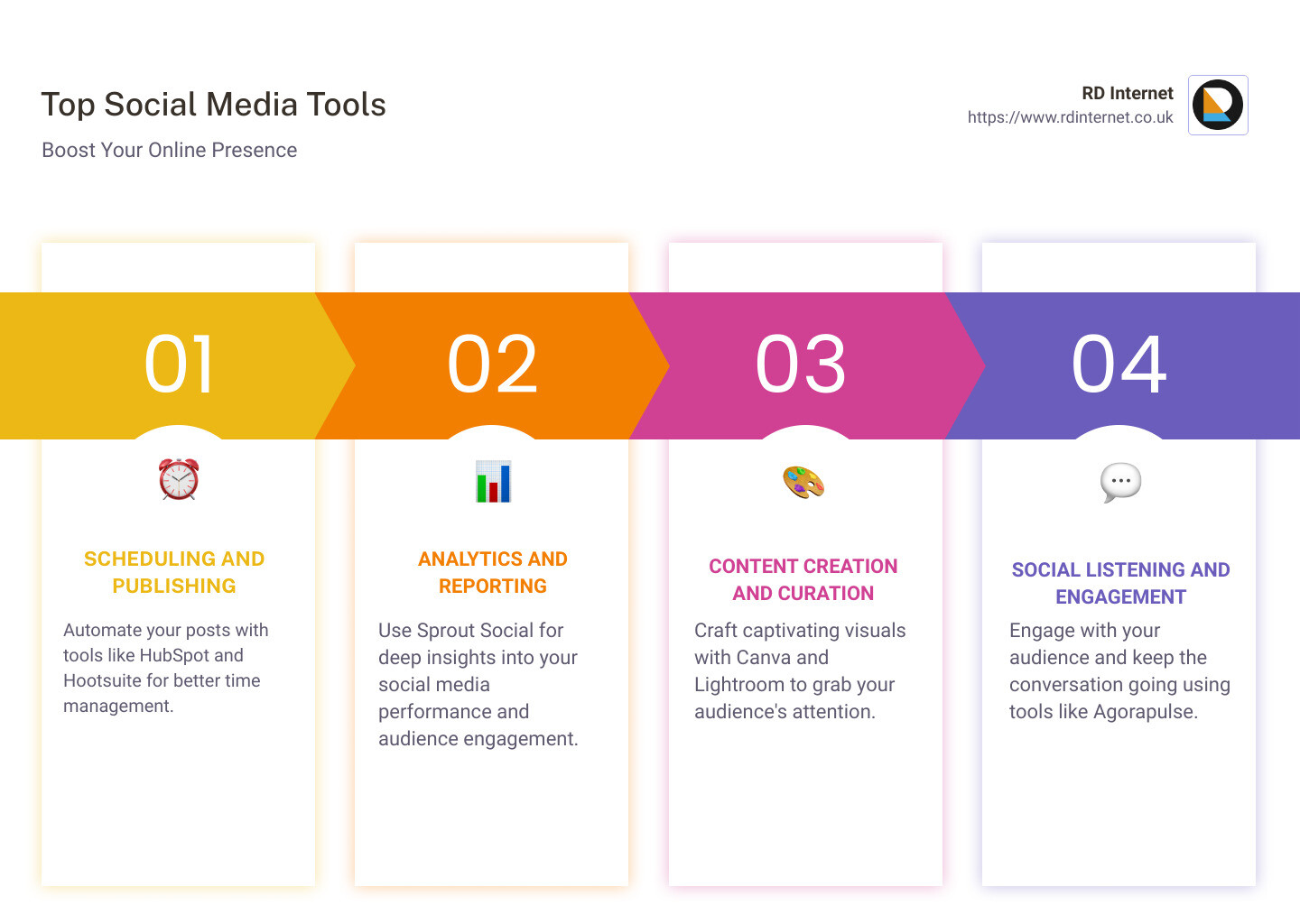
- Scheduling and Publishing: Tools like HubSpot and Hootsuite help organize and automate your posts.
- Analytics and Reporting: Platforms such as Sprout Social offer insights into your social media performance.
- Content Creation and Curation: Canva and Lightroom are great for designing visuals that capture your audience’s attention.
- Social Listening and Engagement: Keep the conversation going with tools like Agorapulse.
- AI and Automation Tools: Use AI-driven tools like Buffer’s AI Assistant for content ideas and scheduling.
- Free and Freemium Tools: There are many high-quality, affordable tools available, such as HubSpot and Canva.
Social media is an essential part of growing your business online. It connects you directly with your customers, builds your brand, and drives sales. However, managing various social platforms can be overwhelming, especially for small business owners in Cardiff, like you, striving to stand out. That’s where social media tools come in, offering efficiency and effectiveness, making them indispensable for staying competitive in the digital arena.
Choosing the right tools can streamline your workflow, boost your online visibility, and ultimately, increase your revenue. Let’s dive deeper into understanding these tools and how they can benefit your business.
Understanding Social Media Tools
Definition
At its simplest, a social media tool is a buddy that helps you manage your business’s online presence. Think of it as a Swiss Army knife for the digital world. These tools can do a lot: from scheduling your posts to analyzing what people are saying about your brand.
Activities
Social media tools cover a wide range of activities. Here’s a quick rundown:
-
Scheduling and Publishing: Plan your posts in advance and set them to go live when your audience is most active. Imagine getting to enjoy a cup of coffee while your social media updates itself.
-
Analytics and Reporting: Ever wondered if your posts are hitting the mark? This feature lets you peek behind the curtain to see what’s working and what’s not.
-
Content Creation and Curation: Not all of us are born artists, but with the right tools, anyone can create eye-catching images and videos.
-
Social Listening and Engagement: Find out what customers are saying about you, engage in conversations, and manage your brand’s reputation without having to be everywhere at once.
-
AI and Automation: These are your time-savers. They can write posts for you, suggest content, and even predict the best times to post.
Automation
This is where the magic happens. Automation in social media tools is like having an assistant who’s always on the clock. It can take care of repetitive tasks, such as posting updates across multiple platforms, so you can focus on what really matters: building relationships with your customers.
-
Scheduling: Plan your content calendar once and let the tool post for you.
-
AI Writing Assistants: Struggling with captions? AI can generate them for you in your brand’s voice.
-
Performance Predictions: Some tools can even predict how well a post will perform, helping you make smarter decisions.
Social media tools are not just about saving time. They’re about making your social media efforts more strategic, more engaging, and more effective. With the right tool in hand, you’re not just posting; you’re crafting a narrative that resonates with your audience, drives engagement, and builds your brand.
We’ll explore the big players in the social media landscape and how leveraging the right tools can transform your social media strategy from good to great. Whether you’re a small business owner in Cardiff or anywhere in the world, understanding and utilizing these tools can set you apart in the crowded digital marketplace.
The Big 4 of Social Media Tools
In the realm of social media, four giants stand tall: Facebook, Twitter, LinkedIn, and Pinterest. Each platform serves a unique purpose and audience, making them invaluable tools for marketers aiming to broaden their reach. Let’s dive into how these platforms can amplify your brand’s voice and the tools designed to harness their full potential.
Facebook: The Social Behemoth
Facebook remains the king of social media, with billions of active users worldwide. It’s a versatile platform where you can share a range of content, from news articles to immersive videos and engaging stories. Facebook’s Business Suite allows you to manage your presence, track performance, and engage with your audience all in one place. It’s an essential tool for businesses looking to stay connected with their community and measure the impact of their marketing efforts.
Twitter: The Pulse of the Planet
Twitter is where news breaks and trends begin. It’s a platform built on real-time conversations, making it ideal for brands that want to stay on top of current events and engage with their audience directly. TweetDeck (now X Pro) offers powerful monitoring and scheduling features, allowing you to track what’s being said about your brand and join the conversation at the right moment. It’s about being where the buzz is and making your voice heard.
LinkedIn: The Professional Network
LinkedIn is more than just a job search site; it’s a platform for professional growth and industry discussions. For B2B companies, LinkedIn is gold. It allows you to establish thought leadership, share industry insights, and connect with peers and potential clients. LinkedIn’s analytics tools help you understand who’s interacting with your content and how to tailor your messaging for maximum impact. It’s about building authority and trust in your industry.
Pinterest: The Visual Discovery Engine
Pinterest is where inspiration lives. It’s a haven for lifestyle brands, offering a visual platform to showcase products and ideas that users can save for later. Tailwind is a must-have tool for Pinterest marketers, enabling you to schedule pins, analyze trends, and reach your audience when they’re most active. It’s about capturing the imagination and leading them to your site.
In conclusion, leveraging the Big 4 social media platforms with the right tools can significantly enhance your online presence. Each platform offers unique opportunities to connect with your audience, and by using specialized tools like Facebook’s Business Suite, X Pro, LinkedIn’s analytics, and Tailwind, you can craft a social media strategy that’s not just good, but great.
As we continue to explore the landscape of social media tools, keep these platforms in mind. They’re not just channels for broadcasting your message; they’re communities where you can listen, engage, and grow. Let’s harness the power of these tools to create compelling narratives that resonate with our audience and drive meaningful engagement.
Next, we’ll delve into the emerging social media platforms of 2024, highlighting the new opportunities they present for marketers looking to stay ahead of the curve.
Popular Social Media Platforms in 2024
Navigating the social media landscape in 2024 is like exploring a vast, ever-changing galaxy. Each platform is a planet, with its own unique environment and lifeforms. As marketers, understanding these environments is crucial to thriving in the digital cosmos. Let’s embark on a journey through the most popular social media platforms of 2024.
Despite the changing social media landscape, Facebook remains a juggernaut. It’s the digital town square where diverse audiences gather, share, and connect. For brands, it’s a goldmine for targeted advertising and community building. The key to success on Facebook? Authentic engagement and content that resonates on a personal level.
YouTube
YouTube is the universe’s library of video content. From how-to guides to viral videos, it’s a central hub for entertainment and education. Brands can leverage YouTube to build a loyal audience through consistent, high-quality video content that educates, entertains, or both. YouTube is not just a platform; it’s a search engine. Optimizing video titles, descriptions, and tags is crucial for visibility.
Instagram continues to be the canvas for visual storytelling. It’s where aesthetics meet analytics. Successful brands on Instagram understand their visual identity and how to communicate it through compelling imagery and engaging stories. With features like Reels and IGTV, brands have numerous ways to creatively engage their audience.
TikTok
TikTok has revolutionized short-form video content, making it an essential platform for brands targeting younger demographics. It’s all about creativity, trends, and authenticity. The most successful brands on TikTok are those that embrace the platform’s playful nature and are willing to experiment with content.
Snapchat
Snapchat remains popular for its ephemeral content, appealing to users who appreciate the fleeting nature of digital moments. Brands can tap into this by creating engaging, time-sensitive content that encourages immediate action. Snapchat’s AR filters also offer a unique way for brands to engage users with immersive experiences.
Twitter is the global town hall. It’s where news breaks and discussions happen in real-time. For brands, Twitter is a powerful tool for customer service and engagement. Listening and responding to conversations about your brand is key to success on this platform.
Pinterest is the go-to platform for inspiration and discovery. It’s where users plan their dreams, from home renovations to wedding planning. Brands can leverage Pinterest to drive traffic to their websites by pinning visually appealing images linked to their content. Understanding the platform’s SEO-friendly nature is also crucial for visibility.
LinkedIn is the professional network. It’s where industry insights, professional development, and networking converge. For B2B brands, LinkedIn is invaluable for establishing thought leadership and connecting with professionals. Content that adds value to your industry conversation can help you stand out.
In conclusion, each social media platform offers unique opportunities and challenges. The key to success in 2024 is understanding the nuances of each platform and crafting strategies that leverage their strengths. As we move into the next section, the right mix of platforms and content can propel your brand to new heights in the digital space. Let’s continue to explore how to harness the power of social media tools to achieve our marketing goals.
Categories of Social Media Tools
Social media tools are like the Swiss Army knife for digital marketers. They come in various forms, each designed to tackle specific tasks that make managing social media easier and more effective. Let’s dive into the categories and highlight some standout tools in each.
Scheduling and Publishing
HubSpot, Hootsuite, Sprout Social, and CoSchedule are the powerhouses here. They allow you to plan and automate your posts across multiple platforms. Imagine writing your content, setting a date and time for it to go live, and then focusing on other tasks, knowing your social media strategy is running smoothly in the background. It’s like having a diligent assistant who never sleeps.
- HubSpot is particularly adept at integrating your social media efforts with the rest of your marketing strategy, ensuring a cohesive approach.
- Hootsuite excels in managing multiple accounts from one dashboard, simplifying your social media management.
- Sprout Social is known for its deep analytics and engagement tools, alongside its scheduling capabilities.
- CoSchedule stands out for its ability to organize not just social media posts but entire marketing campaigns on a single calendar.
Analytics and Reporting
To understand the impact of your social media efforts, tools like Sprout Social, Google Analytics, and Brandwatch offer invaluable insights. They can show you who’s engaging with your content, which posts are performing best, and where there’s room for improvement.
- Sprout Social provides detailed reports on engagement and audience growth across platforms.
- Google Analytics excels in tracking how social media traffic affects your website, helping you see the bigger picture.
- Brandwatch offers deep dives into data, allowing you to understand trends and sentiments in your industry.
Content Creation and Curation
Creating eye-catching and compelling content is made easier with tools like Canva, Lightroom, Animoto, and Venngage.
- Canva and Lightroom help with designing visuals that stand out, with Canva being user-friendly and Lightroom offering professional photo editing capabilities.
- Animoto and Venngage allow for the creation of videos and infographics, respectively, making it easier to diversify your content types.
Social Listening and Engagement
Staying on top of what people are saying about your brand and engaging with your audience is crucial. Sprout Social, Hootsuite, and Agorapulse are great for this.
- Sprout Social and Hootsuite provide tools to monitor mentions, hashtags, and messages, ensuring you never miss a beat.
- Agorapulse has a strong focus on engagement, with a streamlined inbox that brings all your social media conversations into one place.
AI and Automation Tools
The future of social media lies in AI and automation, with tools like Lately, Copy.ai, and Buffer’s AI Assistant leading the charge.
- Lately uses AI to automatically generate social media posts from your content, making content creation a breeze.
- Copy.ai and Buffer’s AI Assistant assist in crafting compelling copy and optimizing posting times, respectively, ensuring your content resonates and reaches your audience at the right time.
Free and Freemium Tools
For businesses on a tight budget, tools like HubSpot, Canva, and Wistia offer free or freemium models that still pack a punch.
- HubSpot has a free CRM that integrates with social media tools, helping you align your marketing, sales, and service efforts.
- Canva offers a wealth of free design templates and tools, making professional-looking graphics accessible to all.
- Wistia focuses on video hosting and provides insightful analytics, even on its free plan.
The right mix of these tools can significantly enhance your social media marketing efforts, saving you time, providing deep insights, and helping you create content that engages and converts. Whether you’re a small business just starting out or a large corporation looking to refine your strategy, there’s a tool out there that can help. Now, let’s look into how to choose the right social media tool for your business in the next section.
How to Choose the Right Social Media Tool
Choosing the right social media tool can feel like finding a needle in a haystack. With so many options, how do you pick the perfect one for your business? Let’s break it down into simple terms, focusing on Integration, Features, User-Friendliness, Cost, and Adaptability.
Integration
Think of your business like a puzzle. Each piece – your website, social media, customer service – needs to fit perfectly. Integration is about making sure your social media tool fits snugly with the other pieces. It should easily connect with your existing platforms, like your CRM or email marketing software. This seamless integration saves time and keeps your data flowing smoothly from one place to another.
Features
Features are the bells and whistles of social media tools. But remember, it’s not about having the most features; it’s about having the right ones. Do you need detailed analytics? Or perhaps a robust content scheduler? Make a list of your must-haves. Tools like Sprout Social and Google Analytics stand out for their in-depth reporting capabilities, while Canva shines in content creation.
User-Friendliness
If a tool is hard to use, it’s not the right tool for you. Period. The best social media tools are intuitive and easy to navigate. They don’t require a PhD in tech to understand. Look for tools that offer straightforward dashboards and quick access to support or tutorials. Your team should be able to jump in and get to work without a steep learning curve.
Cost
Budget matters. But think of cost not just as an expense, but as an investment in your business’s growth. Free tools like HubSpot’s basic plans offer great value for startups, while more comprehensive solutions might require a subscription. Weigh the features against the price to determine the tool’s true value to your business. The cheapest option isn’t always the best one if it doesn’t meet your needs.
Adaptability
The only constant in social media is change. Your chosen tool should be able to keep up. Can it handle new social media platforms as they emerge? Does it offer regular updates? A tool that’s adaptable ensures your social media strategy remains on the cutting edge. Look for platforms that frequently update their features and can scale with your business.
Choosing the right social media tool boils down to understanding your business’s unique needs and how a tool can meet them. Whether it’s the comprehensive analytics of Google Analytics, the visual prowess of Canva, or the all-in-one capabilities of Sprout Social, there’s a tool out there that’s the perfect fit for your strategy. Take the time to explore, test, and decide what works best for your goals. The right tool is an investment in your business’s future success.
Leveraging Social Media Tools for Business Growth
Leveraging the right social media tools is not just an option; it’s a necessity for business growth. These tools offer a plethora of benefits, from enhancing Return on Investment (ROI) to improving efficiency and providing insightful performance data. Let’s dive into how these aspects contribute to business growth.
ROI: The Bottom Line
The ultimate goal of any business tool or strategy is to improve ROI. Social media tools are no exception. By automating routine tasks, these tools free up your team’s time to focus on strategy and engagement, directly impacting your bottom line. For instance, HubSpot’s Social Inbox Tool allows businesses to schedule posts and monitor interactions in a unified space, streamlining the social media management process and potentially increasing conversions through timely engagement.
Efficiency: Doing More with Less
Efficiency in social media management means achieving more results with less time and effort. Tools like Hootsuite and Buffer enable businesses to schedule posts across multiple platforms from a single dashboard. This not only saves time but also ensures a consistent presence on social media, which is crucial for keeping your audience engaged and interested in your brand.
Performance Insight: Knowledge is Power
Understanding what works and what doesn’t is key to refining your social media strategy. Analytics and reporting tools provide valuable insights into post performance, audience behavior, and more. Google Analytics, for example, can show how social media drives traffic to your website, helping you to tie social media efforts to real business outcomes. Similarly, Sprout Social offers in-depth reports that can inform your content strategy, letting you know which types of posts resonate most with your audience.
Using these insights, businesses can make data-driven decisions to optimize their social media strategy, focusing their efforts on what truly matters to their audience and what drives engagement and conversions.
The Path to Growth
Incorporating social media tools into your business strategy is more than a tactical move; it’s a growth strategy. By improving ROI, enhancing efficiency, and gaining valuable performance insights, these tools enable businesses to scale their social media efforts and, by extension, their growth.
As we look to the future, the importance of social media tools in business growth will only increase. The key is to choose tools that align with your business goals and needs, as highlighted in the previous section. With the right tools in hand, businesses can navigate the ever-changing social media landscape with confidence, turning challenges into opportunities for growth.
In conclusion, leveraging social media tools effectively can transform your business’s social media presence, turning it into a powerful engine for growth. By focusing on ROI, efficiency, and performance insights, businesses can not only survive but thrive in the digital age.
Conclusion
In the dynamic world of social media, staying ahead is not just an advantage—it’s a necessity. As we’ve explored the vast landscape of social media tools, from analytics to content creation, the importance of selecting the right tools for your business cannot be overstated. These tools are the compasses that guide us through the complex maze of digital interactions, enabling us to make informed decisions, understand our audience better, and craft messages that resonate.
At RD Internet, we understand the pivotal role these tools play in sculpting a successful social media strategy. Our expertise in leveraging these tools ensures that your business not only navigates the social media landscape effectively but also capitalizes on the opportunities it presents. Whether it’s through engaging content, insightful analytics, or strategic scheduling, our goal is to help you amplify your voice and reach your audience more effectively.
Looking towards the future of social media tools, we anticipate a continued evolution driven by artificial intelligence, machine learning, and the increasing demand for personalization. These advancements promise to make social media tools even more powerful, offering deeper insights, more efficient management capabilities, and unprecedented levels of engagement. The future is about tools that not only understand the data but also the nuances of human emotion and connection, bridging the gap between businesses and their audiences in ways we’ve only begun to explore.
As we embrace these changes, RD Internet stands ready to guide you through the evolving landscape, ensuring that your business remains at the forefront of social media innovation. With a focus on adaptability, efficiency, and strategic insight, we’re not just managing your social media presence; we’re elevating it.
Embrace the future of social media with RD Internet. Let us help you harness the power of the latest social media tools to fuel your business growth and build meaningful connections with your audience. Together, we can turn the challenges of tomorrow into the opportunities of today.
Let’s navigate the future of social media together.
Recent Comments