

Social Media Importance & Growth Trends
In the fast-moving digital world, social media stands as a towering giant influencing both personal connections and business growth. For small business owners in Cardiff, like yourself, tapping into social media’s power could be the game-changer you’ve been looking for to outmaneuver competitors and enhance online visibility. The importance of social media in today’s business landscape cannot be understated. With billions of users worldwide, platforms like Facebook, Twitter, and LinkedIn offer unprecedented access to potential customers.
The growth trends in social media usage are equally staggering, pointing towards an ever-increasing digital populace eager to engage with brands that resonate with their values and needs. This digital revolution has led to a significant shift in how businesses approach marketing, with social media management becoming a critical component of successful online strategies.
Quick Snapshot: Understanding Social Media Management Pricing
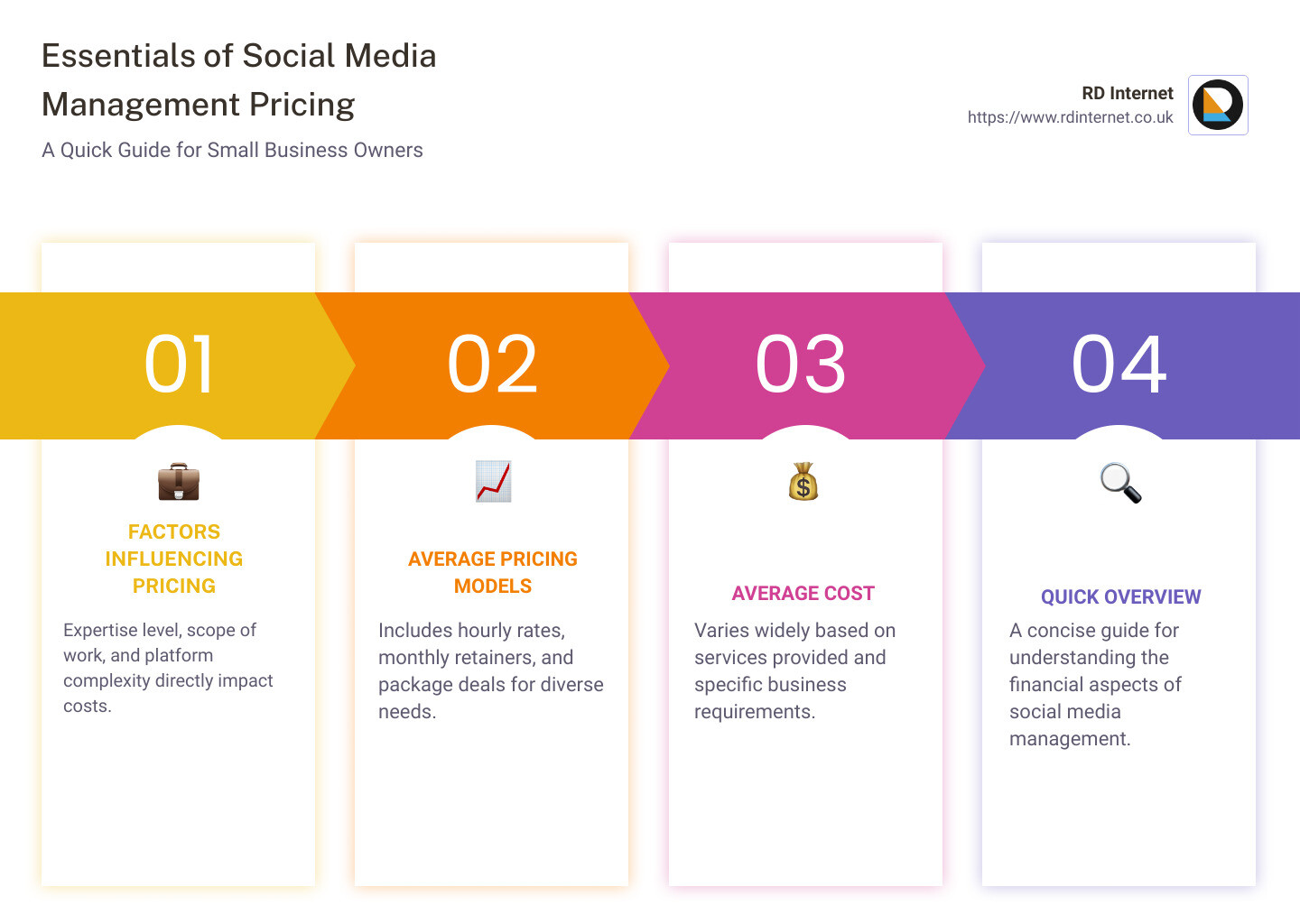
– Factors influencing pricing: Expertise level, scope of work, platform complexity.
– Average Pricing Models: Hourly rates, monthly retainers, package deals.
– Average Cost: Ranges significantly based on services and business needs.
As a small business owner in Cardiff striving for a stronger online presence, understanding the basics of social media management pricing is essential. This guide aims to demystify the costs associated with social media services, providing clarity on what you can expect to invest in growing your digital footprint. Let’s dive deeper into social media management and how its pricing can align with your business goals.
Understanding Social Media Management Pricing
When it comes to understanding social media management pricing, it’s like peeling an onion. There are several layers, and sometimes, it might make you want to cry. But don’t worry! We’re here to make it simple.
Scope of Work
First, let’s talk about the scope of work. This is everything that a social media manager or agency will do for you. It can include:
- Number of platforms: Are they managing just Instagram, or are they juggling Facebook, Twitter, LinkedIn, and TikTok too?
- Quantity of content: How many posts are they creating and publishing each week or month?
- Content creation: Are they starting from scratch, or do you need to provide images and brand assets?
- Engagement: Will they reply to comments and messages, or is that on you?
Imagine you’re ordering a pizza. The scope of work is like choosing your toppings. More toppings (services) usually mean a higher price.
Experience Level
Next up is the experience level. Just like in any job, more experience can often mean higher costs. But it also usually means better quality and possibly, better results. An experienced social media manager might charge more, but they also bring a wealth of knowledge and skills to the table that can help grow your business faster.
Agency vs Freelancer
Now, let’s look at agency vs freelancer. This is like choosing between a fancy restaurant and a home-cooked meal.
- Agencies often offer a full suite of services and have a team of people to work on your account. This can be great for larger businesses or those wanting a comprehensive strategy across multiple platforms. However, this usually comes at a higher price.
- Freelancers might be more specialized or offer more personalized service. They can be a great option for smaller businesses or those on a tighter budget.
In the end, choosing between an agency and a freelancer comes down to your business needs, budget, and personal preference.
The key to understanding social media management pricing is to clearly define your needs and goals. From there, you can find a service provider that fits your budget and can help you achieve your digital marketing objectives.
Ready to dive into the different factors that can influence pricing? Let’s keep going.
Factors Influencing Pricing
When it comes to social media management pricing, several factors can significantly influence the final cost. Understanding these can help businesses make informed decisions and select a pricing model that aligns with their goals and budget. Here are the main factors:
Business Size
Larger businesses often have more complex needs and higher expectations for their social media presence. They might require management across multiple platforms, a higher volume of posts, or more sophisticated strategies to engage a diverse audience. This complexity can drive up the price.
On the other hand, small to medium-sized businesses might have simpler requirements, leading to lower costs. However, no matter the size, the value of professional social media management in reaching and engaging your audience effectively is undeniable.
Industry Specifics
Different industries face unique challenges and regulations on social media. For instance, companies in the healthcare or financial sectors might need to navigate strict compliance and privacy regulations, requiring managers to have specialized knowledge. This expertise can add to the cost.
Conversely, industries with fewer restrictions, like fashion or entertainment, might focus more on creativity and engagement, potentially lowering the cost due to fewer legal hurdles.
Platform Complexity
Not all social media platforms are created equal. Some, like LinkedIn, cater to professional networking and B2B interactions, while others, like TikTok, are more about creativity and entertainment. The complexity of managing each platform varies. Platforms that require high-quality visuals, like Instagram, might necessitate professional photography, adding to the cost.
Moreover, each platform has its unique algorithm and audience behavior, requiring tailored strategies. Managing multiple platforms or those with higher complexity can increase the price.
Content Volume
The amount of content needed can greatly affect pricing. More posts mean more time spent on content creation, strategy, and engagement. It’s not just about the number of posts but also their quality. High-quality, original content that resonates with your audience requires research, creativity, and time, all of which contribute to higher costs.
Understanding these factors is crucial when considering social media management pricing. It’s not just about finding the cheapest option but selecting a service that meets your specific needs and helps you achieve your business goals effectively.
Now, let’s explore the average pricing models to give you a clearer picture of how these services are typically charged.
Average Pricing Models
When you’re diving into social media management pricing, you’ll come across a few common ways agencies and freelancers charge for their services. Understanding these models can help you make a more informed decision about which one aligns best with your business needs. Let’s break them down:
Hourly Rates
Hourly pricing is as straightforward as it sounds. You pay for each hour of work dedicated to your social media management. This model provides transparency and flexibility, making it a popular choice for projects where the scope is less defined or for businesses that need occasional social media support rather than full-scale management.
- Advantage: It’s transparent. You know exactly how many hours of work you’re paying for.
- Disadvantage: Costs can add up quickly if the project takes longer than anticipated.
Monthly Retainers
A monthly retainer is a fixed fee paid in advance for a set package of services over a month. This model is ideal for ongoing social media management, where consistent activities like content creation, posting, and engagement are needed. It offers predictability for both the client and the service provider.
- Advantage: Predictable costs and services make budgeting easier.
- Disadvantage: You might pay for services you don’t use if the package is not fully customized to your needs.
Package Deals
Package deals bundle various social media management services into predefined offerings. These can range from basic packages that cover essential services like content creation and posting to full-service packages that include strategy development, engagement, analytics, and ad campaigns. Packages are usually priced at a flat rate and can offer savings compared to purchasing services individually.
- Advantage: Easy to understand what you’re getting for a fixed price.
- Disadvantage: Less flexibility to adapt services to your specific needs without incurring additional costs.
When considering these models, think about the scope of your social media needs, the level of expertise required, and the flexibility you need in managing costs. The goal is to find a pricing model that offers transparency, aligns with your business objectives, and provides value for your investment in social media management.
As we’ve explored the common pricing models, delve deeper into what exactly you’re paying for. In the next section, we’ll break down the costs associated with social media management services.
Breaking Down the Costs
When it comes to social media management pricing, understanding where your money goes can help you make informed decisions. Let’s look at the key areas where your investment is allocated: Content Creation, Strategy Development, Engagement, Analytics, and Ad Campaigns.
Content Creation
Creating content is not just about posting pictures or writing posts. It involves designing graphics, producing videos, and crafting messages that resonate with your audience. Based on research and expert insights, small to mid-sized agencies charge between $40 and $160 per hour for ongoing social media content creation. This cost can vary depending on the complexity and volume of the content required.
Strategy Development
A well-thought-out strategy is the backbone of successful social media management. It includes identifying your audience, setting goals, and planning content that aligns with your brand’s voice. Strategy development can be priced on an annual or project basis, but it’s crucial for setting a direction that guides all social media activities.
Engagement
Engagement involves interacting with your audience through comments, messages, and other social media interactions. It’s about building a community around your brand. Agencies often include engagement in their packages, but the extent of engagement can vary. Some offer real-time responses and proactive engagement strategies, which can be more costly but significantly beneficial for customer retention and brand loyalty.
Analytics
Understanding the performance of your social media activities through analytics is vital. It helps in making data-driven decisions and optimizing your strategy for better results. Analytics services might include monthly reports, insights on audience behavior, and recommendations for improvement. While some agencies include this in their standard packages, comprehensive analytics services can increase the overall cost.
Ad Campaigns
Running social media ad campaigns is a separate beast. It involves budgeting for ad spend, designing ads, targeting the right audience, and analyzing the performance. The cost of promoting your content on platforms like Facebook depends on factors like bidding strategies and the competitive landscape. The agency or freelancer’s fee for managing these campaigns is in addition to your ad spend budget.
Remember: The pricing for these services can vary widely based on factors like geographical location, the expertise of the agency or freelancer, and the specific needs of your business. For instance, the average company in the US spends between $6,000 and $10,500 per month on social media marketing, which includes all the aspects mentioned above.
When setting a budget for social media management, consider what aspects are most critical to your business’s success on social media. Are you looking to increase brand awareness, drive sales, or improve customer engagement? Your goals will dictate where to allocate your budget for maximum impact.
Now that we’ve broken down the costs, you’ll be better equipped to assess social media management proposals and ensure that your investment aligns with your business objectives and expected outcomes.
Pricing Strategies for Social Media Services
When it comes to social media management pricing, understanding the different strategies agencies and freelancers use can help you make an informed decision about which service is right for you. Let’s dive into three popular pricing strategies: Value-Based Pricing, Project-Based Fees, and Dynamic Pricing.
Value-Based Pricing
This strategy is all about the perceived value of the services provided. Instead of charging based on the time it takes to complete a task, agencies or freelancers set their prices based on the potential return on investment (ROI) their work could bring to a client. For example, if a social media campaign is expected to significantly increase sales or brand visibility, the price for that campaign will be higher.
Advantages: This approach aligns the agency’s or freelancer’s incentives with the client’s success. Clients might also feel more confident knowing they are paying for results rather than time.
Disadvantages: It can be challenging to agree on the value of a service, especially if the outcomes are not immediately tangible, like brand awareness.
Project-Based Fees
With project-based fees, the total cost of a social media management project is agreed upon before the work begins. This fee is usually based on the scope of the project, including the number of platforms covered, the volume of content created, and any additional services like strategy development or analytics.
Advantages: Clients appreciate the clarity and predictability of project-based pricing. They know exactly how much they will be spending and what they will be getting in return.
Disadvantages: If the project scope changes significantly, renegotiation of fees may be necessary, which can lead to delays or additional costs.
Dynamic Pricing
Dynamic pricing is a flexible strategy that allows prices to adjust based on demand, time of year, or client budget. For social media management, this could mean offering discounts during off-peak seasons or adjusting prices for clients with smaller budgets.
Advantages: This approach can attract a wider range of clients and allows agencies and freelancers to fill their schedules during slower periods.
Disadvantages: It requires more management to adjust prices and communicate these changes to potential clients. It can also lead to perceptions of inconsistency in pricing.
Understanding these pricing strategies can empower you to negotiate a social media management package that aligns with your business goals and budget. Whether you value predictability, are looking for a results-driven approach, or need flexible pricing options, there’s a strategy out there that can meet your needs. The key is to communicate clearly with your service provider about your expectations and to ensure that the agreed-upon strategy aligns with your vision for social media success.
Common Pricing Packages Explained
In the realm of social media management, understanding the various pricing packages available is crucial. These packages typically range from basic setups for startups to comprehensive solutions for established businesses. Let’s dive into the common types: Starter Package, Full-Service Package, and Custom Solutions.
Starter Package
Ideal for small businesses or those just dipping their toes into the social media world, the Starter Package often includes:
- Social Media Strategy: Crafting a plan that outlines goals, target audience, and content themes.
- Content Creation: Designing graphics, writing captions, and selecting hashtags.
- Scheduling and Publishing: Planning when and where to post the created content.
This package is a launching pad for businesses to establish a social media presence. It’s about laying the groundwork, telling your brand’s story, and starting to engage with your audience. Although it might not yield immediate ROI, it sets the stage for future growth.
Full-Service Package
For businesses ready to dive deeper, the Full-Service Package builds on the Starter Package by adding:
- Engagement/Community Management: Actively interacting with followers to build community and customer loyalty.
- Social Media Advertising: Creating and managing ads to target specific audiences and achieve business goals.
This package is tailored for businesses looking to fully leverage social media’s power. It’s not just about being present; it’s about actively engaging and using strategic advertising to drive growth and sales.
Custom Solutions
Every business is unique, with specific needs and goals. Custom Solutions are designed to address this by offering a tailored approach. Whether you need a focus on influencer partnerships, video content production, or advanced analytics and reporting, custom solutions ensure that your social media strategy aligns perfectly with your business objectives.
Custom packages are particularly useful for businesses with unique challenges or those operating in niche markets. They offer the flexibility to mix and match services based on what will drive the most value for your business.
Choosing the right package depends on various factors, including your business size, goals, and budget. Starter Packages are great for building a foundation, Full-Service Packages for businesses ready to invest in growth, and Custom Solutions for those needing a tailored approach.
As you consider your options, social media is a dynamic and evolving platform. What works today may need adjustment tomorrow. Therefore, flexibility and ongoing communication with your service provider are key to achieving long-term success in the social media landscape.
How to Decide on a Budget for Social Media Management
Deciding on a budget for social media management is like planning a journey. You need to know where you’re starting, where you want to go, and what resources you’ll need to get there. Let’s break down this process into manageable steps focusing on Business Goals, ROI Expectations, and Market Research.
Business Goals
First, clearly define your business goals. Are you looking to increase brand awareness, drive traffic to your website, or boost sales? Your goals will directly influence how much you should invest in social media management. For example, maintaining a basic level of engagement and brand presence might not require a hefty budget. However, aggressive growth targets in highly competitive industries might necessitate a more substantial investment.
Example: A small local bakery might set a goal to increase foot traffic by 20% through social media promotions and community engagement. This goal is specific, measurable, achievable, relevant, and time-bound (SMART).
ROI Expectations
Next, consider your Return on Investment (ROI) expectations. This involves understanding the financial return you expect from your social media activities. Calculating potential ROI can be tricky, but it’s essential for setting a realistic budget. If you’re expecting social media to generate $10,000 in sales monthly, you need to invest an appropriate amount to achieve that goal, keeping in mind the cost of content creation, ad spend, and management fees.
Statistic: According to a survey, businesses that invest in comprehensive social media management services can see a return of $5 for every $1 spent. This ratio varies widely depending on the industry and the effectiveness of the strategy employed.
Market Research
Finally, conduct thorough market research. Look into what similar businesses in your industry are spending on social media management and the results they’re achieving. This can give you a ballpark figure for your budget. Additionally, understanding the competitive landscape can help you identify opportunities and gaps in your own strategy.
Case Study: A mid-sized e-commerce company conducted market research and discovered that their competitors were heavily investing in influencer marketing on Instagram. By reallocating part of their budget to influencer collaborations, they saw a 30% increase in engagement and a significant uptick in sales.
Putting It All Together
When deciding on a budget for social media management, consider the following steps:
- Set Clear Business Goals: Know what you want to achieve.
- Understand Your ROI Expectations: Have a clear idea of the financial return you’re aiming for.
- Conduct Market Research: Know what your competitors are doing and how much they’re spending.
Social media management is not a one-size-fits-all service. Your budget should be flexible enough to adapt to changing goals and market conditions. By focusing on your business goals, ROI expectations, and conducting thorough market research, you can set a social media management budget that is realistic, achievable, and aligned with your business objectives.
In the next section, we’ll delve into some of the most frequently asked questions about social media management pricing to help you further refine your understanding and approach.
Frequently Asked Questions about Social Media Management Pricing
Navigating social media management pricing can be like trying to find your way through a maze. But don’t worry, we’ve got the map to help you understand the essentials. Let’s dive into some common questions that might be on your mind.
What’s included in a standard social media management package?
A standard social media management package often includes a mix of content creation, scheduling, and engagement activities. Here’s a quick breakdown:
- Content Creation: This involves crafting posts that resonate with your audience, including graphics, captions, and hashtags.
- Scheduling and Publishing: Planning when your content goes live on various platforms to maximize engagement.
- Engagement: Interacting with your audience through comments, messages, and mentions to build a community around your brand.
Packages can vary widely based on the agency or freelancer you’re working with, so it’s important to clarify what’s included upfront.
How do agencies and freelancers set their prices?
Agencies and freelancers typically consider several factors when setting their prices, including:
- Experience Level: More experienced professionals often charge higher rates due to their proven track record of delivering results.
- Scope of Work: The complexity and volume of the work required can significantly influence pricing.
- Market Rates: Prices are also influenced by what others in the market are charging for similar services. This ensures competitiveness and fairness.
- Value Delivered: Professionals may charge based on the perceived value they bring to your business, especially if they specialize in a niche that’s particularly beneficial to you.
Can the size of my business affect social media management costs?
Absolutely! The size of your business can impact social media management costs in a few ways:
- Volume of Work: Larger businesses may have more social media accounts and require more content, leading to higher costs.
- Complexity: Bigger companies might have more complex needs, such as reputation management or a higher level of engagement, which can increase pricing.
- Customization: Small businesses might opt for more standardized packages, while larger businesses may seek custom solutions that cater to their specific needs, affecting the pricing structure.
The goal is to find a pricing model that fits your budget while meeting your social media objectives. Don’t hesitate to discuss your needs with potential service providers to find the best fit for your business.
As we wrap up this section, keep in mind that investing in social media management is an investment in your brand’s future. By understanding the ins and outs of social media management pricing, you’re one step closer to making informed decisions that propel your business forward.
Conclusion
In this comprehensive guide, we’ve walked through the various facets of social media management pricing, aiming to equip you with the knowledge needed to navigate this crucial aspect of digital marketing. From understanding the scope of work to breaking down costs and exploring different pricing models, our goal has been to demystify the process and help you make informed decisions.
When it comes to investing in social media, it’s crucial to recognize that it’s not just an expense but a strategic investment in your brand’s future. The digital landscape is changing, and social media platforms continue to play a pivotal role in how brands connect with their audience, build relationships, and drive business growth.
At RD Internet, we understand the importance of crafting a social media strategy that aligns with your business goals and delivers measurable results. Our team of experts is dedicated to helping you navigate the complexities of social media management, ensuring that your investment translates into tangible value for your brand.
Investing in social media management with RD Internet means more than just regular posts on your platforms; it’s about creating a comprehensive strategy that encompasses content creation, community engagement, analytics, and ad campaigns tailored to your specific needs. Whether you’re looking to increase brand awareness, boost engagement, or drive sales, our bespoke solutions are designed to meet your objectives and exceed your expectations.
The right investment in social media can yield significant returns for your business. It’s not just about being present on these platforms but leveraging them strategically to connect with your audience and achieve your business goals. With RD Internet as your partner, you can rest assured that your social media presence is in capable hands, allowing you to focus on what you do best – running your business.
As you consider your social media management needs, we invite you to explore our services further and discover how we can help you unlock the full potential of your social media presence. Let’s work together to take your brand to new heights.
Ready to elevate your social media game? Discover how RD Internet can transform your social media strategy and drive meaningful results for your business.
Thank you for joining us on this journey through the intricacies of social media management pricing. We hope this guide has provided you with valuable insights and clarity on how to approach your social media investment. At RD Internet, we’re here to help you every step of the way.
Recent Comments