

When you’re hunting for the secrets to SEO strategies business marketing expert skills, you’re essentially looking for the magic formula to boost your small business’s online visibility, drive more traffic to your website, and ultimately, increase revenue. Here’s a quick hit list to get you started:
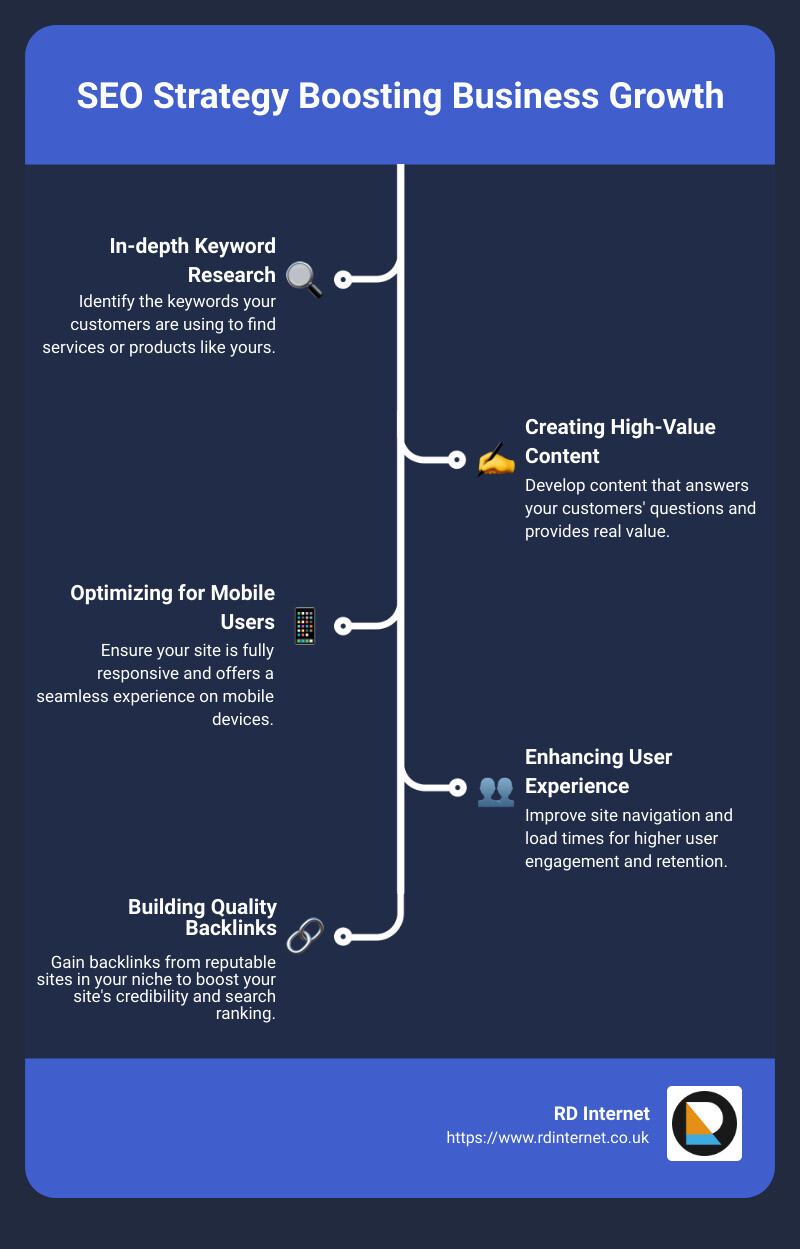
- Quality Content: Your content must answer your customers’ questions and offer value.
- Keyword Research: Find and use the keywords your customers are searching for.
- Mobile Optimization: Your site must work seamlessly on mobile devices.
- User Experience (UX): A smooth, enjoyable user experience keeps visitors coming back.
- Backlinks: Other websites linking to yours boosts your credibility and search ranking.
SEO, or Search Engine Optimization, is no longer a buzzword or an optional strategy. For small businesses, particularly those in competitive digital landscapes like Cardiff, it’s a lifeline to sustainable growth. It’s about understanding what your potential customers are searching for online, the answers they seek, the words they’re using, and the type of content they wish to consume. By aligning your digital content strategy with these insights, you position your business to be found by the right people at the right time.
But why is SEO so crucial for your business growth? In a nutshell, it helps your business stand out in a crowded online marketplace, driving organic (unpaid) traffic to your website without the need for expensive advertising. This makes it an efficient and cost-effective strategy for enhancing online visibility and encouraging growth.
SEO in Business Marketing
When we talk about SEO, or Search Engine Optimization, we’re diving into the heart of digital visibility. Imagine SEO as the compass that guides internet users directly to your business. Simply put, it’s a collection of strategies and practices aimed at improving your website’s position on search engine results pages (SERPs).
The Evolution of SEO
SEO isn’t static; it’s a constantly evolving field. In its early days, SEO was all about stuffing websites with keywords and getting as many backlinks as possible, regardless of the quality. Fast forward to today, and the landscape has dramatically changed. Search engines, especially Google, have become much more sophisticated. They now prioritize high-quality content, user experience, and the relevance of links over sheer quantity. This evolution has shifted the focus from exploiting loopholes to genuinely improving the user’s experience and providing value.
The Impact of SEO on Business Marketing
The impact of SEO on business marketing is profound. It’s not just about getting your website to the top of search results; it’s about establishing credibility, enhancing brand visibility, and driving organic traffic that’s genuinely interested in what you have to offer.
- Credibility and Trust: A website that ranks high on SERPs is often perceived as more trustworthy and credible by users. This perception is crucial in the digital world, where trust can be a scarce commodity.
- Visibility and Brand Awareness: Being visible on search engines means your brand gets noticed. It’s simple math; the higher you rank, the more likely people will see your website and become aware of your brand.
- Targeted Traffic: SEO helps attract users who are actively searching for information related to your products or services. This means the traffic coming to your site is more likely to be interested in what you have to offer, leading to higher conversion rates.
A compelling case study in this context is that of a small e-commerce business that revamped its website with SEO in mind. By focusing on keyword research, improving site speed, and creating valuable content, the business saw a 200% increase in organic traffic and a 40% uptick in sales within six months. This story underscores the tangible benefits of integrating SEO into business marketing strategies.
In conclusion, understanding SEO is crucial for any business looking to thrive in the digital marketplace. It’s not just about algorithms and rankings; it’s about connecting with your audience in the most effective way possible. The role of a SEO strategies business marketing expert becomes increasingly important in navigating this complex but rewarding landscape.
Key SEO Strategies for Businesses
In the bustling digital marketplace, standing out is no small feat. Yet, it’s achievable with the right approach. Let’s dive into the core strategies that can elevate your business’s online presence.
Content Quality
“Content is king” might sound cliché, but it’s the golden rule in SEO. High-quality, engaging content is the cornerstone of attracting and retaining users. It’s not just about throwing words on a page; it’s about crafting stories that resonate with your audience. Whether it’s a blog post, a video, or an infographic, your content should provide value, answer questions, and solve problems. Google loves content that users find helpful, and it rewards such content with higher rankings.
Keyword Research
Understanding what your target audience is searching for is crucial. Keyword research helps you discover the terms and phrases people use in search engines. It’s like getting a map to your treasure; the treasure being visibility and relevance in the digital world. Tools like Google Keyword Planner can be a great starting point. But remember, it’s not just about the most popular keywords; it’s about the right keywords that match your content and offerings.
Mobile Optimization
If you’re not mobile-friendly, you’re not competitive. With the majority of searches now performed on mobile devices, Google has shifted to mobile-first indexing. This means your website’s mobile version will be considered the primary version. If your site isn’t optimized for mobile, you’re not only providing a poor user experience, but you’re also likely being penalized in search rankings. Simple steps like improving site speed, using responsive design, and optimizing images can make a huge difference.
User Experience (UX)
SEO is not just about pleasing search engines; it’s about delighting users. A seamless, intuitive user experience is key to keeping visitors on your site longer and reducing bounce rates. This includes clear navigation, fast loading times, and visually appealing design. Google’s Page Experience update has made UX more important than ever, directly impacting your site’s ranking. Think of your website as a storefront; make it inviting and easy for customers to find what they need.
Backlinks
Think of backlinks as votes of confidence from other websites. When a reputable site links to yours, it signals to search engines that your content is valuable and trustworthy. However, not all backlinks are created equal. Focus on earning high-quality backlinks from authoritative sites in your niche. Guest blogging, creating shareable infographics, and producing stellar content that naturally attracts links are effective strategies.
In the realm of SEO, these strategies are not just checkboxes. They are ongoing efforts that require regular attention and adjustment. A SEO strategies business marketing expert understands that the digital landscape is changing. By focusing on content quality, keyword research, mobile optimization, user experience, and backlinks, businesses can build a strong online presence that not only attracts but also retains customers. As we navigate further into the intricacies of SEO, the importance of avoiding common pitfalls becomes apparent.
Role of a Marketing Expert in SEO
In SEO, the role of a marketing expert cannot be overstated. Their expertise is crucial in developing effective strategies, analyzing market trends, and adapting to the ever-changing digital landscape. Let’s dive into the specifics of what these professionals do and why their role is indispensable.
Strategy Development
A marketing expert starts with a blank canvas and paints a picture of success using SEO strategies. They understand that a well-crafted strategy is the backbone of any successful SEO campaign. By combining their knowledge of the company’s goals with their understanding of the competitive landscape, they can devise a plan that targets the right audience with the right message.
For instance, let’s imagine a local bakery wants to increase its online visibility. The marketing expert might suggest focusing on local SEO strategies, such as optimizing for location-based keywords or getting listed in local business directories. This targeted approach ensures that the bakery appears in search results when nearby customers are looking for a place to buy pastries or bread.
Market Analysis
Understanding the market is like having a map in SEO. A marketing expert uses various tools and techniques to analyze the market, identify opportunities, and understand customer behavior. This analysis helps in making informed decisions that align with the business’s objectives and customer needs.
For example, if research shows that a significant portion of the target audience uses mobile devices to search for products, the marketing expert would prioritize mobile optimization in their SEO strategy. This insight ensures that the business’s website is accessible and user-friendly for mobile users, improving its search engine ranking and attracting more customers.
Trend Adaptation
The digital landscape is akin to shifting sands—what works today might not work tomorrow. A true SEO strategies business marketing expert stays on top of the latest trends and algorithm updates to ensure that their strategies remain effective. They understand that adapting to these changes is not just about survival but about leveraging new opportunities to stay ahead of the competition.
For instance, when Google announced the importance of page speed as a ranking factor, marketing experts quickly focused on optimizing website speed to ensure their clients’ websites did not fall in search rankings. This proactive approach to trend adaptation is what sets apart successful SEO campaigns from the rest.
In conclusion, the role of a marketing expert in SEO is multifaceted and vital for any business looking to thrive online. Through strategic development, market analysis, and trend adaptation, they navigate the complexities of SEO to drive traffic, engagement, and ultimately, conversions. Understanding and leveraging these roles will be key to staying competitive in the digital marketplace.
Common SEO Mistakes to Avoid
Making your way through SEO can sometimes feel like navigating a minefield. One wrong step, and your efforts could blow up in your face. As a SEO strategies business marketing expert, I’ve seen my fair share of mishaps. Let’s talk about three common SEO mistakes you should steer clear of: Keyword Stuffing, Ignoring Mobile Users, and Neglecting Analytics.
Keyword Stuffing: A Recipe for Disaster
Remember when you were a kid, and you thought if a little bit of sugar made your cereal taste good, a lot would make it taste amazing? But then you tried it, and… yuck. Keyword stuffing is a bit like that. It’s when you cram as many keywords as possible into your content, hoping it will make your website more visible.
But here’s the thing: Search engines have gotten smarter. They can tell when you’re trying to game the system and don’t appreciate it. Not only does keyword stuffing make your content difficult and unpleasant to read, but it can also lead to your site being penalized by search engines.
The solution? Focus on creating valuable, relevant content that naturally incorporates your keywords. It’s better to be the gourmet chef of content creation, carefully seasoning your work, than to dump in keywords like too much salt.
Ignoring Mobile Users: Don’t Miss the Boat
Did you know that over half of all web traffic comes from mobile devices? Ignoring mobile users in your SEO strategy is like ignoring half your potential customers. Yet, many businesses still make this mistake by not optimizing their websites for mobile use.
Mobile optimization means making sure your site loads quickly on mobile devices, is easy to navigate, and provides a good user experience. Google has even moved to mobile-first indexing, which means it predominantly uses the mobile version of the content for indexing and ranking.
In short: If your site isn’t mobile-friendly, you’re not just turning away potential customers; you’re also hurting your search engine rankings.
Neglecting Analytics: Flying Blind
Imagine trying to fly a plane without any instruments telling you your altitude, speed, or direction. That’s what it’s like running an SEO campaign without paying attention to analytics. Analytics provide crucial insights into how well your SEO strategies are working, what your audience is looking for, and where there’s room for improvement.
Yet, some businesses set their SEO strategy and forget it, never bothering to check back in to see how it’s performing. This is a huge mistake. SEO is not a “set it and forget it” kind of thing. It requires ongoing attention and adjustment.
Tools like Google Analytics can show you how users are finding your site, which pages they’re spending time on, and where you’re losing them. This data is invaluable for refining your SEO strategy and ensuring you’re not just attracting traffic but the right kind of traffic.
Moving Forward
As we transition into the next section, keep in mind that avoiding these common SEO mistakes is crucial for any business looking to improve its online presence. Keyword stuffing, ignoring mobile users, and neglecting analytics are pitfalls that can easily derail your SEO efforts. By focusing on creating quality content, optimizing for mobile, and leveraging analytics to inform your strategy, you’ll be well on your way to SEO success.
SEO is a marathon, not a sprint. It takes time, patience, and continuous effort to see results. But with the right strategies and a keen eye on avoiding these common mistakes, you’ll be setting your business up for long-term success in the digital marketplace.
Measuring SEO Success
After putting in the hard work and applying the right SEO strategies, how do you know if they’re paying off? As an SEO strategies business marketing expert will tell you, measuring your SEO success is vital. Let’s break down the four key metrics: Traffic Analysis, Conversion Rates, SERP Position, and Engagement Metrics.
Traffic Analysis
Imagine you’re throwing a party. You want to know how many people showed up, right? Traffic analysis is somewhat similar. It tells you how many visitors your website is attracting. Tools like Google Analytics can show you not just how many, but where they’re coming from – organic search, social media, or direct visits. Seeing an increase in organic traffic? That’s a sign your SEO efforts are working.
Conversion Rates
But it’s not just about how many people show up to your party; it’s about how many actually enjoyed it enough to take action – maybe signing a guest book or grabbing a party favor. In the digital world, we measure this through conversion rates. This metric tells you the percentage of visitors who take a desired action on your site, like filling out a form, signing up for a newsletter, or making a purchase. A rise in conversion rates often means your content is resonating well with your audience and your SEO strategies are effective.
SERP Position
Where you stand in a race often shows how well you’ve performed, and the same goes for your position in search engine results pages (SERP). Higher rankings mean your website is visible to more people, increasing the likelihood of clicks. Climbing up the ranks is a clear indicator that your SEO strategies are on point. Most people don’t go past the first page of search results, so aim to secure a spot there.
Engagement Metrics
Lastly, let’s talk about engagement metrics. These include average session duration, pages per session, and bounce rate. If visitors are spending more time on your site and checking out multiple pages, it’s a good sign they find your content valuable. Conversely, a high bounce rate might indicate that your site’s not meeting visitors’ expectations. Monitoring these metrics can give you insights into user behavior and help you fine-tune your SEO strategies.
Measuring your SEO success is crucial to understanding the impact of your efforts. By keeping a close eye on these metrics, you can identify what’s working and what needs improvement. This continuous cycle of analysis and adjustment is key to maintaining and improving your online presence. SEO is an ongoing process, and staying vigilant with these metrics will guide you in navigating the ever-changing digital landscape.
Top Tip
Make sure your website speed and metrics are in line using Google’s Page speed insights which will show how your website performs on all devices.
Let’s dive into some frequently asked questions about SEO strategies, shedding light on the most effective tactics, the ideal frequency for strategy updates, and how small businesses can compete in the SEO arena.
Frequently Asked Questions about SEO Strategies
Navigating SEO can sometimes feel like trying to solve a puzzle with pieces that keep changing shapes. It’s no wonder that there are so many questions surrounding SEO strategies. Let’s break down some of the most common inquiries with straightforward answers.
What is the most effective SEO strategy today?
The most effective SEO strategy today is creating high-quality, relevant content that addresses the needs and questions of your audience. It sounds simple, but it’s a powerful approach. This strategy is rooted in understanding your audience deeply and producing content that provides real value to them. Google’s algorithms are increasingly sophisticated, aiming to match users with content that best answers their queries. Therefore, focusing on quality content not only helps with rankings but also builds trust and authority with your audience.
For instance, a blog post that answers a common question in your industry with clear, expert advice will likely perform better than a generic article stuffed with keywords. The goal is to serve your audience first; search engine rankings will follow.
How often should SEO strategies be updated?
SEO is not a set-it-and-forget-it type of strategy. The digital landscape is constantly evolving, with search engine algorithms being updated regularly. It’s recommended to review and adjust your SEO strategy at least quarterly. However, staying informed about major algorithm updates or shifts in your industry’s online behavior can signal when a more immediate review is necessary.
Moreover, continuous testing and refinement of your SEO tactics are essential. What worked last year, or even last month, might not yield the same results today. Regularly analyzing your SEO performance data will help you identify areas for improvement and opportunities to capitalize on.
Can small businesses compete with larger ones in SEO?
Absolutely, small businesses can compete with larger ones in SEO. In fact, SEO is a great leveler in digital marketing. Small businesses can carve out their niche by targeting specific keywords and local SEO strategies that larger businesses might overlook.
For example, a local coffee shop can optimize its website for phrases like “best espresso in [City Name]” or create content specific to its neighborhood’s coffee culture. This localized approach can give small businesses an edge in search rankings within their community or specific niches.
Additionally, small businesses often have the advantage of being more agile and able to adapt quickly to changes in SEO trends or algorithm updates. With a focused strategy and a commitment to creating valuable content, small businesses can indeed punch above their weight in the SEO arena.
In conclusion, whether it’s understanding the current best practices in SEO, keeping strategies fresh, or leveraging the unique strengths of small businesses, the key lies in staying informed, being adaptable, and always prioritizing the needs of your audience. Let’s keep these insights in mind as we continue to explore the dynamic world of SEO and how it shapes our approach to digital marketing.
Conclusion
In the rapidly evolving landscape of digital marketing, the power of SEO cannot be understated. As we’ve navigated through the intricacies of SEO strategies, the role of a business marketing expert, and the common pitfalls to avoid, one theme remains constant: continuous learning.
At RD Internet, we understand that the digital world is in a state of perpetual motion. Technologies advance, consumer behaviors shift, and search engine algorithms evolve. This environment demands a proactive approach to SEO, one that embraces education and adaptation as core principles.
Continuous learning is the bedrock upon which successful SEO strategies are built. It’s not just about keeping up with the latest trends or algorithm updates; it’s about deepening our understanding of our audience, refining our skills, and pushing the boundaries of what’s possible in digital marketing.
Here are a few ways we commit to continuous learning at RD Internet:
- Regular Training and Workshops: Keeping our team’s skills sharp and up-to-date with the latest SEO techniques and tools.
- Active Community Engagement: Participating in forums, webinars, and conferences to exchange knowledge with other SEO strategies business marketing experts.
- Data-Driven Insights: Leveraging analytics to learn from our campaigns, understand our audience better, and make informed decisions.

In conclusion, the journey of an SEO strategist is one of constant exploration and growth. At RD Internet, we’re committed to leading the charge, armed with the knowledge that the landscape of digital marketing will continue to change. By fostering a culture of continuous learning, we not only stay ahead of the curve but also deliver exceptional value to our clients, helping them achieve their business goals in an ever-competitive online world.
In the realm of SEO, stagnation is the enemy of success. Embrace change, stay curious, and let’s keep learning together. Here’s to growing, innovating, and leading in the dynamic world of digital marketing with RD Internet by your side.
Recent Comments