

Releaseing the Power of PPC Advertising
PPC advertising strategies are crucial for any business aiming to boost its online presence and revenue quickly. For those seeking instant traffic, precise audience targeting, and measurable outcomes, PPC is an exceptional tool.
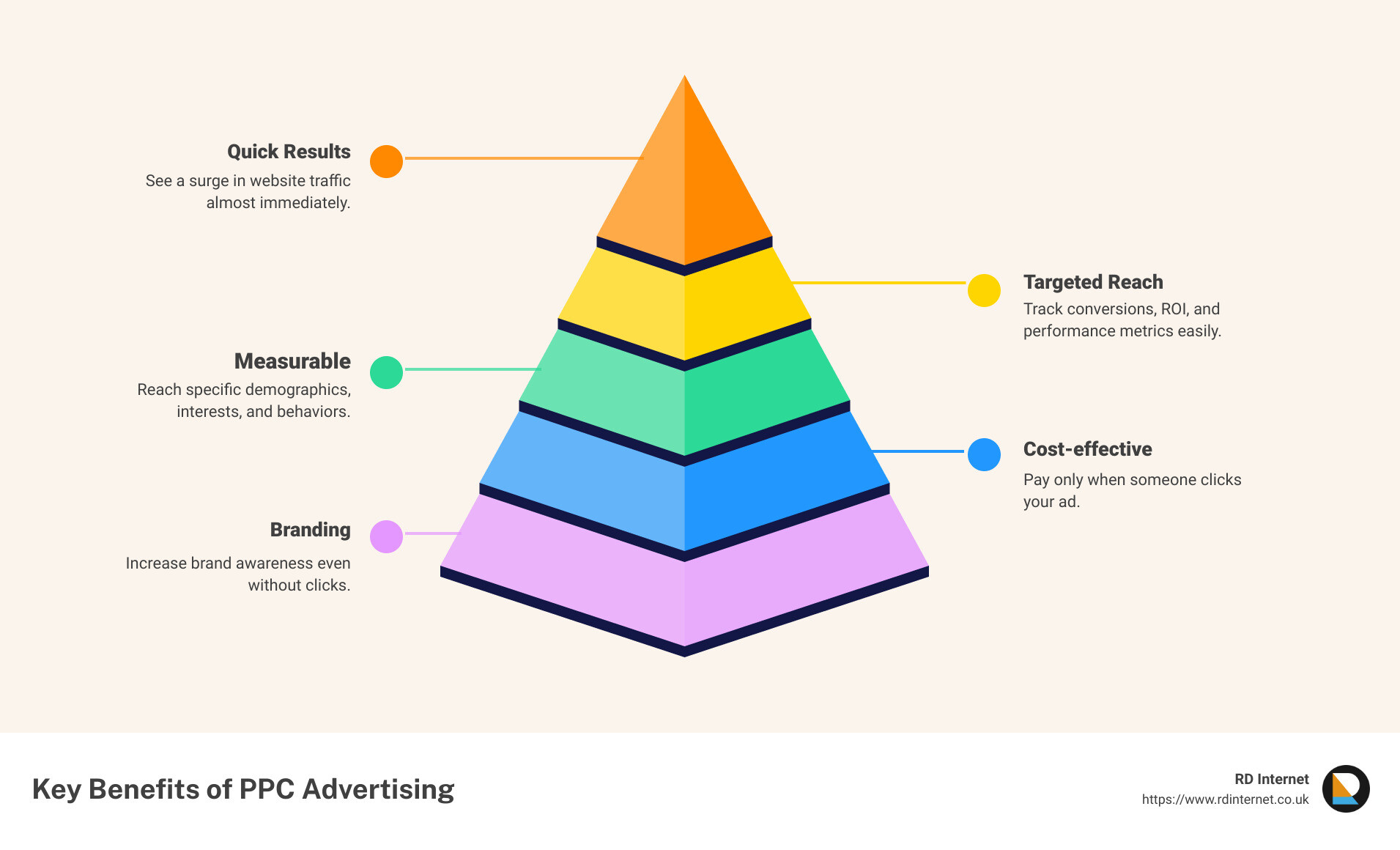
Key benefits include:
- Quick results: See a surge in website traffic almost immediately.
- Targeted reach: Reach specific demographics, interests, and behaviors.
- Measurable: Track conversions, ROI, and performance metrics easily.
- Cost-effective: Pay only when someone clicks your ad.
- Branding: Increase brand awareness even without clicks.
Pay-Per-Click (PPC) advertising offers a compelling, way to connect with potential customers. Unlike SEO, which can take months to yield results, PPC delivers immediate visibility on search engines and social media platforms. This can be especially vital for small businesses looking to outpace their competitors and establish their brand quickly.
Moreover, PPC is highly cost-effective. Marketers only pay when users click their ads, making budget allocation much more predictable and manageable than traditional advertising methods.
What is PPC Advertising?
Pay-Per-Click (PPC) advertising is a form of online marketing where advertisers pay a fee each time someone clicks on their ad. It’s a way to buy visits to your site, rather than attempting to earn those visits organically.
How PPC Works
In PPC, you bid on keywords that your target audience is likely to use when searching for products or services similar to yours. When someone types one of these keywords into a search engine or social media platform, your ad may appear in the search results.
Cost-per-click (CPC) is the amount you pay for each click on your ad. The CPC can vary based on the competitiveness of the keyword and the quality of your ad.
Platforms for PPC Advertising
PPC ads can appear on various platforms including:
- Search engines like Google and Bing
- Social media platforms such as Facebook, Instagram, and LinkedIn

Why Use PPC?
PPC advertising is popular for several reasons:
-
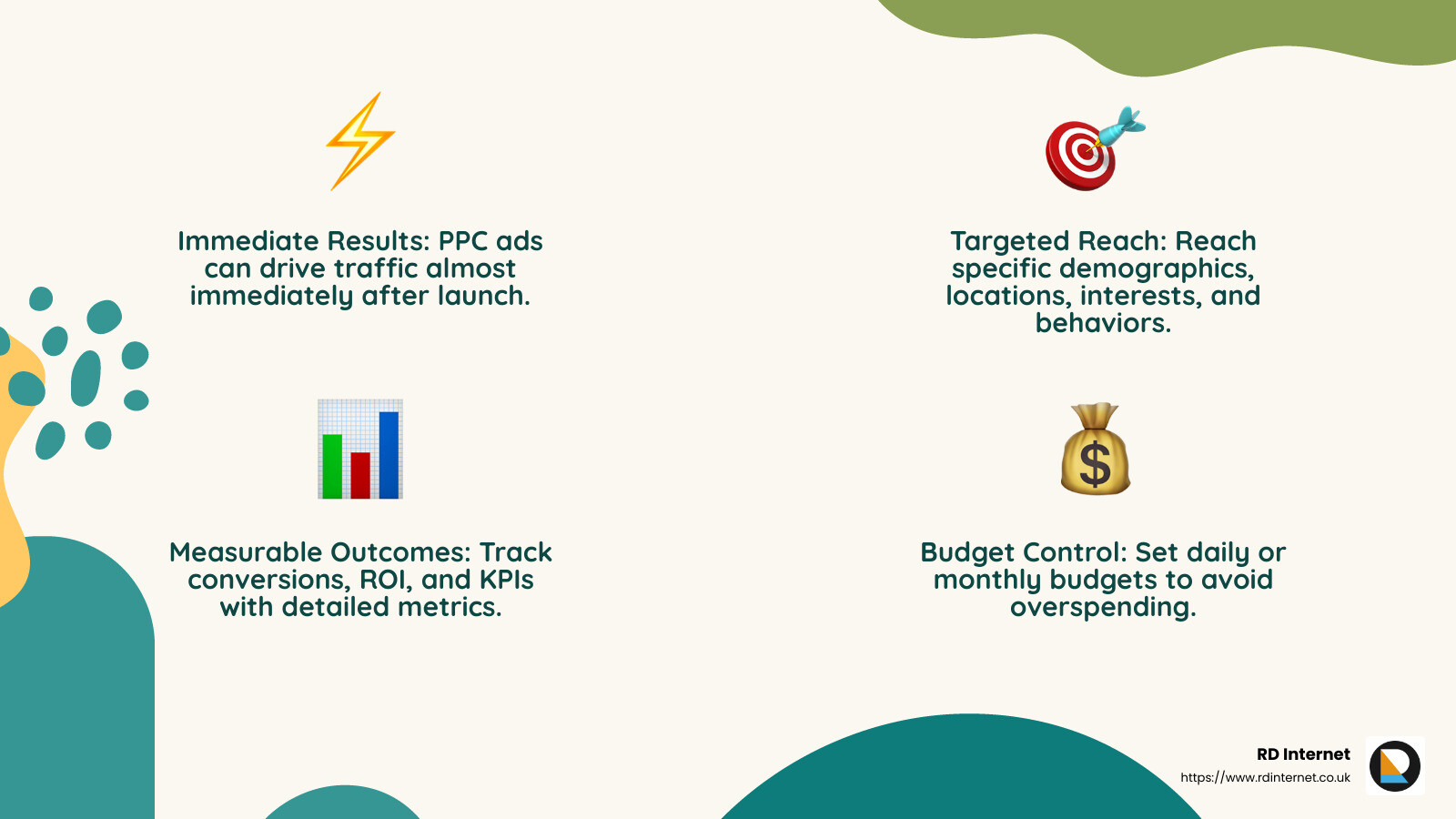
Immediate Results: Unlike SEO, which can take months to show results, PPC ads can drive traffic to your website almost immediately after they are launched.
-
Targeted Reach: You can target specific demographics, locations, interests, and behaviors, making it easier to reach your ideal audience.
-
Measurable Outcomes: PPC provides detailed metrics, allowing you to track conversions, ROI, and other key performance indicators (KPIs).
-
Budget Control: You can set a daily or monthly budget, ensuring you never spend more than you intend.
Types of PPC Ads
Different types of PPC ads include:
- Search Ads: Text ads that appear on search engine results pages.
- Display Ads: Image-based ads that appear on external websites.
- Social Ads: Ads that appear on social media platforms.
- Remarketing Ads: Ads targeting users who have previously visited your site.
- Shopping Ads: Ads featuring product images, prices, and descriptions, ideal for e-commerce.
Real-World Impact
Beth Chernes, an SEO consulting expert, explains:
“Ask yourself: How fast do you want to reach your customers? If you want to immediately direct them to you and your services, PPC ads will do exactly that.”
This fast-track approach can be a game-changer for businesses, allowing them to quickly gain visibility and attract potential customers.
Ana Gotter, a freelance content marketer, adds:
“PPC advertising is an easy way to level the playing field… PPC ads allow you to generate interest now as long as you have the budget for the pay-to-play platforms.”
By leveraging PPC, businesses can complement their SEO efforts, providing a balanced strategy for both immediate and long-term growth.
Next, we’ll dive into the Key Elements of a Successful PPC Campaign, where we explore how to choose the right keywords, craft compelling ad copy, and optimize landing pages for maximum conversions.
Key Elements of a Successful PPC Campaign
Creating a successful PPC campaign involves several key elements. Let’s break down the essentials: keywords, ad copy, landing pages, bid management, and relevance.
Keywords
Keywords are the foundation of any PPC campaign. They trigger your ads when users search for related terms.
How to Choose Keywords
- Start with a Keyword Planner: Tools like Google Keyword Planner help identify relevant keywords.
- Focus on Long-Tail Keywords: These are longer and more specific phrases. They often have less competition and higher conversion rates. For example, instead of “bicycles,” use “affordable mountain bikes for kids.”
- Use Negative Keywords: These prevent your ads from showing up for irrelevant searches. For instance, if you sell luxury watches, you might want to exclude keywords like “cheap watches.”
Ad Copy
Your ad copy needs to grab attention and drive clicks. It consists of a headline, URL, and description.
Crafting Effective Ad Copy
- Speak Directly to Your Audience: Use language that resonates with your target persona.
- Include Main Keywords: Make sure your primary keyword appears in the headline and description.
- Actionable CTA: Use a clear and compelling call-to-action, like “Buy Now” or “Get a Free Quote.”
- Match Your Landing Page: Ensure the language in your ad copy aligns with your landing page to provide a seamless experience.
Landing Pages
A well-optimized landing page is crucial for conversions. It’s where users land after clicking your ad.
Optimizing Landing Pages
- Strong Headline: Your headline should mirror your ad to maintain consistency.
- Clean Design: A clutter-free layout improves user experience.
- Responsive Forms: Make it easy for users to fill out forms, with a prominent CTA button.
- Relevant Copy: Ensure your landing page content is highly relevant to your keywords and ad copy.
- A/B Testing: Continuously test different versions of your landing page to see what works best.
Bid Management
Managing your bids effectively ensures you get the most out of your budget.
Techniques for Bid Management
- Manual Bidding: You set the maximum CPC for your keywords. This gives you more control but requires constant monitoring.
- Automated Bidding: Let the platform adjust your bids to maximize conversions. This saves time but offers less control.
- Bid Modifiers: Adjust bids based on factors like location, device, and time of day to target your audience more precisely.
Relevance
Relevance ties all these elements together. The more relevant your ads are to the user’s search query, the better they will perform.
Enhancing Relevance
- Quality Score: Google uses Quality Score to rate the relevance of your ads and landing pages. A higher score can lower your CPC and improve ad position.
- Ad Extensions: Use ad extensions to provide additional information like location, phone number, or links to specific pages. This can improve your ad’s click-through rate (CTR).
By focusing on these key elements—keywords, ad copy, landing pages, bid management, and relevance—you can create a PPC campaign that drives results and maximizes ROI.
Next, we’ll dive into Advanced PPC Advertising Strategies, where we explore how to refine your keyword research, optimize your ad copy, and more.
Advanced PPC Advertising Strategies
Keyword Research and Selection
Long-Tail Keywords
Long-tail keywords are longer, more specific phrases. They often have less competition and higher conversion rates. For example, instead of “bicycles,” try “affordable mountain bikes for kids.” This helps you attract more targeted traffic.
Keyword Planner
Tools like Google Keyword Planner help identify relevant keywords. You can see search volumes, competition levels, and even get suggestions for new keywords.
Negative Keywords
Negative keywords prevent your ads from showing up for irrelevant searches. For instance, if you sell luxury watches, you might want to exclude keywords like “cheap watches.” This ensures your budget is spent on high-quality clicks.
Ad Copy Optimization
Headline
Your headline is the first thing users see. Make it compelling and include your main keyword. For example, “Buy Affordable Mountain Bikes for Kids.”
Description
Your description should support your headline and provide more details. Include a clear call-to-action (CTA) like “Shop Now” or “Learn More.”
Call-to-Action (CTA)
A strong CTA encourages users to take action. Phrases like “Get a Free Quote” or “Start Your Free Trial” work well.
Ad Extensions
Ad extensions provide additional information like your location, phone number, or links to specific pages on your website. They take up more space on the search results page and can improve your click-through rate (CTR).
Landing Page Optimization
Relevance
Your landing page should match your ad copy. If your ad is about luxury sunglasses, the landing page should focus solely on those sunglasses.
User Experience
A clean, clutter-free design improves user experience. Make sure your forms are easy to fill out and your CTA button is prominent.
Conversion Tracking
Use conversion tracking to monitor how well your landing page is performing. This helps you make data-driven decisions to improve your conversion rates.
Bid Management Techniques
Manual Bidding
Manual bidding allows you to set the maximum cost-per-click (CPC) for your keywords. This gives you more control but requires constant monitoring.
Automated Bidding
Automated bidding lets the platform adjust your bids to maximize conversions. This saves time but offers less control.
Bid Modifiers
Adjust your bids based on factors like location, device, and time of day. For example, you might increase your bid for mobile users if they are more likely to convert.
Audience Targeting and Segmentation
Demographics
Target specific age groups, genders, or income levels. This helps you reach the most relevant audience.
Interests and Behaviors
Target users based on their interests and online behaviors. For example, if you sell fitness equipment, target people interested in healthy eating.
Remarketing
Remarketing targets people who have already visited your website. This keeps your brand top of mind and encourages them to return and complete a purchase.
By mastering these advanced PPC advertising strategies, you can refine your keyword research, optimize your ad copy, and more, leading to higher ROI and better campaign performance. Next, we’ll explore the Top PPC Platforms for Advertising and how to leverage them for your business.
Top PPC Platforms for Advertising
Google Ads
Google Ads is the biggest PPC platform out there. It offers multiple ways to reach your audience:
Search Network: Ads appear at the top of Google search results. Perfect for targeting users actively searching for your product or service.
Display Network: These are banner ads shown on websites that partner with Google. They help increase brand awareness.
Shopping Ads: These ads show product images, prices, and store names at the top of search results. Great for e-commerce businesses.
Facebook Ads
Facebook Ads are excellent for reaching a broad audience with various ad formats:
Image Ads: Simple but effective. Use a single image to grab attention.
Video Ads: Videos can be more engaging than images. They autoplay in users’ feeds, grabbing attention quickly.
Carousel Ads: Showcase multiple products or features in a single ad. Users can swipe to see more.
Microsoft Advertising
Microsoft Advertising (formerly Bing Ads) is another powerful tool:
Search Ads: Similar to Google’s Search Network. Ads appear on Bing search results.
Product Ads: These ads show product details like images and prices, similar to Google Shopping Ads.
Display Ads: Banner ads shown on Microsoft’s partner sites.
YouTube Ads
YouTube Ads are a fantastic way to engage users with video content:
Skippable Ads: These ads can be skipped after 5 seconds. Ideal for longer messages.
Non-Skippable Ads: Must be watched entirely, usually up to 15 seconds. Great for concise, impactful messages.
Bumper Ads: Very short, non-skippable ads (6 seconds or less). Perfect for quick, memorable messages.
Instagram Ads
Instagram Ads blend seamlessly into users’ feeds, making them less intrusive:
Photo Ads: Use a single image to promote your product or service.
Video Ads: Short videos that autoplay in users’ feeds. Can be up to 60 seconds long.
Stories Ads: Full-screen ads that appear between users’ Stories. Disappear after 24 hours, creating a sense of urgency.
By understanding the strengths of each platform, you can choose the best one(s) for your business. Next, we’ll dive into Measuring and Optimizing PPC Performance to ensure you’re getting the most out of your campaigns.
Measuring and Optimizing PPC Performance
To get the most out of your PPC advertising strategies, measure and optimize your campaigns. Here are key metrics and techniques you should focus on:
Conversion Tracking
Conversion tracking is crucial. It tells you if your ads are turning clicks into actions, like purchases or sign-ups.
- Set Up Conversion Goals: Define what actions count as conversions. This could be a sale, a form submission, or a download.
- Track Conversions: Use tools like Google Analytics or Facebook Pixel to track these actions. This data helps you see which ads are working.
Return on Investment (ROI)
ROI measures the revenue generated for every dollar spent on ads. It’s the ultimate indicator of your campaign’s success.
- Calculate ROI: The formula is (Revenue – Cost) / Cost. For example, if you spend $100 on ads and make $300, your ROI is 2x or 200%.
- Optimize ROI: Focus on ads and keywords that bring the highest returns. Reduce spend on low-performing ones.
Quality Score
Quality Score is Google’s rating of your ad’s relevance and quality. It affects your ad rank and cost-per-click (CPC).
- Improve Quality Score: Ensure your ads are relevant to your keywords and landing pages. High-quality scores can lower your CPC.
- Monitor Regularly: Check your Quality Score in your Google Ads account and make adjustments as needed.
Ad Rank
Ad Rank determines your ad’s position on the search results page. It’s influenced by your bid amount and Quality Score.
- Increase Ad Rank: Improve your Quality Score and bid strategically. Higher ad ranks mean better visibility.
- Use Ad Extensions: Adding sitelinks, callouts, and other extensions can boost your ad’s rank by making it more useful to users.
Analytics
Analytics provide insights into your campaign’s performance. They help you understand user behavior and make data-driven decisions.
- Use Google Analytics: Track metrics like bounce rate, session duration, and pages per session. These indicate how users interact with your site after clicking your ad.
- Analyze Data: Look for trends and patterns. Are certain ads or keywords performing better? Use this information to refine your strategy.
By focusing on these metrics, you can continuously refine your PPC advertising strategies to maximize your ROI. Next, let’s explore some frequently asked questions about PPC advertising strategies to deepen your understanding.
Frequently Asked Questions about PPC Advertising Strategies
What is PPC marketing strategy?
A PPC marketing strategy is a comprehensive plan that outlines how to use pay-per-click advertising to achieve specific marketing goals. This could be increasing brand awareness, driving website traffic, or boosting sales.
Example: If your goal is to increase brand visibility, your strategy might include targeting high-volume keywords on Google Ads and running awareness campaigns on social media platforms like Facebook.
What are the key aspects of PPC?
There are several key aspects to a successful PPC campaign:
- Keywords: The foundation of any PPC campaign. Choose relevant keywords that your target audience is searching for.
- Ad Copy: Create compelling headlines and descriptions that attract clicks.
- Landing Pages: Ensure your landing pages are relevant to your ad copy and optimized for conversions.
- Bid Management: Decide how much you’re willing to pay for each click and manage your bids to get the best ROI.
- Relevance: Ensure that your ads are highly relevant to the keywords you’re targeting to improve your Quality Score and ad rank.
How does PPC work?
PPC works by allowing advertisers to place ads on search engines and other platforms, and only pay when someone clicks on their ad. Here’s a simplified breakdown:
- Ad Auction: When a user searches for a keyword, an ad auction determines which ads will appear based on factors like bid amount and ad quality.
- Ad Display: The winning ads are displayed on the search engine results page (SERP) or other placements.
- Click and Cost: You pay a fee each time someone clicks on your ad. This fee is known as the cost-per-click (CPC).
- Conversion: Ideally, the user takes a desired action on your website, such as making a purchase or filling out a form.
By understanding these fundamentals, you can better steer PPC advertising strategies and optimize your campaigns for success.
Next, we’ll dig into the top PPC platforms for advertising to help you choose the right one for your business.
Conclusion
At RD Internet, we specialize in crafting effective PPC advertising strategies that drive results. Our expertise can help your business harness the full potential of PPC to achieve increased revenue and improved online visibility.
PPC Benefits
Quick Results: Unlike SEO, which can take months to show results, PPC campaigns can drive traffic to your website almost immediately. This rapid influx of visitors can translate into quick wins for your business.
Targeted Reach: PPC allows for precise targeting. You can tailor your ads to reach specific demographics, interests, and behaviors. This ensures that your message gets in front of the people who are most likely to convert.
Measurable Outcomes: One of the standout benefits of PPC is its measurability. You can track every click, impression, and conversion, allowing you to calculate your return on investment (ROI) accurately. Tools like Google Analytics make it easy to monitor your campaign’s performance in real-time.
Cost-Effectiveness: With PPC, you only pay when someone clicks on your ad. This pay-per-click model ensures that your budget is spent efficiently, targeting users who have shown interest in your offering.
Brand Awareness: Even if users don’t click on your ad, seeing it can increase brand recognition. Over time, this can lead to higher trust and more conversions.
Increased Revenue
Effective PPC campaigns can significantly boost your revenue. By targeting users with high buying intent and optimizing your ads and landing pages for conversions, you can turn clicks into customers.
Consider this: if you spend $1 on a PPC ad and generate $3 in sales, your ROI is 200%. The key is to continuously optimize your campaigns to maximize this return.
Improved Online Visibility
PPC ads can place your brand at the top of search engine results and across various social media platforms. This prime positioning increases the likelihood that potential customers will see and engage with your brand.
Example: A well-placed Google Ad can ensure that your business appears above organic search results, giving you a competitive edge in a crowded market.
By leveraging platforms like Google Ads, Facebook Ads, and YouTube Ads, you can expand your reach and connect with a broader audience.
Partner with RD Internet
Ready to take your PPC campaigns to the next level? At RD Internet, we have the tools and expertise to help you achieve your marketing goals. Our custom strategies are designed to deliver maximum ROI and lift your brand’s online presence.
Find how our PPC advertising services can benefit your business.
In conclusion, a well-executed PPC strategy is a powerful tool for increasing revenue and enhancing online visibility. By partnering with RD Internet, you can ensure that your PPC campaigns are optimized for success.
Recent Comments