

Does your business struggle with gaining online visibility? Do you find it challenging to compete with your rivals on the digital stage? If so, it means you need to embark on mastering one of the most effective strategies in the digital marketing arena, Media SEO.
Securing a robust online presence goes beyond having a well-designed website. It’s about ensuring that your website and social media platforms rank higher in search engine results. This is where Media SEO comes to the rescue. This strategy combines Search Engine Optimization (SEO) practices with social media marketing, raising your brand’s awareness and extending your reach to a larger audience.
At RD Internet, we understand the integral role of Media SEO in enhancing your online visibility and driving quality traffic to your website. Given the interconnected nature of SEO and social media, gaining expertise in Media SEO can be the game-changer in your digital marketing endeavours.
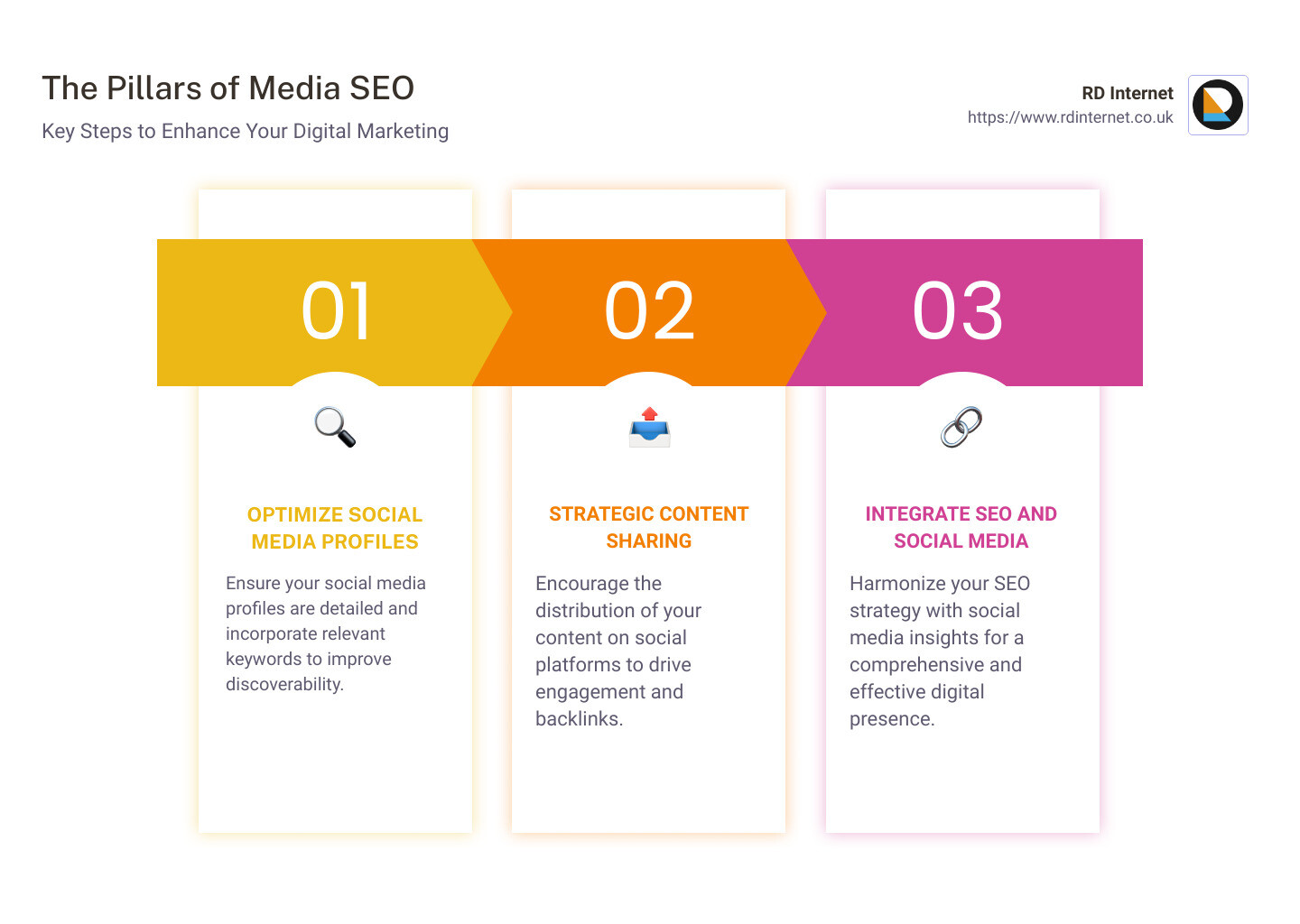
To give our clients a quick understanding, here is a brief checklist about Media SEO:
– Evaluate and optimize your social media profiles.
– Use relevant keywords into your social media posts and profiles.
– Encourage sharing of content on various social media platforms.
– Incorporate social media performance into your SEO strategy.
– Create a comprehensive strategy by aligning your SEO and social media efforts.
As we delve deeper into this guide, we aim to reveal the secrets behind Media SEO and how to use it effectively for improving your brand’s visibility across different search engines and social media channels. Get ready to elevate your digital presence and leave an indelible footprint in the digital world!
The Intersection of SEO and Social Media
The digital landscape has blurred the lines between SEO and social media, creating a realm where these two facets of digital marketing intersect and complement each other.
The Role of Social Media in SEO
At first glance, social media management and SEO may seem like two separate entities. Social media is about building relationships and engaging with your audience, while SEO focuses on specific keyword analyses to attract as many eyes as possible. However, when you look closer, you’ll see that these two strategies can work together, amplifying the results of each other.
When you optimize your social profiles and posts using SEO strategies, you attract potential customers through search. This strategy, known as social media SEO, enhances your brand’s visibility and increases the chances of your content being found by the right audience. Moreover, it exposes your audience to your products and services, leading to potential conversions.
How Social Media Profiles Impact Search Rankings
While it’s true that search engines like Google do not officially use social signals as a ranking factor, the benefits of integrating these strategies are undeniable. Social media profiles often appear among top search results, especially for branded keywords, immediately after the brand’s website result. This highlights the significant role social media plays in enhancing your brand’s presence on search engine results pages (SERPs) (Sprout Social).
When your brand attracts a lot of traffic, search engines perceive your brand as credible, relevant, and high-quality, which can lead to a higher search result. Posting interesting, engaging content on social media can boost your website traffic, and when people share your website’s link, it can enhance your page authority and rankings.
Social Media as a Significant Source of Traffic
Social media channels are a significant source of traffic for many organizations. For instance, platforms like Facebook serve as an aggregator of positive reviews and potential bookings, making it an SEO goldmine for local businesses. Platforms like Google Analytics categorize social media as a unique entity, allowing you to understand your social media efforts, target audience, and search optimization.
By using social media effectively, you can funnel traffic back to your website, increasing visibility and potentially resulting in more backlinks. These backlinks can significantly impact your search engine rankings, making social media a powerful tool for SEO (RD Internet).
In conclusion, the intersection between SEO and social media is not only possible but beneficial in amplifying your digital marketing efforts. It’s time to start leveraging the power of social media SEO to improve your online presence and increase your brand’s visibility.
Optimizing Social Media Profiles for SEO
The next step on your quest to master media SEO is optimizing your social media profiles. This is an integral part of your SEO strategy, as social media profiles often rank among the top search results, especially for branded keywords.
Importance of Detailed Social Media Profiles
The details in your social media profiles are more important than you might think. They play a significant role in your visibility on search engines. Details such as your business name, location, and industry should be accurately and fully filled out. The more information you provide in these sections, the easier it is for search engines to understand what your business does and position it in front of the right audience.
Each platform offers different levels of detail. For instance, Facebook has a generous ‘About’ section, while Instagram offers a minimalist bio. Regardless of the platform, make sure you utilize available space to your advantage. Don’t let these spaces go to waste; insert relevant industry and brand keywords, location details, and links (Sprout Social).
Integrating Keywords into Social Media Profiles
Just as you would incorporate keywords into your website content for SEO, do the same for your social media profiles. Social media platforms are becoming more search-oriented, and integrating keywords into your bio, posts, and even hashtags can increase your visibility on search engines.
Consider the words and phrases your potential customers might use when searching for your products or services. Include these in your social media profiles in a natural and meaningful way.
Linking Social Media Profiles Back to Your Website
The URL in the bio of your social media accounts is a follow link, which means it passes SEO authority to your site. Ensure you’re taking advantage of this and linking back to your website from your social media profiles. This simple step can increase your website’s traffic and boost your search engine rankings.
Additionally, don’t forget to include links to your website within your social media posts. This not only increases traffic but also encourages content sharing, creating a snowball effect that can significantly improve your visibility online.
Encouraging Content Sharing on Social Media
The more your content is shared on social media, the better your chances of increasing traffic and building more backlinks. Encourage your audience to share your posts by creating engaging and shareable content.
You can also use social media to promote new pieces of content on your website. The more visibility your content gets, the higher the potential for backlinks and traffic, which can result in a significant boost in your search engine rankings.
At RD Internet, we are here to guide you through every step of your media SEO journey. By optimizing your social media profiles, you’re one step closer to improving your online visibility and growing your business.
Optimizing Social Media Posts for SEO
In media SEO, optimization doesn’t stop at your social media profiles – it extends to your posts as well. Understanding how to optimize your content for search visibility can significantly boost your online presence and brand recognition.
Using Relevant Keywords and Hashtags in Posts
Just as we integrate keywords into our profiles, we should also incorporate them into our social media posts. Keywords in your posts can increase your visibility in search results on social platforms. However, it’s crucial not to overstuff your posts with keywords – the key is to integrate them naturally into your content.
Hashtags also play a vital role in media SEO. They act as a powerful tool to connect your content with a broader audience interested in the same topics. Remember to use relevant and popular hashtags that resonate with your audience and relate to your content.
Importance of Alt-Text, Subtitles, and Location Tags in Posts
Alt-text, subtitles, and location tags can greatly enhance media SEO. Alt-text makes your visual content more accessible and helps search engines understand your content better.
Subtitles in video contents are not just for accessibility; they also improve SEO. By including your target keywords in your subtitles, you can increase the chances of your videos appearing in search results.
Location tagging is particularly essential for local businesses. By tagging your location in your posts, your content can appear in local search results, making it easier for local customers to find your business.
Making Website Content Easy to Share on Social Media
Another crucial aspect of media SEO is making your website content easily shareable on social media. By integrating social sharing buttons on your site, you give visitors the ability to share your content with just a click. This not only increases your content’s reach but also generates more traffic to your site, improving your site’s SEO.
At RD Internet, we understand the power of media SEO in enhancing your online visibility. By optimizing your social media posts, you can reach a larger audience, increase your website traffic, and grow your business. In the next section, we will delve into the importance of leveraging social media to support your SEO efforts.
Leveraging Social Media to Support SEO Efforts
In the digital marketing landscape, social media and SEO are two sides of the same coin. When used effectively, they can complement each other to increase your online visibility, drive traffic to your website, and build a strong brand presence. In this section, we will explore how to leverage social media to support your media SEO efforts.
Using Social Data for Content Ideas
The first step is to utilise social data for content ideas. Your social media feeds can be a goldmine of fresh and trending content ideas. From potential blog topics to the latest trends and keywords, there’s arguably no better place than social media to find them.
For instance, the conversations that occur on platforms such as Facebook, Twitter, or LinkedIn can provide real-time insights into what your audience is interested in. These insights can, in turn, guide your content creation process. Using a social listening tool like the one provided by Sprout Social can streamline this process, helping you identify popular topics and trends without much guesswork .
Fine-Tuning Publishing Frequency on Social Media
Next, you need to fine-tune your publishing frequency on social media. Establishing a consistent content calendar produces better traffic results than posting at random. Familiarise yourself with the best times to post on social media and ensure that links to your site are part of your social content strategy.
Also, don’t shy away from recycling links to blog posts. Given the effort required to put together any given post, they deserve to be shared multiple times. You can repurpose your content for social distribution to avoid repetition and keep your content fresh .
Building Relationships with Audience and Influencers on Social Media
Lastly, building relationships with your audience and influencers on social media is crucial. An engaged community is more likely to click on your website links and share your content, thereby driving meaningful traffic to your site.
Social media platforms provide an excellent avenue for developing and nurturing relationships with your target audience, including influencers. When influencers reshare your content, your brand’s reach is amplified, providing a significant boost to your media SEO efforts .
At RD Internet, we understand the power of leveraging social media to support your SEO efforts. We can guide you through these steps effectively, helping you maximise your online visibility and reach your business goals. In the next section, we will explore how to create a comprehensive strategy that integrates SEO and social media effectively.
Creating a Comprehensive Strategy for SEO and Social Media
To truly harness the potential of media SEO, it’s crucial to have a comprehensive strategy that integrates both SEO and social media effectively. It’s about creating a synergy where both elements work together to amplify your online visibility and reach.
Maximizing Marketing Efforts through SEO and Social Media Integration
The integration of SEO and social media can greatly maximize your online marketing efforts. It’s not about treating these two as separate entities but viewing them as interconnected components of your digital marketing strategy.
1. Integrated Keyword Strategy: Applying the keyword strategy from your website to your social media engagement can add coherence and maximise visibility. Use relevant keywords in your social media posts and profiles to help improve SEO effectiveness.
2. Social Sharing: Encourage sharing of your website content on social media platforms. Integrating social sharing buttons on your blog and website can increase traffic from social media and potentially influence search rankings, as Google has been known to use social media sharing data for this purpose.
3. Content Lifespan and Engagement: Use social media to extend the lifespan of your content. Strategies like using specific hashtags, tagging influencers, and hosting giveaways can not only increase engagement but also prolong the relevance of your content.
At RD Internet, we can help you create a tailored SEO and social media strategy that maximises your marketing efforts and optimises your online visibility.
Uncovering Customer Insights and Content Ideas through SEO and Social Media
SEO and social media can be a goldmine for customer insights and fresh content ideas.
1. Monitor Engagement: Keep track of the likes, comments, and shares your content receives on social media. This can help identify topics and types of content that resonate with your audience.
2. Use Social Data: Social data can provide valuable insights into your target audience’s preferences and behaviours. This data can be used to inform your content creation and SEO strategies.
3. Recycle High-Performing Content: Don’t be afraid to repurpose content that has performed well in the past. This can extend the content’s life and continue to engage your audience.
By uncovering customer insights and coming up with new content ideas through SEO and social media, you can keep your digital marketing strategy fresh and relevant.
At RD Internet, we use these insights to drive our strategies, ensuring that we’re always delivering content that resonates with your target audience and drives traffic to your site.
Mastering media SEO isn’t an overnight process. It requires a strategic approach, consistent effort, and a willingness to adapt based on insights and performance. But with the right strategy in place, the rewards can be substantial.
In the next section, we’ll explore the power of media SEO in digital marketing, giving you a clearer understanding of its potential impact on your business.
Conclusion: The Power of Media SEO in Digital Marketing
In digital marketing, the power of media SEO cannot be underestimated. As we’ve explored in the previous sections, integrating social media and SEO strategies can have a significant impact on your online visibility, website traffic, and ultimately, your business’s success.
Media SEO is about more than just getting your website to the top of search engine rankings. It’s about fostering relationships with your audience, building brand recognition, and driving targeted traffic to your site. It’s about making your brand memorable and trustworthy in the eyes of your potential customers.
As a small business owner, understand that neither SEO nor social media can do it all when it comes to driving digital strategy goals. They work best when they are integrated and leveraged to support each other.
Consider these impressive statistics:
- 54% of social media users research products on the platforms
- 71% of consumers who have had a positive experience with a brand on social media are likely to recommend the brand to their friends and family
- Consumers are 6x more likely to buy from a product page that includes pictures from social media.
These stats underline how social media drives the same goals as SEO: increasing visibility, driving traffic, and converting visitors into customers.
At RD Internet, we understand the intricacies of media SEO and are committed to helping you navigate this complex landscape. We appreciate that these details might seem small, but they can make a significant difference in your search engine ranking.
And remember, it’s not just about the technology or the algorithms. It’s about people. It’s about connecting with your audience in a meaningful way and providing them with the value they seek.
By optimising your social media profiles, creating engaging and keyword-rich content, and focusing on building relationships rather than just promoting your business, you can harness the power of media SEO and take your digital marketing to new heights.
For more detailed insights into SEO strategies, visit our SEO Services page. And if you’re interested in elevating your social media presence, check out our range of Digital Marketing Services.

Media SEO is not a one-time effort but a continual process of improvement and adaptation. But the potential rewards in terms of increased visibility, engagement, and business growth make it well worth the effort.
In the rapidly evolving digital landscape, standing still is not an option. Embrace the power of media SEO, and set your business on a path to long-term digital marketing success.
Recent Comments