

Introduction to PPC Ad Campaign Management
Welcome to the world of Pay-Per-Click (PPC) advertising, a realm where businesses can catapult their online presence to new heights, drive increased traffic, and ultimately, boost their bottom line. As a small business owner in Cardiff seeking to dominate the digital landscape, understanding and mastering PPC ad campaign management is crucial in your quest to outshine competitors and amplify your online visibility.
PPC ad campaign management is essentially the process of overseeing and guiding the strategy of your business’s PPC ad campaigns. It involves various tasks, from ad creation, keyword research, and bidding strategy to monitoring performance metrics and optimizing campaigns for better results.
Remember, in the digital marketplace, standing out is not an option but a necessity. And with expertly managed PPC campaigns, you can reach your target audience at the right time with the right message, leading to improved website traffic and increased sales. This guide will delve into the intricacies of PPC ad campaign management, providing you with the knowledge and tools to effectively manage your PPC campaigns and maximize your return on investment.
In the sections that follow, we’ll break down the basics of PPC, highlight the role of a PPC manager, unveil a step-by-step guide to managing your PPC ads, and explore the benefits of hiring a professional PPC agency. So, let’s dive in and start your journey towards mastering PPC ad campaign management!
Understanding PPC: The Basics
In the quest to dominate online advertising, understanding pay-per-click (PPC) marketing is a critical first step. Let’s delve into what PPC is, how it operates, and why it’s a game-changer in the digital marketing landscape for businesses like yours.
What is PPC?
Pay-per-click (PPC) is a type of online advertising where you, as an advertiser, pay a fee each time your ad gets clicked by a user. It’s like an express lane on the busy highway of online visibility, where you’re essentially buying visits to your website, rather than earning them organically. This form of advertising focuses on targeting potential customers who are actively searching for the products or services you offer, making it a powerful tool for driving qualified traffic to your site. You can use Google Ads or Microsoft ads.
How Does PPC Work?
PPC operates on an auction system. When a user performs a search using keywords related to your business, an automated auction takes place behind the scenes. Search engines assess all eligible ads based on factors such as your bid amount (how much you’re willing to pay per click), the relevance of your ad, and its quality. The highest-ranking ads then earn the spotlight on the search engine results page (SERP).
One pivotal aspect of PPC is the selection of keywords. These are the triggers that prompt your ad to appear when users perform a search. These keywords should be carefully chosen to be highly relevant to your business and specific enough to capture the attention of your ideal customer.
The Importance of PPC in Digital Marketing
PPC holds a prominent place in the world of digital marketing. The ability to secure a spot above organic search results on the SERP can give your business an immediate visibility boost, a significant advantage in today’s competitive marketplace.
But the benefits of PPC go beyond just driving traffic. PPC targets users who are actively seeking your products or services, which significantly increases the likelihood of conversions. This means that the traffic you’re driving to your site is already interested in what you have to offer, leading to a higher potential for increased sales and revenue. Moreover, the results from PPC campaigns are measurable, providing valuable insights to refine your marketing strategies and drive better results.
In essence, PPC is a cost-effective and efficient way to amplify your online visibility, drive targeted traffic, and increase conversions. Whether you’re a small business owner in Cardiff or the leader of a global enterprise, leveraging PPC in your digital marketing strategy can be a game-changer for your online success.
The Role of a PPC Advertising Manager
In the world of digital advertising, the PPC Advertising Manager is the captain of the ship, navigating the complex waters of online ads to ensure the smooth sailing of your business.
Responsibilities of a PPC Manager
A PPC Manager is a maestro at orchestrating an effective pay-per-click ad campaign. Their responsibilities are multi-faceted, encompassing every stage from the initial design to the launch of the campaign.
The first step is developing a winning PPC strategy. They take into account various factors like your business goals, target audience, industry trends, and competitor analysis to craft a bespoke PPC strategy designed to deliver results. They determine the most effective keywords related to your products or services, ensuring your ads appear in front of users who are most likely to convert.
Once the strategy is in place, the PPC manager takes charge of managing your PPC campaigns. This involves setting up your ad campaigns on different platforms, such as Google AdWords, Facebook, YouTube, and other social media channels. They handle everything from ad creation, setting bids, targeting the right demographics, to scheduling ads for optimal visibility.
But their role doesn’t end with launching a campaign. An integral part of a PPC manager’s responsibilities is the ongoing monitoring and optimization of your PPC campaigns. They continuously track the performance of your ads, measuring results using key metrics like click-through rates, conversion rates, and cost per acquisition. Based on these insights, they make necessary adjustments to enhance the effectiveness of your campaigns, ensuring that your advertising budget is managed in a targeted and efficient manner.
The Importance of a PPC Manager in a Campaign
A PPC Manager is not just a role, it’s a necessity. They play a pivotal role in your digital marketing success, ensuring that your PPC campaigns are as effective and profitable as possible. They are the wizards behind the curtain, making sure your ad campaigns reach their full potential.
By managing and optimizing your PPC campaigns, they help to drive targeted traffic to your website, leading to increased conversions and business growth. They are your strategic partner, helping you to maximize your return on investment and ensure your PPC advertising budget is used effectively.
In essence, a PPC Manager is your key to dominating online advertising and boosting your ROI. Whether you’re a small business owner in Cardiff looking to improve your online presence or a global enterprise aiming to increase your revenue, a proficient PPC Manager can help you leverage the power of pay-per-click advertising to achieve your business goals.
With expert management and strategic planning, you can master PPC Ad Campaign Management, leading your business to unparalleled online success.
How to Manage PPC Ads: A Step-by-Step Guide
Navigating the world of pay-per-click advertising can seem like a daunting task, particularly for small business owners. But fear not, mastering PPC ad campaign management is within your reach. By following this step-by-step guide, you can confidently manage your PPC ads, boost your ROI, and dominate online advertising.
Choosing Your PPC Campaign Management Tools and Software
The first step in managing your PPC ads effectively is to choose the right campaign management tools and software. These platforms provide you with the necessary functionality to plan, execute, and monitor your PPC campaigns. Some popular platforms include Google Ads and Microsoft Ads. These platforms are user-friendly and offer a wealth of features that can help you create and manage effective ad campaigns.
Remember, the right tool will not only streamline your PPC ad management process but also help you gain insights into your campaign performance and adjust your strategies as needed.
Understanding PPC Campaign Structure
A well-structured PPC campaign is key to achieving your digital marketing goals. Understanding the structure of a PPC campaign will help you organize your ads effectively, resulting in better performance and higher ROI.
In a PPC campaign, you can create multiple ad groups within a single campaign. Each ad group should contain ads and keywords that are relevant to each other. This structure allows you to set daily budget caps, day-parting, and geo-targeting parameters at the campaign level, ensuring better control over your ad spend and performance.
Identifying Your Landing Pages
The landing page is where your PPC traffic ends up. It’s crucial to direct your PPC visitors to a landing page with a relevant offer and a clear call-to-action, rather than your homepage or blog. By doing so, you increase the chances of conversion and make your ad spend more efficient.
Don’t forget to add a tracking token or UTM parameter to your landing page URL. This will help you identify the source of your leads and measure the effectiveness of your PPC campaign.
Building Your Keyword Strategy
Keywords are the backbone of any successful PPC campaign. They are the terms and phrases your target audience uses when searching for products or services like yours.
To build an effective keyword strategy, use keyword research tools to identify relevant keywords. Choose keywords that align with your business offerings and the intent of your target audience. Remember, the more relevant your keywords are to your ads and landing page, the higher your chances of achieving a high-quality score and driving conversions.
Creating Your Ads
Once you’ve identified your keywords, it’s time to create your ads. Your ad copy should be compelling, relevant, and tailored to your target audience. Write headlines and descriptions that clearly communicate your value proposition and compel users to click on your ad.
Remember, you can create multiple ads within each ad group and test different variations to see which ones perform best. This A/B testing can help you optimize your ads and improve your campaign performance.
Sharing the Completed Template with Stakeholders
After you’ve set up your PPC campaign, it’s important to share your campaign plan with all relevant stakeholders, whether they are internal team members or external partners. This ensures that everyone is on the same page about your campaign goals, strategies, and performance metrics.
In conclusion, managing PPC ads can be a complex process, but with the right strategies and tools, you can effectively navigate the PPC landscape, boost your ROI, and dominate online advertising. Follow this step-by-step guide, and you’ll be well on your way to mastering PPC ad campaign management.
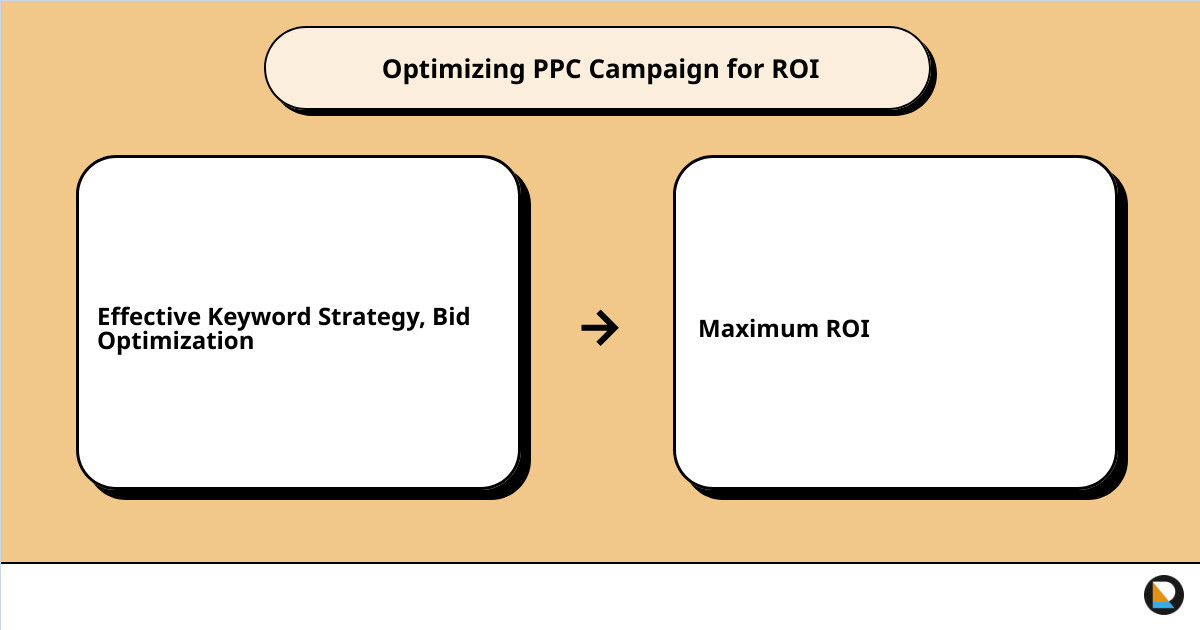
Optimizing Your PPC Campaign for Maximum ROI
In order to maximize the ROI of your PPC campaign, you need to regularly fine-tune and optimize your strategies. This involves pruning non-performing keywords, optimizing your bids for profitable conversions, and tailoring your campaign targeting based on devices, geography, and time. Let’s explore these techniques in more detail.
Pruning Non-Performing Keywords
Just as a gardener trims away dead branches to allow a plant to flourish, trimming or “pruning” non-performing keywords from your PPC campaign can help your ads perform better. These could be keywords that generate clicks but do not lead to conversions, have low Quality Scores (3 or lower), or convert at an unprofitable cost. By removing these keywords, you can focus more of your budget on the keywords that actually make you money. This information can be found under the “Search terms” subtab in your Ads account.
Bid Optimization for Profitable Conversions
Bid optimization is another key strategy to boost your ROI. This involves determining which keyword bids will yield the most profitable conversions. To do this, you need to figure out how much you can afford to pay for each conversion while still making a profit. Factors to consider include your customer lifetime value, your business model, and your definition of a conversion (such as a phone call, sale, or demo). By fine-tuning your bids in this way, you can maximize the return on each dollar spent.
Campaign Targeting Based on Devices, Geography, and Time
Targeting your campaign based on devices, geography, and time can also significantly improve your PPC performance. For instance, you might find that your audience is more likely to convert on mobile devices, in a specific location, or at a particular time of day. By adjusting your ad delivery to match these trends, you can increase your chances of reaching your audience when they’re most likely to convert.
In addition to these strategies, Google Ads offers features like bid adjustments and ad scheduling that can help you further hone your targeting and boost your ROI. Bid adjustments allow you to increase or decrease your bids based on specific criteria like device type or location, while ad scheduling lets you control when your ads appear based on the time or day of the week.
Implementing these techniques can help you to significantly optimize your PPC campaign, thereby maximizing your ROI and dominance in the online advertising sphere.
The Benefits of Hiring a Professional PPC Agency
The online advertising sphere can be a minefield of technical jargon, complex algorithms, and ever-changing best practices. For businesses looking to maximize their online visibility and drive targeted traffic to their websites, the task of managing a PPC ad campaign can be daunting and time-consuming. This is where hiring a professional PPC agency can prove invaluable.
When to Consider Hiring a PPC Management Company
There are several situations when it might be beneficial to consider hiring a PPC management company. If you’re new to online advertising, having an expert guide you through the process can save you from costly mistakes and accelerate your learning curve.
Businesses that lack an in-house advertising team may struggle to keep up with the demands of managing a PPC campaign. A dedicated PPC management company can take the reins, leaving you free to focus on other aspects of your business.
Small firms without sufficient manpower to effectively oversee PPC campaigns can also benefit from outsourcing this task. A professional PPC agency can provide the expertise and resources necessary to run a successful campaign, thereby freeing up your team to focus on their core responsibilities.
Moreover, if your organization can’t afford the sometimes-expensive database and software systems needed for optimal PPC management, hiring a dedicated agency can be a cost-effective solution. They already have the necessary tools and know-how to optimize your campaign and ensure your advertising budget is spent wisely.
What to Look for in a PPC Management Firm
When hiring a PPC agency, there are several key factors to consider. First and foremost, look at the experience and expertise of the agency. An experienced PPC company will have a proven track record of managing successful campaigns and keeping up-to-date with the latest industry trends and updates.
Transparency and reporting are also crucial. You should have a clear understanding of where your advertising budget is being spent and what results it’s producing. A professional agency will provide regular, detailed reports showing the performance of your campaigns, including key metrics like click-through rates, conversion rates, and return on investment.
Don’t overlook the power of client testimonials and reviews. These can provide reassurance of the company’s capabilities and customer service. Look for case studies or examples of previous work to see how they’ve helped other businesses achieve their goals.
Finally, consider the range of services the PPC company offers. Do they specialize solely in PPC, or do they offer a broad range of digital marketing services? Depending on your needs, a more holistic approach could provide better results.
In a nutshell, hiring a professional PPC agency can provide a significant boost to your online advertising efforts, enhancing your online visibility, driving more targeted traffic to your site, and ultimately increasing your bottom line.
Conclusion: Mastering PPC Ad Campaign Management for Business Success
In the vast and competitive digital landscape, mastering PPC ad campaign management is like having a secret weapon in your arsenal. It’s a game-changing strategy that can propel your business to new heights of online visibility and success. By effectively leveraging the power of PPC campaigns, you can reach your target audience more effectively, boost your click-through rates, increase conversions, and maximize your return on investment (ROI).
The process of managing PPC ad campaigns can be complex, involving various steps such as selecting the right tools and software, understanding campaign structures, identifying landing pages, building a keyword strategy, creating engaging ads, and effectively communicating with stakeholders. However, the rewards of a well-executed PPC campaign are worth the effort. It can deliver almost instant visibility for your brand, generate high-quality leads, and provide measurable results that can help you refine your marketing strategy further.
While managing PPC campaigns in-house is an option, the time, effort, and knowledge required for effective campaign management can be overwhelming for small business owners like yourself. This is where partnering with a professional PPC agency like RD Internet can make a significant difference. A professional agency brings in-depth knowledge, industry experience, and a suite of advanced tools to the table, ensuring your PPC campaigns are set up, optimized, and managed to deliver maximum ROI.
In conclusion, mastering PPC ad campaign management is an essential step towards dominating online advertising and boosting your business’s success. It’s not just about getting your ads in front of your audience; it’s about making sure those ads are designed, targeted, and managed in a way that delivers tangible, profitable results. So, whether you choose to manage your PPC campaigns in-house or hire a professional agency, remember that the ultimate goal is to boost your ROI and dominate online advertising.
Remember, the path to PPC mastery is a journey. It involves continuous learning, experimenting, optimizing, and refining your strategies. But with the right approach, tools, and partnerships, you can make that journey a successful one. So, why wait? Start mastering PPC ad campaign management today, and watch your online advertising efforts soar to new heights of success!
Recent Comments