

How to Promote Online Courses on Social Media: 10 Best Tips
From Zero to Hero: How to Sell Online Courses on Social Media
If you’re looking to understand how to promote online courses on social media, you’re in the right place. Here’s a quick rundown on effective strategies:
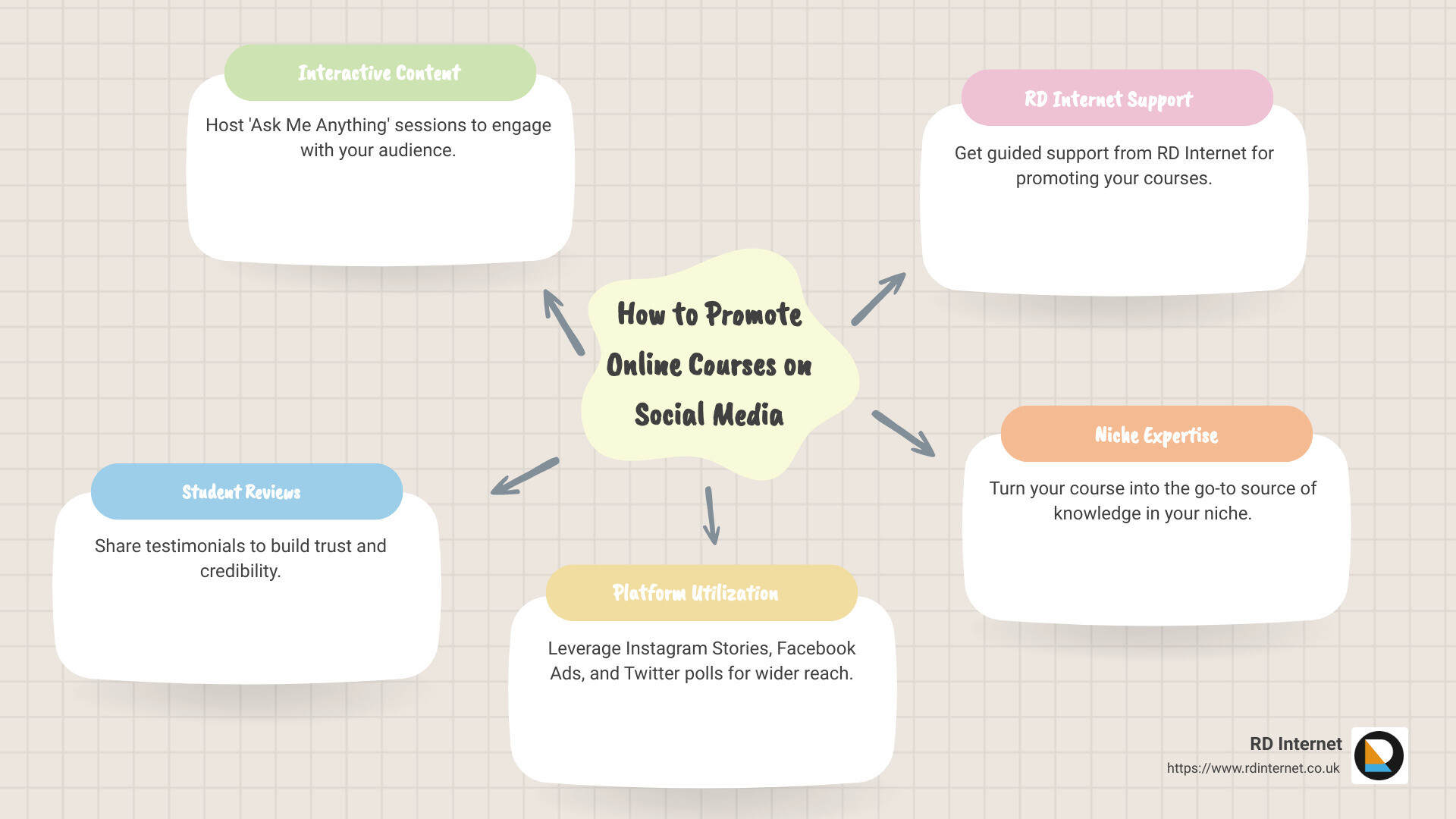
- Engage through interactive content like “Ask Me Anything” sessions.
- Share student reviews and testimonials to build trust.
- Utilize different platforms like Instagram Stories, Facebook Ads, and Twitter polls.
Promoting an online course on social media can feel overwhelming, especially for small business owners who are also juggling other responsibilities. With so many platforms and strategies to consider, where do you even start?
That’s where we come in.
At RD Internet, our mission is to guide you right from day one. We’ll break down how to use various social media platforms to turn your online course from an unknown entity into the go-to source of knowledge in your niche.
Understanding Your Audience
Before diving into how to promote online courses on social media, it’s crucial to understand your audience. Knowing who you are talking to will help you tailor your content and strategies effectively. Let’s break it down:
Target Audience
Your target audience is the group of people most likely to benefit from your course. Identifying this group is the first step. Ask yourself:
- Who needs this information?
- What problems does my course solve?
- What are their interests and hobbies?
For example, if you are offering a course on digital marketing, your audience might include small business owners, marketing professionals, and entrepreneurs.
Personas
Creating detailed personas can help you visualize your audience. A persona is a fictional character that represents a segment of your target market. Include details like age, job title, goals, and challenges.
Example Persona:
- Name: Sarah
- Age: 32
- Job Title: Social Media Manager
- Goals: Improve her company’s online presence, learn new marketing strategies
- Challenges: Limited budget, time constraints
Demographics
Demographics provide statistical data about your audience. This includes:
- Age: Are they younger or older?
- Gender: Male, female, or non-binary?
- Location: Where do they live?
- Education Level: High school, college, or beyond?
Fact: According to Statista, there are over 4.2 billion social media users worldwide. Knowing the demographics of these users can help you target your course more effectively.
Engagement
Engagement is how you interact with your audience and how they interact with you. High engagement means your content resonates with your audience. Here are some ways to boost engagement:
- Ask Questions: Use polls and questions to get feedback.
- Respond to Comments: Show that you value their input.
- Share User-Generated Content: Highlight testimonials and success stories from your students.
By understanding your audience, you can create content that speaks directly to them, increasing the chances of turning potential students into actual students.
How to Promote Online Courses on Social Media
Leveraging Facebook Ads
Facebook Ads are a powerful tool to promote your online courses. They allow you to reach a broad audience and target specific groups who are most likely to be interested in your course.
Retargeting is key. These ads appear to people who have already visited your website but haven’t enrolled. This keeps your course top-of-mind and increases the likelihood of conversion.
For example, if someone visited your site to check out your online piano lessons but didn’t sign up, a retargeting ad can remind them of the benefits and special offers, nudging them to enroll.
Quote: “Retargeting ads are like gentle reminders that keep your course in the minds of potential students.” – Lisa Genova
Instagram Stories and Reels
Instagram is a visual platform with over 2 billion monthly active users. Instagram Stories and Reels are perfect for promoting your online courses.
Instagram Stories are short, engaging updates that disappear after 24 hours. Use them to share quick tips, behind-the-scenes looks, or student testimonials.
Instagram Reels allow you to create longer, more detailed videos. Use them to dive deeper into course content or share mini-lessons.
Example: Emily Reagan effectively used Instagram Stories and Reels to promote her Digital Marketing Assistant course. Her engaging stories and targeted ads maximized visibility and enrollments.
Engaging with Twitter Polls
Twitter Polls are a fantastic way to engage your audience and gather feedback. They are simple to create and can run from 5 minutes to 7 days.
Polls can be used to ask your audience what topics they are most interested in or what they think about a specific course module.
Example: Eventbrite used Twitter polls to ask their audience to help choose the name for a new program, building anticipation and engagement.
Utilizing LinkedIn for Professional Courses
LinkedIn is the go-to platform for professionals. It’s ideal for promoting courses aimed at career growth and professional development.
Leverage Your Network: Use your existing connections to spread the word about your course. Don’t hesitate to let your network know when you launch a new course.
Tags and Hashtags: Mention relevant tools and use hashtags to increase the visibility of your posts. This can significantly boost engagement and reach.
Example: A course on project management can tag @ProjectManagementInstitute and use hashtags like #ProjectManagement and #ProfessionalGrowth to attract a targeted audience.
Pinterest for Visual Courses
Pinterest is a visual-centric platform with over 431 million active users, mostly women aged 20-45. It’s perfect for courses related to fashion, home design, cooking, DIY, travel, or personal growth.
Create Eye-Catching Pins: Showcase your course content with visually appealing pins. Include keywords and descriptions to optimize for search.
Pinterest Ads: Utilize Pinterest ads to reach a broader audience and drive traffic to your course landing page.
Example: Om Sai Cooking Classes shares visually appealing pins featuring cooking tips, recipes, and course highlights, linking directly to the course website.
By leveraging these strategies, you can effectively promote your online courses on social media, reaching a wider audience and driving engagement.
Next, we’ll dive into creating engaging content that captures attention and drives enrollments.
Creating Engaging Content
Creating engaging content is key to capturing attention and driving enrollments for your online courses. Let’s explore some effective strategies.
Shoutouts and Influencer Marketing
Influencer marketing is a powerful tool for promoting your online courses. By partnering with influencers who have a large and engaged following, you can reach a broader audience.
Instagram Shoutouts: Pay influencers to give shoutouts about your courses. For example, if you’re offering a photography course, collaborate with a popular Instagram photographer to mention your course in their stories or posts.
TikTok Influencers: TikTok is another platform where influencers can boost your course visibility. Find influencers in your niche and arrange for them to create short, engaging videos about your course.
Video Promos and Trailers
Video content is highly engaging and can effectively showcase what your course offers.
Course Trailers: Create short, captivating trailers for your courses. Highlight key benefits and what students will learn. Platforms like MasterClass excel at this by producing high-quality trailers that generate excitement.
Video Promos: Use platforms like YouTube to share video promos. These can be longer than trailers and provide more detailed insights into the course content.
Sharing Testimonials and Reviews
Social proof is crucial for building trust and convincing potential students to enroll.
Collecting Testimonials: Ask your current students for text and video testimonials. Highlight their success stories and how your course helped them achieve their goals.
Sharing Reviews: Post these testimonials on your social media profiles and course landing pages. Potential students are more likely to trust and enroll in a course that has positive reviews from real people.
By leveraging these strategies, you can create engaging content that not only captures attention but also drives enrollments for your online courses.
Building a Community
Facebook Groups and LinkedIn Groups
Creating a thriving community is essential for the success of your online courses. Facebook Groups and LinkedIn Groups are powerful tools for this.
Facebook Groups allow you to build a space where learners can interact, share experiences, and ask questions. This not only fosters a sense of belonging but also positions you as an authority in your field. For example, a course creator who started a small Facebook group about digital marketing saw their group grow to over 1,000 members in six months. By consistently sharing valuable insights and engaging with members, they successfully promoted their course and boosted enrollments.
LinkedIn Groups are particularly effective for professional courses. LinkedIn’s global user base allows you to reach a broader, more professional audience. For instance, Michael Brook, a leading course expert, uses LinkedIn to connect with professionals who benefit from his training programs. By personalizing messages and collaborating with industry influencers, he expands his course’s reach and credibility.
Engagement Tip: Regularly post new content, ask questions, and share valuable articles to keep the conversation going. Encourage members to share their experiences and insights. This not only maintains engagement but also provides you with valuable feedback for course improvement.
Hosting Live Events
Live events like webinars, Q&A sessions, and live training can significantly boost engagement and interest in your courses.
Webinars are an excellent way to present your course content in a live, interactive format. Run ads to promote your webinar on platforms like Facebook and Google. If your topic attracts sign-ups, create the webinar and deliver it live. This not only validates your content but also builds a direct connection with potential students.
Q&A sessions allow you to address specific queries and concerns from your audience. Hosting these sessions on platforms like Facebook Live or YouTube Live can help you reach a wider audience without any additional cost. For example, a course creator hosted a live Q&A session in a relevant subreddit and saw a significant increase in course sign-ups.
Engagement Tip: Promote your live events through your email list and social media channels. Offer exclusive content or discounts to attendees to encourage participation.
By leveraging Facebook Groups, LinkedIn Groups, and live events, you can build a vibrant community that not only supports your current students but also attracts new ones. This sense of community and continuous engagement is crucial for the long-term success of your online courses.
Next, let’s dive into some frequently asked questions about how to promote online courses on social media.
Frequently Asked Questions about How to Promote Online Courses on Social Media
What are some common mistakes to avoid in online course promotion?
- Not Conducting Market Research: Skipping market research can be costly. You need to understand your audience’s needs and preferences before creating your course. This ensures your content is relevant and valuable.
- Overlooking Your Niche: Trying to appeal to everyone often results in appealing to no one. Focus on a specific niche where you can be an expert. This makes your course more attractive to a targeted audience.
- Not Building an Audience: Start building your audience before you launch your course. Use social media, blogs, and email lists to create a community interested in your content. This helps generate buzz and ensures a ready pool of potential students.
- Pricing Too Low: Undervaluing your course can signal low quality. Research your competitors and price your course according to the value it offers. People are willing to pay for quality education.
- Not Testing Everything: Test your content, landing pages, and marketing strategies. Use A/B testing to see what works best. This helps optimize your efforts and improve conversion rates.
How long does it take to see results from social media promotion?
Consistency is key. If you are consistent with your social media promotion, you can expect to see results within 3 to 9 months. For new brands, it may take longer due to the time needed to establish a presence and build trust with your audience.
Should I focus on organic reach or paid advertising?
Both organic reach and paid advertising have their benefits and should be integrated for better results.
- Organic Reach: Helps build trust and long-term relationships with your audience. It involves sharing valuable content, engaging with your followers, and being active on social media platforms. You should also ensure your content is optimised, called SEO. make sure your titles, headings and content are optimised.
- Paid Advertising: Allows you to reach a larger and more targeted audience quickly. Platforms like Facebook and Instagram offer advanced targeting options, enabling you to reach individuals who are most likely to be interested in your course.
By combining both strategies, you can maximize your reach and effectiveness. Organic reach builds a loyal community, while paid ads drive quality leads and immediate engagement.
By avoiding common mistakes and integrating both organic and paid strategies, you can effectively promote your online courses on social media and achieve your goals.
Next, let’s wrap up with some final thoughts on how to successfully market your online courses.
Conclusion
Promoting online courses on social media can seem overwhelming, but with the right strategies, you can turn your efforts into substantial success. At RD Internet, we specialize in helping you navigate this complex landscape.
SEO optimization is crucial. By optimizing your social media profiles and posts, you can increase visibility and attract more organic traffic. This means more potential students discovering your courses without you having to spend extra on ads.
Social media management is another key element. Effective management ensures that your content is consistently engaging and that you’re interacting with your audience in meaningful ways. This builds trust and encourages more sign-ups for your courses.
Finally, all these efforts can lead to increased revenue. By effectively promoting your courses, you not only attract more students but also build a loyal community. This can lead to repeat business and word-of-mouth referrals, both of which are invaluable for long-term success.
Ready to take your online course promotion to the next level? Contact RD Internet today and let us help you achieve your goals!
Recent Comments