

Quick Guide to Managing Social Media:
1. Identify the Right Platforms: Focus on where your audience hangs out.
2. Set Clear Goals: Know what you’re aiming for, like more followers or sales.
3. Streamline with Tools: Use tools to schedule and analyze your posts.
4. Create Engaging Content: Mix it up with user-generated and original content.
5. Listen and Adapt: Use feedback to tweak your strategy.
Managing multiple social media accounts might seem like juggling with too many balls in the air, but it’s crucial for growing your business in the digital space. As a small business owner in Cardiff looking to make a significant online impact, understanding the landscape of social media platforms and how to engage your audience effectively while aligning with your brand goals is the foundation of a solid social media strategy.
Each social media platform offers a unique opportunity to connect with a different segment of your audience. Whether it’s the visual impact of Instagram, the immediacy of Twitter, or the community aspect of Facebook, knowing where your audience spends their time and what content resonates with them can transform how your business is perceived and experienced online.
Engagement is key. The more you engage with your audience, the more they’ll engage with your brand, helping to increase visibility, drive sales, and build loyalty. However, doing this well across multiple channels requires a clear understanding of your brand goals. What are you trying to achieve with your social media presence? More website visits? Increased sales? Whatever your goals, they should be specific, measurable, attainable, relevant, and time-bound (SMART).
Social media management doesn’t have to be overwhelming, especially when you have the right strategies and tools at your disposal. Below is an infographic designed to give you a visual roadmap for managing your social media efforts more effectively.
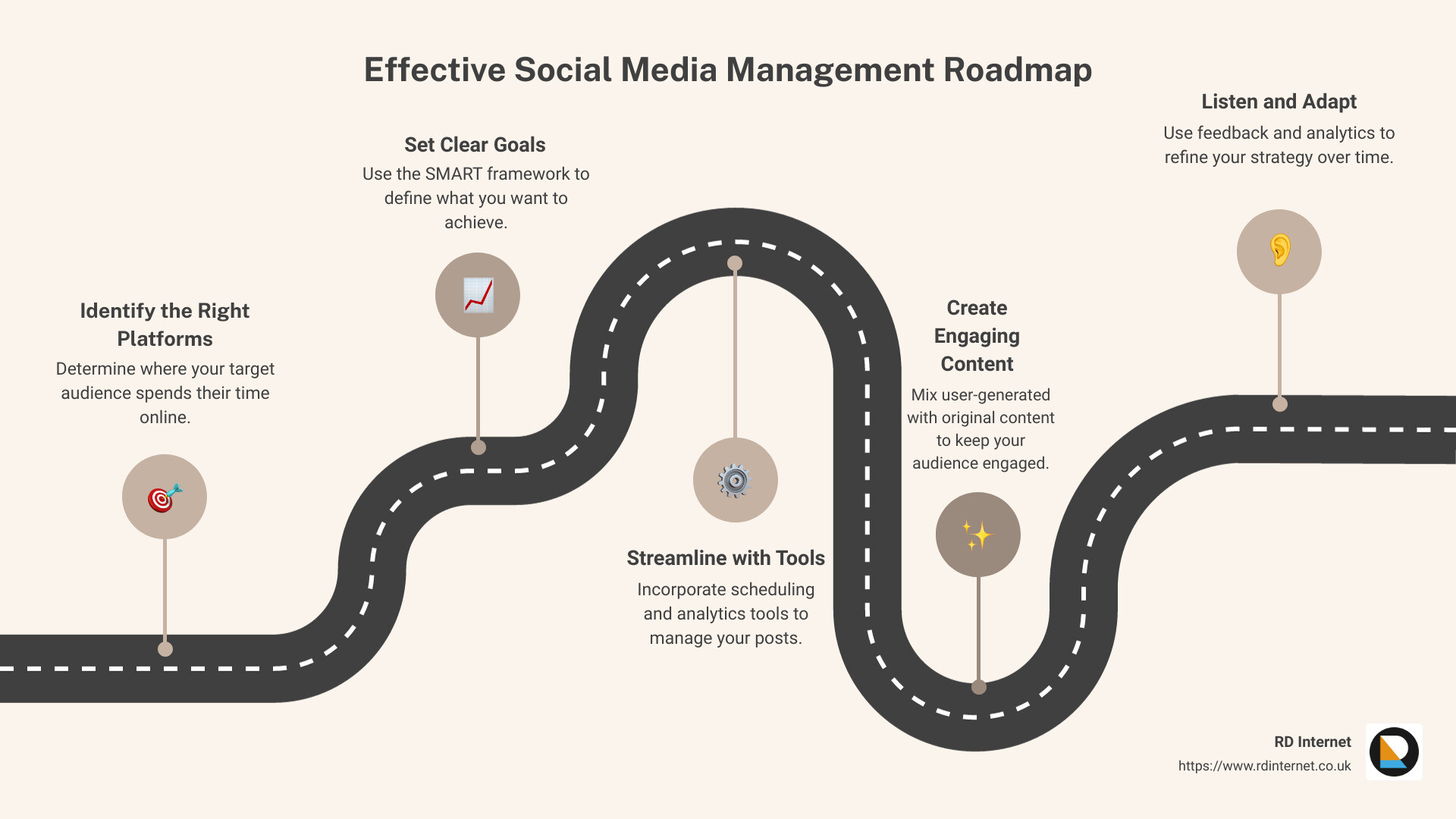
In short, the path to managing social media effectively involves a delicate balance between strategic planning, creative content creation, and data-driven decision making. Let’s dive deeper into how you can harness these elements to boost your online presence and achieve your business objectives.
Identifying the Right Platforms
Choosing where to share your brand’s voice is like picking the right tools for a job. Not every tool is suited for every task, and the same goes for social media platforms. Let’s break down how to manage social media by selecting the right platforms for your business.
Instagram, YouTube, TikTok, BeReal: These are some of the heavy hitters in the social media world. Each has its unique flavor and audience.
- Instagram is all about visuals. If your brand can showcase its products or services through eye-catching images or stories, Instagram is your stage.
- YouTube is the go-to for video content. From tutorials to behind-the-scenes, if you can tell your story through videos, YouTube’s vast audience awaits.
- TikTok has taken the world by storm with its short-form video content. It’s perfect for brands that can engage with a younger audience through creative and trending content.
- BeReal is the new kid on the block, promoting authenticity with its unique approach to sharing real moments. It’s a space for brands willing to show a more genuine, unfiltered side.
Audience Analysis: Knowing your audience is key. What platforms do they spend most of their time on? What type of content do they engage with? Answers to these questions will guide you to the right platforms. For example, if your target audience is teenagers, TikTok might be your best bet. If it’s professionals you’re after, consider LinkedIn.
Competitor Research: Keep your friends close and your competitors closer. See where your competitors are most active and successful. This doesn’t mean you should blindly follow them onto every platform, but it can give you insights into where your industry’s audience might be hanging out.
Choosing the Right Platforms: Here’s a simple guide to help you make the decision:
- Identify Your Audience: Who are they? What do they like? Where do they hang out online?
- Define Your Content Type: Are you more about visuals, videos, or written content?
- Research Competitors: Where are they seeing the most engagement?
- Test and Learn: You won’t know for sure until you try. Start with your best guess and refine as you learn what works.
Managing social media is not about being everywhere at once. It’s about being where your audience is and engaging them in a meaningful way. Choose your platforms wisely, and you’ll set yourself up for success in the crowded digital landscape.
Keep in mind that the choice of platform is just the beginning. Next, we’ll explore how setting clear social media goals can help streamline your efforts and ensure that every post moves you closer to your business objectives.
Setting Clear Social Media Goals
Why Set Goals?
In the bustling world of social media, it’s easy to get lost. You might find yourself posting just for the sake of it, without a clear direction. That’s where setting goals comes in. Goals give your social media efforts a purpose, helping you to focus on what really matters to your brand.
Enter the SMART Framework
The SMART framework is your best friend when it comes to goal setting. It stands for:
- Specific: Clearly define what you want to achieve. Instead of saying “increase engagement,” specify “increase comments on Instagram posts by 20%.”
- Measurable: Make sure you can track your progress with numbers. How will you know you’ve reached your goal if you can’t measure it?
- Achievable: Be realistic. Setting a goal to gain a million new followers in a week is more fantasy than target.
- Relevant: Your goals should align with your overall business objectives. If your aim is to drive sales, your social media goals should support that.
- Time-bound: Set a deadline. A goal without a timeline is just a dream.
Choosing Your KPIs
Key Performance Indicators (KPIs) are the metrics that will tell you if you’re on track to meet your goals. For example, if your goal is to increase brand awareness, your KPIs might include metrics like reach and impressions. If you’re aiming to boost engagement, you’d look at likes, comments, shares, and mentions.
Each goal should have its own set of KPIs. This specificity will help you measure success accurately and make necessary adjustments along the way.
Brand Objectives and Measurable Outcomes
Your social media goals should not exist in a vacuum. They need to tie back to your brand’s broader objectives. If your business aims to expand into a new market, social media can play a key role in achieving that by targeting content to users in that market.
Measurable outcomes are crucial. They allow you to prove the value of your social media efforts in concrete terms. This could be anything from an increase in website traffic originating from social media platforms to a rise in sales attributed to a specific campaign.
To Wrap Up
Setting clear social media goals is not just about ticking boxes. It’s about creating a roadmap for your brand’s journey on social media. By applying the SMART framework, choosing the right KPIs, and aligning your goals with your brand’s broader objectives, you’re laying down the foundation for measurable, achievable success.
The digital landscape is always changing. Be prepared to revisit and adjust your goals as needed. This flexibility will keep your social media strategy fresh and aligned with your evolving business needs.
Moving on, we’ll delve into how streamlining your workflow can further enhance your social media management efforts.
Streamlining Your Workflow
To keep up with the world of social media, having an organized workflow is crucial. By streamlining your tasks, you can save time and reduce stress. Let’s dive into how content batching, scheduling tools, and productivity apps can transform your social media management.
Content Batching:
Imagine cooking one meal at a time versus preparing ingredients for several meals all at once. Content batching works on the same principle. By dedicating specific blocks of time to create a week’s or month’s worth of content, you can significantly boost efficiency. This method allows for a more focused creative process and minimizes daily task switching, leading to higher quality content.
Scheduling Tools:
Once you have your content ready, scheduling tools become your best friend. Apps like Sprout Social allow you to schedule posts across different platforms at optimal times. This means your content goes live when your audience is most active, without you needing to be at your desk or on your phone. It’s like setting and forgetting, but in the best way possible.
Productivity Apps:
To keep everything running smoothly, productivity apps such as Asana, Todoist, and Hive are invaluable. These tools help you plan your content calendar, set reminders for tasks, and collaborate with team members. Whether you’re tracking the progress of a campaign or managing day-to-day activities, these apps ensure nothing falls through the cracks.

Why It Matters:
In the realm of social media, time is of the essence. The ability to quickly adapt and respond to trends or feedback can set your brand apart. By streamlining your workflow, you not only make room for creativity and strategy but also ensure you’re consistently present and engaging with your audience.
Remember that the key to effective social media management lies in finding the right balance between planning and spontaneity. With your workflow streamlined, you’re well-equipped to navigate the ever-changing landscape of social media with confidence and agility.
Leveraging Content Calendars and Scheduling Tools
In the bustling world of social media, staying organized is not just a benefit—it’s a necessity. One of the most effective tools in your arsenal for keeping your social media strategy on track is the use of content calendars and scheduling software. Let’s dive into how these tools can transform your approach to managing social media.
Why Use a Content Calendar?
A content calendar acts as a visual roadmap of what you’re planning to post across your social media channels. It helps you:
- Visualize your content strategy over days, weeks, or months.
- Ensure a balanced mix of content types and themes.
- Plan for key dates, events, or product launches.
- Avoid last-minute scrambles for content.
A content calendar keeps you organized, focused, and aligned with your social media goals.
The Power of Scheduling Software
Scheduling software, like Sprout, takes your content calendar to the next level. These tools allow you to:
- Schedule posts in advance across multiple platforms.
- Identify optimal posting times based on your audience’s activity.
- Automate the posting process, freeing up your time for other tasks.
For instance, research suggests that the best times to post can vary greatly depending on your audience and platform. By leveraging scheduling software, you can ensure your content hits the feed when your audience is most active, without having to be at your computer or phone to hit “publish” manually.
Finding the Optimal Posting Times
Optimal posting times are not a one-size-fits-all. They vary by platform, audience, and even the type of content. However, data from scheduling software can provide insights into when your posts are likely to perform best. For example, you might find that your Instagram audience engages more in the evening, while your LinkedIn followers are more active during work hours.
How to Get Started
- Audit your content: Review what types of content have been most successful and start planning more of these.
- Choose your scheduling tool: Sprout is a great option, but there are many out there. Pick one that fits your needs and budget.
- Plan your content: Use your audit insights and upcoming events or product launches to plan out your posts.
- Schedule and monitor: Schedule your posts according to your plan and optimal times. Don’t forget to monitor their performance for future optimizations.
By embracing content calendars and scheduling tools, you’re not just posting content; you’re strategically planning your way to social media success. These tools not only save you time but also ensure your content is consistent, timely, and engaging for your audience.
As we continue to explore the complexities of how to manage social media, these tools are your allies. They provide structure in a fluid and ever-changing landscape, allowing you to focus on creating compelling content and building meaningful connections with your audience.
Engaging and Authentic Content Creation
When it comes to mastering how to manage social media, one of the most crucial elements is creating content that resonates. Authenticity isn’t just a buzzword; it’s the backbone of successful social media management. Let’s dive into how you can make your brand’s social media presence not only visible but genuinely engaging.
Brand Authenticity
At its core, brand authenticity means staying true to who you are, what you stand for, and how you communicate with your audience. According to the Sprout Social Index™, a staggering 38% of consumers find original content more appealing than trend-chasing posts. This tells us that trying to mimic viral content can sometimes backfire. Instead, focus on what makes your brand unique and use that to inform your content strategy.
User-Generated Content
User-generated content (UGC) is a goldmine for social media managers. It serves two purposes: it provides you with authentic content directly from your audience, and it significantly boosts engagement. For instance, ESPN’s TikTok page does a fantastic job of this by featuring a variety of user-generated content, from intramural sports to heartwarming moments between athletes. This approach not only diversifies their content but also strengthens their community by highlighting real stories.
Content Mix
Variety is key. Your audience likely consists of different segments, each with unique preferences. To cater to this diversity, your content mix should include a range of formats – from short-form videos and GIFs to text posts and live streams. Remember the earlier example of using a single live video to create multiple pieces of content? This strategy ensures that you’re maximizing each piece of content to engage different segments of your audience.
ESPN TikTok Example
Let’s take a closer look at ESPN’s TikTok strategy. They’ve mastered the art of blending entertainment with sports journalism, all while keeping authenticity at the forefront. By featuring user-generated content, they not only keep their feed fresh but also build a deeper connection with their audience. This strategy is something any brand can replicate, regardless of industry. It’s about finding those genuine moments that align with your brand values and sharing them with your audience.
In conclusion, engaging and authentic content creation is about knowing your brand, listening to your audience, and being creative in how you present your message. Whether it’s through leveraging user-generated content or diversifying your content mix, the goal is to create a space where your audience feels seen and heard. Keep these principles in mind to not only manage your social media effectively but to also cultivate a community around your brand.
Advanced Social Media Management Techniques
When you’ve got the basics of how to manage social media down, it’s time to level up. Advanced techniques can save you time, keep you informed, and personalize your audience’s experience. Let’s dive in.
Social Listening
Imagine you’re at a party. Instead of talking non-stop, you listen. You learn what people like, dislike, and what they’re passionate about. Social listening is like that, but for your brand on social media. Tools that monitor mentions of your brand, competitors, and the industry can give you insights you’d miss otherwise. This information can guide your content strategy and help you engage in conversations that matter to your audience.
Automation and Analytics Automation
If you’re manually checking each post’s performance, stop. Analytics automation tools can gather data for you, showing what’s working and what isn’t. Schedule these reports to run weekly or monthly. You’ll save time and get a clear picture of your social media performance without the constant manual effort.
Canned Responses
Nobody likes to wait, especially online. Canned responses can help. These are pre-written answers to common questions or comments. They make replying faster and easier. But remember, personalization matters. Use canned responses as a starting point, but tweak them to address the specific person or situation.
Chatbots
Chatbots can be a game-changer for customer service on social media. They’re like having a helpful assistant available 24/7. Chatbots can answer questions, guide users through your site, or even help with purchases. Setting them up takes effort upfront, but the time they save you later is worth it.
Incorporating these advanced techniques into your social media management strategy can significantly enhance your efficiency and effectiveness. By listening to your audience, automating repetitive tasks, and using technology to personalize interactions, you’ll not only manage your social media better but also deepen your connection with your audience. Remember that the digital landscape is always evolving. Staying open to new tools and strategies will keep your social media management game strong.
Monitoring and Adapting Strategies
In social media, staying still means falling behind. As we’ve seen, leveraging tools and strategies can significantly enhance how you manage social media. Yet, equally crucial is the ability to monitor performance and adapt strategies accordingly. Let’s dive into how to keep your social media strategy agile and responsive to both your audience’s needs and industry trends.
Performance Tracking
First and foremost, you need to keep a close eye on how your content performs. This isn’t just about counting likes or shares. It’s about understanding what these metrics tell you about your audience’s preferences and behaviors. Use analytics tools provided by social media platforms or third-party apps to get a detailed view of your performance. Look for patterns. For instance, do posts at certain times get more engagement? Is there a type of content that resonates more with your audience?
Data is your friend. It gives you a clear, unbiased view of what works and what doesn’t. But don’t get lost in the numbers. Always link them back to your social media goals. Are you driving the actions (like website visits, sign-ups, or sales) that matter to your business?
Strategy Adjustments
Based on your performance tracking, you’ll need to make strategy adjustments. This could mean changing your content mix, posting times, or even the platforms you’re active on. The key here is not to be afraid of change. If something isn’t working, the sooner you pivot, the better.
For example, if you notice that video content gets significantly more engagement than images, it might be time to invest more in video production. Or, if you find that your audience is more active in the evenings, adjust your posting schedule to match.
Industry Trends
Staying on top of industry trends is crucial for keeping your social media strategy relevant. This means keeping an eye on both the broader digital marketing landscape and developments within your specific industry. Subscribe to newsletters, follow thought leaders on social media, and participate in industry forums.
For instance, if there’s a new social media platform that’s gaining traction with your target audience, you should consider testing it out. Or, if there’s a shift towards more authentic, behind-the-scenes content, think about how you can incorporate that into your strategy.
To sum up, effective social media management isn’t just about setting up a strategy and sticking to it. It’s a dynamic process of tracking, analyzing, and adapting. Keep your finger on the pulse of your performance data and industry trends. Be ready to make changes to your strategy to stay aligned with your goals and your audience’s evolving preferences. Remember that flexibility and responsiveness are key to maintaining a strong and engaging social media presence.
Delegating and Managing Workload
When it comes to how to manage social media, understanding that you can’t do everything alone is crucial. This is where task delegation comes into play. It’s about recognizing the strengths within your team and assigning tasks accordingly. For instance, if someone has a knack for analytics, let them handle the reporting. If another is creative, they might be better suited for content creation. This not only optimizes productivity but also ensures tasks are completed with expertise.
Burnout prevention is another critical aspect. Social media never sleeps, but that doesn’t mean you shouldn’t. It’s tempting to be always on, especially when notifications keep buzzing. However, setting boundaries is essential. This might mean scheduling specific times to check on your platforms or even using tools to automate certain tasks to give you breathing space. A well-rested mind is more creative and efficient.
Lastly, let’s talk about mental health management. The digital world can be overwhelming. Negative comments, the pressure to keep up with trends, and the constant need for engagement can take a toll on anyone’s mental health. It’s important to foster an environment where team members feel they can speak up about their mental health without fear of judgment. Encouraging regular breaks, promoting a healthy work-life balance, and providing support resources are all ways to help manage this.
In summary, managing a social media workload effectively requires a combination of task delegation, burnout prevention strategies, and a proactive approach to mental health management. By implementing these tactics, you can ensure a productive, creative, and healthy social media management team. As we move into the conclusion of our guide, the landscape of social media is always changing. Staying informed, being adaptable, and continuously learning are key to navigating these waters successfully.
Conclusion
In wrapping up our guide on how to manage social media effectively, it’s crucial to remember that the digital landscape is changing. The strategies that work today might need to be tweaked or entirely rethought tomorrow. This is where RD Internet steps in as your steadfast partner in navigating the complexities of social media management. Learn more about how we can support your social media journey by visiting our social media management company page.
Continuous Learning: The realm of social media waits for no one. Platforms introduce new features, algorithms change, and audience preferences shift. To stay ahead, we must commit to lifelong learning. This means keeping an eye on industry news, learning from peers, and even learning from the data your own campaigns generate. Every post, every campaign, is an opportunity to learn something new.
Adapting Strategies: What works today might not work tomorrow. That’s why it’s crucial to remain flexible and ready to pivot your strategies as needed. This could mean changing your content mix, experimenting with new platforms, or revising your engagement tactics based on the latest trends and data insights. The goal is to stay relevant and engaging to your audience, no matter how the digital landscape shifts.
At RD Internet, we understand the importance of staying at the forefront of social media trends and strategies. Our team is dedicated to providing you with the tools, insights, and support needed to manage your social media presence effectively. Whether you’re looking to refine your current approach or explore new avenues for engagement, we’re here to help you navigate the journey.
The key to successful social media management lies in being proactive, adaptable, and always willing to learn. By embracing these principles, you can ensure that your brand remains connected and relevant in the ever-changing world of social media. Let’s continue to grow and adapt together, creating meaningful connections with your audience along the way.
Recent Comments