

How to Become a Social Media Manager Course: Top 5 Tips
Mastering Social Media Management: Your Path to Success
If you’re wondering how to become a social media manager course that can set you on the right path to a rewarding career, you’ve come to the right place.
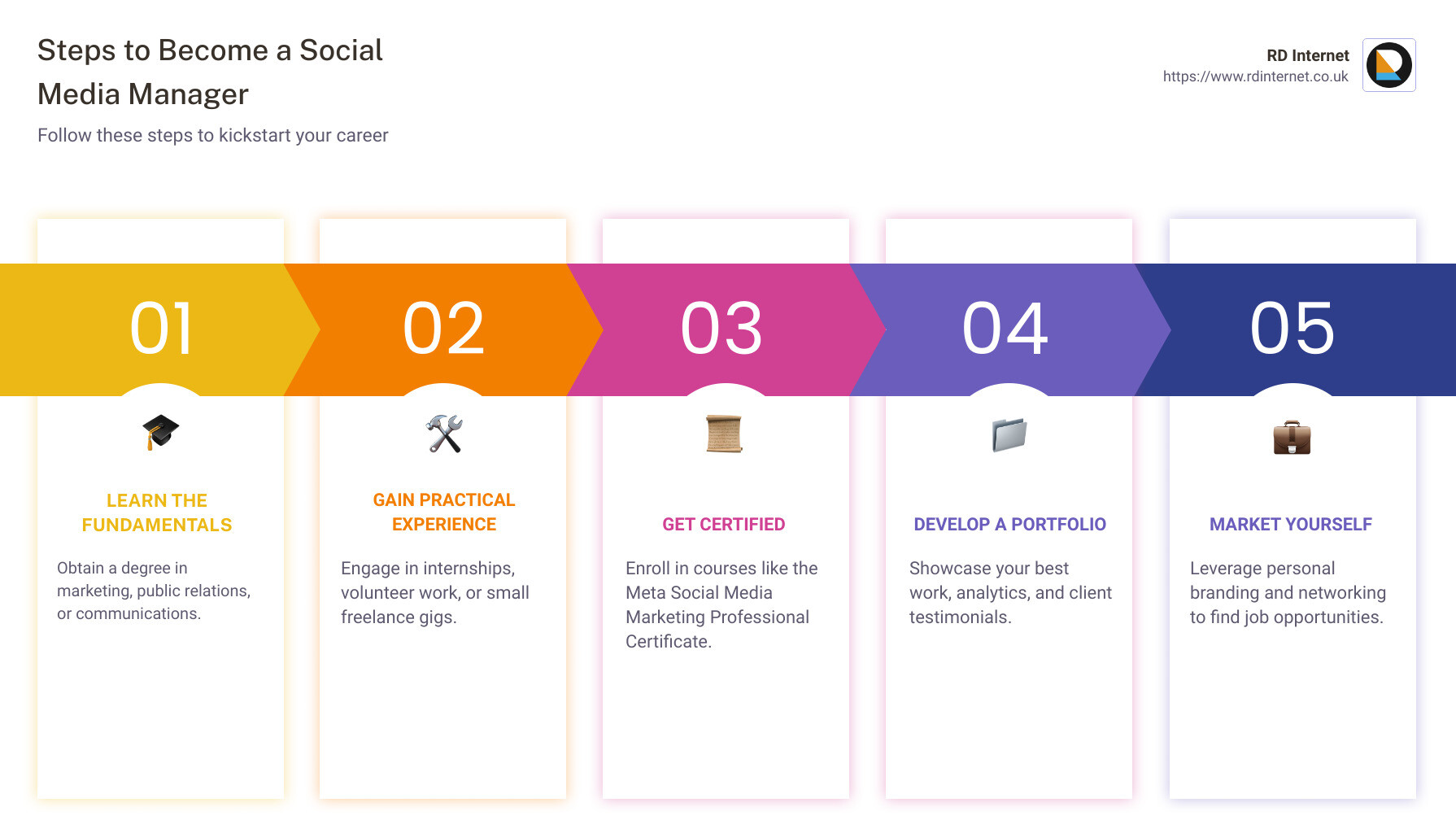
Here’s a quick guide to get started:
- Learn the Fundamentals: Consider obtaining a degree in marketing, public relations, or communications.
- Gain Practical Experience: Internship opportunities, volunteer work, or small freelance gigs can help you build valuable experience.
- Get Certified: Enroll in reputable courses like the Meta Social Media Marketing Professional Certificate.
- Develop a Portfolio: Showcase your best work, complete with analytics and client testimonials.
- Market Yourself: Personal branding and networking are key to landing your dream job.
Becoming a social media manager opens doors to various career opportunities. From engaging storytelling to data analysis, this role combines creativity with strategy to drive online engagement. Businesses across all sectors need skilled social media managers to enhance their online presence and connect with their audience.
As you embark on this journey, you’ll find that the role of a social media manager is dynamic and changing, offering exciting challenges and tremendous growth potential.
Understanding the Role of a Social Media Manager
A social media manager wears many hats. If you’re considering this career, it’s crucial to understand the key responsibilities, skills needed, and daily tasks involved.
Responsibilities
Strategizing for Social Media Success: Your main job is to develop strategies that align with your company’s goals. This includes planning campaigns, creating content, and setting the brand’s tone and personality.
Increasing Followers and Engagement: Boosting a company’s profile on social platforms is a big part of the job. You’ll work to increase followers and drive engagement through likes, comments, and shares.
Posting and Monitoring Platforms: Depending on your team size, you may be responsible for posting content and monitoring responses. This includes scheduling posts and responding to comments and messages.
Analyzing Data: You’ll spend a good chunk of time analyzing data to understand how posts are performing. This helps in tweaking strategies for better results.
Reporting Metrics: Companies want to see the impact of your work. You’ll report metrics like follower growth, engagement rates, and campaign success to key stakeholders.
Skills Needed
Storytelling: Crafting compelling narratives is vital. Whether it’s a tweet or a long-form post, your content should captivate the audience.
Design Sense: A keen eye for design helps in creating visually appealing posts that attract attention.
Analytical Skills: You need to analyze data to understand what works and what doesn’t. Tools like Google Analytics and social media insights are your best friends here.
Communication: Excellent communication skills are a must. You’ll be the voice of the brand, so clear and engaging communication is essential.
Adaptability: Social media trends change rapidly. Being adaptable and ready to pivot strategies is crucial.
Daily Tasks
Content Creation: Your day might start with brainstorming ideas for posts, writing copy, or designing graphics.
Scheduling Posts: Using tools like Hootsuite or Buffer, you’ll schedule posts to go live at optimal times.
Engaging with Followers: Responding to comments and messages, and engaging with followers is a daily task. This helps build a community around the brand.
Analyzing Performance: You’ll review analytics to see how posts are performing. This involves looking at metrics like engagement rates and click-through rates.
Reporting: At the end of the day or week, you might compile reports to share with your team or stakeholders, showcasing your achievements and areas for improvement.
Understanding these aspects of the role can help you prepare for a successful career as a social media manager. Up next, we’ll explore the educational pathways that can set you on this exciting career path.
Educational Pathways
Recommended Degrees
To become a social media manager, a bachelor’s degree in certain fields can be very helpful. Degrees in journalism, communications, marketing, or public relations are particularly relevant. These programs teach you how to craft messages, understand audiences, and manage campaigns—skills that are key for social media management.
For instance, a degree in marketing will help you understand consumer behavior and how to craft strategies to engage them. A communications degree focuses on effective messaging and public speaking, which is crucial for engaging with your audience. Journalism teaches you how to write compelling content, while public relations covers managing a brand’s image and dealing with crises.
Online Courses and Certifications
If you’re looking for more flexible learning options, online courses and certifications can fill the gap. These are especially useful if you already have a degree but want to specialize in social media management.
One highly recommended program is the Meta Social Media Marketing Professional Certificate on Coursera. This course covers everything from creating a social media presence to running ad campaigns and measuring their results. The first week is free, making it a low-risk way to see if it’s right for you.

Coursera and edX offer a variety of online courses that can help you gain the necessary skills. For example, Coursera has a range of social media marketing courses that cover different aspects like content creation, analytics, and platform-specific strategies. These online courses often include practical projects, quizzes, and assignments to ensure you can apply what you’ve learned. Plus, you can add these certifications to your LinkedIn profile or CV to showcase your skills to potential employers.
How to Become a Social Media Manager Course
Step 1: Close Skill Gaps
To start your journey, identify and close any skill gaps. Social media management isn’t just about posting content. It involves project management, strong communication, copywriting, and adaptability.
Consider taking digital marketing boot camps for an accelerated learning format or bachelor’s degree programs in marketing or communications. These courses will help build your foundational skills.
Step 2: Understand Social Media Platforms and Marketing Analytics
Next, dive deep into the major social media platforms like Facebook, Instagram, LinkedIn, Twitter, YouTube, and Pinterest. Understand their strengths and weaknesses, and get familiar with tools for scheduling, publishing content, and social listening.
Study how other businesses use these platforms. Take online courses to learn graphic design and SEO for social media. Tools like Google AdWords, WordPress, and Facebook Ads are also essential for anyone looking to learn social media marketing.
Step 3: Gain Relevant Work Experience
Apply your skills in real-world situations. Seek out internships or volunteer to manage social media for small businesses or nonprofits. Even working for free initially can provide valuable experience.
Enhance your personal social media channels to showcase your skills. Be strategic and consistent to grow your following. This hands-on experience can be a strong addition to your professional portfolio.
Step 4: Develop a Portfolio
Your portfolio is key to demonstrating your skills. Include:
- Introduction: Briefly describe your experience and include a photo.
- Best Content: Showcase three or four projects with engaging visuals.
- Analytics: Show performance metrics and what you learned.
- Strategic Approach: Explain your project ideas, steps taken, and success measurement.
- Client Testimonials: Collect feedback from internships or freelance work.
- Strengths and Services: Highlight your most comfortable areas and how your portfolio supports these claims.
- Contact Information: Make it easy for prospective employers to reach you.
Step 5: Market Yourself to Potential Clients
Market yourself as a personal brand. Curate your portfolio to match the jobs you’re applying for. Highlight relevant projects and skills.
Networking is crucial. Attend conferences and small business events to meet industry professionals. Don’t hesitate to introduce yourself, give out business cards, and showcase your brand.
Understanding how to write a CV that highlights your new skills is also essential. Tailor your CV to each job application to increase your chances of landing a role.
By following these steps, you’ll be well on your way to becoming a successful social media manager.
Key Skills for Social Media Managers
To excel as a social media manager, there are several crucial skills you need to master. These skills not only help you create engaging content but also allow you to analyze data and adapt quickly to ever-changing social media trends.
Writing
Writing is at the core of social media management. Crafting compelling posts that capture attention and convey a brand’s message is essential. Whether it’s a tweet, a Facebook post, or an Instagram caption, your writing needs to be clear, engaging, and on-brand.
Editing
Editing goes hand-in-hand with writing. As a social media manager, you need to ensure that all content is polished and free of errors. This includes checking for grammar, spelling, and punctuation mistakes, as well as refining the tone and style to match the brand’s voice.
Design
A keen eye for design is another vital skill. Visual content often gets more engagement than text alone. Knowing how to create appealing graphics, videos, and other visual elements can set you apart. Tools like Canva and Adobe Creative Suite can be incredibly helpful here.
Analytical Tools
Understanding and using analytical tools is crucial for measuring the success of your social media efforts. Tools like Google Analytics, Hootsuite, and Sprout Social can help you track metrics such as engagement, reach, and conversion rates. This data is invaluable for refining your strategies and proving your impact to stakeholders.
Flexibility
Flexibility is key in the world of social media. Algorithms change, trends evolve, and unexpected events occur. Being able to pivot quickly and adapt your strategies ensures that you stay relevant and effective.
Timeliness
Lastly, timeliness is essential. Posting at the right times, responding quickly to comments and messages, and staying current with trends can significantly boost your engagement. Using scheduling tools can help you maintain a consistent posting schedule, but always be ready to jump in and engage in real-time.
By mastering these skills, you’ll be well-equipped to handle the dynamic and multifaceted role of a social media manager.
Frequently Asked Questions about How to Become a Social Media Manager Course
What qualifications do I need to be a social media manager?
To become a social media manager, you typically need a bachelor’s degree in a relevant field. Popular choices include marketing, public relations, communications, and journalism. These programs provide a solid foundation in understanding consumer behavior, brand management, and effective communication strategies.
How can I learn to be a social media manager?
Learning to be a social media manager involves several steps:
- Close Skill Gaps: Focus on essential skills like project management, communication, and copywriting. Online courses and digital marketing boot camps can help.
- Understand Social Media Platforms: Get familiar with platforms like Facebook, Instagram, and Twitter. Learn how to use their tools for scheduling, publishing, and analytics.
- Gain Relevant Work Experience: Internships, volunteer work, or freelancing can provide hands-on experience.
- Develop a Portfolio: Showcase your work, including content strategies and analytics reports.
- Market Yourself: Build a personal brand, network, and create a compelling CV.
How long is a social media manager course?
The duration of a social media manager course can vary. For example, the Meta Social Media Marketing Professional Certificate on Coursera offers a structured program with 4 modules, including quizzes and assignments. Most online courses, like those on edX or Coursera, are designed to be flexible, allowing you to complete them at your own pace.
Typically, such courses can take anywhere from a few weeks to several months, depending on the depth and complexity of the material. For instance, some programs offer 9 months to complete the coursework, ensuring you have ample time to grasp the concepts and apply them in real-world scenarios.
By following these steps and enrolling in a how to become a social media manager course, you can equip yourself with the necessary skills and knowledge to excel in this dynamic field.
Conclusion
Becoming a social media manager is a rewarding journey that opens up numerous career opportunities. By enrolling in a how to become a social media manager course, you can gain the skills and knowledge needed to thrive in this dynamic field.
At RD Internet, we understand the importance of continuous learning and career fulfillment. Our tailored social media management services are designed to help you stay ahead of the curve and achieve your professional goals. Whether you’re a novice or looking to refine your skills, we provide the resources and support you need to succeed.
The world of social media is ever-changing. Staying updated with the latest trends and tools is crucial. Embrace continuous learning and always be ready to adapt. With dedication and the right training, you can become an expert social media manager and make a significant impact in the digital marketing landscape.
Ready to take the next step? Explore our social media management services and start your journey towards becoming a successful social media manager today.
Recent Comments