

How SEO Works in Digital Marketing: Top Guide for 2024
Introduction
How SEO works in digital marketing is a crucial question for any small business owner looking to boost their online presence. To put it simply:
- SEO: Search Engine Optimization involves improving your website to rank higher on search engine results pages (SERPs).
- Importance: Higher rankings mean more visibility, more traffic, and ultimately, more revenue.
- Digital Marketing: A broader strategy that includes SEO, social media, email marketing, and more to reach and engage your target audience.
When we talk about SEO, we’re referring to a set of practices designed to make your website more visible and appealing to search engines like Google. It’s not just about getting more eyes on your site; it’s about attracting the right kind of traffic — people who are genuinely interested in what you offer.
Put simply, SEO helps your business get found online.
Infusing your digital marketing strategy with robust SEO practices can be a game-changer, enabling your business to compete more effectively. This includes understanding what people search for, optimizing your content, and ensuring your site runs smoothly.
What is SEO?
SEO stands for Search Engine Optimization. It’s the process of optimizing your website so that it ranks higher in search engine results pages (SERPs) like those on Google. The goal is to make your site more visible to people who are searching for keywords related to your business.
Search Engine Optimization Explained
Imagine you own a bookstore. When someone searches for “best mystery novels” on Google, you want your store to be one of the first results they see. That’s where SEO comes in. Through various techniques, you make your website appealing to search engines, which then rank it higher in the results.
SEO involves several elements:
- Keywords: Words or phrases that people type into search engines. For instance, “best mystery novels” is a keyword.
- Content: The text, images, and videos on your website. High-quality, relevant content helps you rank better.
- Technical Aspects: How well your site performs, including page speed and mobile-friendliness.
- Backlinks: Links from other websites to yours. They act like votes of confidence.
Organic Search Results
Organic search results are the unpaid listings that appear on a search engine results page. These listings are ranked based on their relevance to the search query. Unlike paid ads, you can’t buy your way to the top of organic results. Instead, you have to earn it through effective SEO practices.

A Nod to Moz
One of the key players in the SEO world is Moz. Moz offers tools and resources that help businesses improve their SEO. They provide insights into keyword research, site audits, and more. Moz’s tools are widely used by SEO professionals to gain a competitive edge.
Why SEO Matters
SEO is crucial for your digital marketing strategy. It helps drive more traffic to your website, which can lead to more leads and sales. According to research, 75% of users don’t click past the first page of search results. So, if your site isn’t on that first page, you’re missing out on a lot of potential customers.
In the next sections, we’ll dive deeper into how SEO works in digital marketing, covering aspects like on-page SEO, off-page SEO, technical SEO, and local SEO. Stay tuned to learn more about optimizing your website for better search engine rankings.
How SEO Works in Digital Marketing
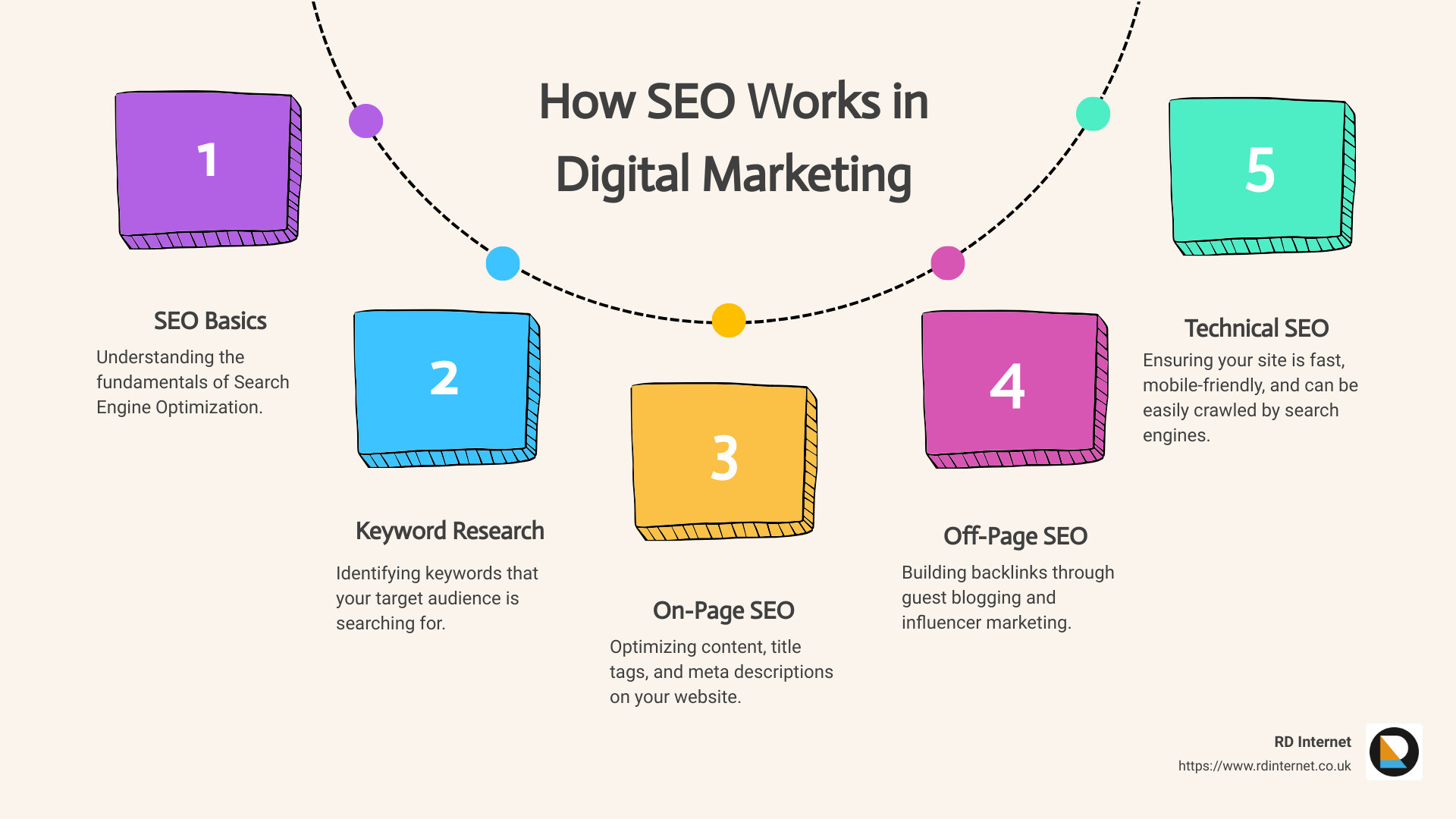
When it comes to how SEO works in digital marketing, it’s all about improving your website’s visibility in search engine results. This involves several key components: on-page SEO, off-page SEO, technical SEO, and local SEO. Let’s break these down.
On-Page SEO
On-page SEO focuses on optimizing individual web pages to rank higher and earn more relevant traffic. Here are some critical elements:
-
Content Optimization: Your content needs to be high-quality, relevant, and engaging. Use keywords naturally within your content to help search engines understand what your page is about.
-
Title Tags: This is the title of your web page that appears in the search results. Make sure it includes your primary keyword and is under 60 characters.
-
Meta Descriptions: These are brief summaries of your web pages. They should be under 160 characters and include your primary keyword to attract clicks.
-
Internal Linking: Link to other pages on your website to help search engines understand the structure of your site and keep users engaged.
-
Site Speed: A fast-loading site enhances user experience and is favored by search engines. Tools like Google PageSpeed Insights can help you identify and fix speed issues.
Off-Page SEO
Off-page SEO involves activities outside your own website to improve your rankings. This includes:
-
Backlinks: Links from other websites to your own. High-quality backlinks signal to search engines that your site is authoritative and trustworthy.
-
Social Media Marketing: Promoting your content on social media platforms can drive traffic and generate backlinks.
-
Guest Blogging: Writing articles for other websites can also earn you backlinks and increase your site’s authority.
-
Influencer Marketing: Collaborating with influencers in your industry can help you reach a broader audience and earn valuable backlinks.
Technical SEO
Technical SEO focuses on the backend of your website to ensure it’s properly optimized for search engines. Key aspects include:
-
Site Architecture: Your website should have a clear and logical structure. This helps both users and search engines navigate your site more easily.
-
Crawlability and Indexing: Ensure that search engines can easily crawl and index your pages. Use tools like Google Search Console to monitor and fix issues.
-
Mobile Optimization: With more people using mobile devices, your site must be mobile-friendly. Google’s Mobile-Friendly Test can help you check this.
-
Site Speed: Again, a fast-loading site is crucial. Optimize images, use a content delivery network (CDN), and minimize code to improve speed.
Local SEO
Local SEO is essential for businesses that operate in specific geographic areas. It involves optimizing your online presence to attract local customers. Key elements include:
-
Google Business Profile: Claiming and optimizing your Google Business Profile can improve your visibility in local searches.
-
Local Content: Create content that is relevant to your local audience. This can include blog posts about local events or news.
-
Citations: Ensure your business name, address, and phone number (NAP) are consistent across all online directories.
-
Reviews: Encourage satisfied customers to leave positive reviews on platforms like Google and Yelp. Reviews can significantly impact local search rankings.
By focusing on these aspects, you can improve your website’s visibility, attract more traffic, and ultimately drive more leads and sales. In the next section, we will explore the role of SEO in your overall digital marketing strategy, including how it can enhance brand awareness and ROI.
The Role of SEO in Digital Marketing Strategy
SEO is a cornerstone of any successful digital marketing strategy. It helps improve your website’s visibility, attract more traffic, and convert visitors into leads and sales. Let’s dive into the key aspects of how SEO works in digital marketing.
Brand Awareness
SEO plays a crucial role in building brand awareness. When your website ranks high in search results, more people see your brand name. This visibility helps establish your brand as a leader in your industry. For instance, a study found that 75% of users never scroll past the first page of search results. So, appearing on the first page can significantly boost your brand’s visibility.
Traffic Generation
One of the most immediate benefits of SEO is increased traffic generation. By optimizing your website for relevant keywords, you attract users actively searching for what you offer. For example, if you sell eco-friendly products, ranking for keywords like “sustainable living tips” can drive a targeted audience to your site. More traffic often means more opportunities to convert visitors into customers.
Lead Conversion
SEO doesn’t just bring traffic; it brings the right kind of traffic. People who find your website through organic search are often looking for specific information or solutions. This high-intent traffic is more likely to convert into leads or sales. Effective SEO strategies, such as optimizing landing pages and using clear calls-to-action, can significantly improve your lead conversion rates.
ROI
One of the most compelling reasons to invest in SEO is its potential for a high return on investment (ROI). Unlike paid advertising, which stops delivering results once you stop paying, the benefits of SEO are long-lasting. Once your site ranks high, it can continue to attract organic traffic without ongoing costs. According to a report, businesses that prioritize SEO can see a 14.6% close rate, compared to just 1.7% for outbound leads like cold-calling.
Competitive Advantage
Finally, SEO provides a significant competitive advantage. By outranking your competitors in search results, you can capture a larger share of the market. For example, if two businesses offer similar products, the one with a better SEO strategy will likely attract more customers. SEO also helps you stay ahead by keeping up with search engine algorithm updates and industry trends.
SEO is not just a single tactic but a comprehensive strategy that supports various aspects of digital marketing. From enhancing brand awareness to driving traffic and maximizing ROI, SEO is indispensable for any business looking to succeed online.
In the next section, we’ll discuss the key components of an effective SEO strategy, including keyword research, content creation, and technical optimization. Stay tuned to learn more!
Key Components of an Effective SEO Strategy
Keyword Research
Keyword research is the foundation of any effective SEO strategy. It involves finding the right words and phrases your target audience uses when searching online. This helps you understand searcher intent and ensures your content meets their needs.
Tools for keyword research like Google Keyword Planner and SEMrush can help you find high-value keywords. Focus on long-tail keywords—specific phrases that are less competitive but highly relevant to your audience. For instance, instead of just “shoes,” consider “comfortable running shoes for women.”
Content Creation
Creating high-quality content is essential for engaging users and ranking well in search engines. Your content should address user intent—what your audience is looking for. Make sure to write clearly and provide valuable information.
Good content design also matters. Use headings, bullet points, and images to make your content easy to read. For example, a detailed guide with step-by-step instructions and visuals will be more engaging than a block of text.
Technical Optimization
Technical optimization ensures your website runs smoothly and is easy for search engines to crawl and index.
- Site speed: A fast-loading site improves user experience and can boost your rankings. Tools like Google PageSpeed Insights can help you identify speed issues.
- Mobile-friendliness: With more people using smartphones, your site must be mobile-friendly. Use responsive design to ensure it looks good on all devices.
- Structured data: Adding structured data (schema) helps search engines understand your content better. This can lead to rich snippets in search results, improving click-through rates.
Link Building
Link building involves getting other websites to link to your content. Quality backlinks act as votes of confidence, signaling to search engines that your site is trustworthy and authoritative.
- Backlink quality: Focus on earning links from reputable sites. A link from a well-known site like Forbes is more valuable than multiple links from lesser-known blogs.
- Organic link building: Create valuable content that others naturally want to link to. For example, a well-researched article or an engaging infographic.
- Avoiding black hat tactics: Stay away from purchasing links or using link farms. These can lead to penalties from search engines.
User Experience
A good user experience (UX) keeps visitors on your site longer and reduces bounce rates, which can positively affect your rankings.
- Site navigation: Make it easy for users to find what they’re looking for. Clear menus and internal links help guide them through your content.
- Accessibility: Ensure your site is accessible to everyone, including people with disabilities. This can involve using alt text for images and ensuring your site is navigable via keyboard.
- Reducing bounce rates: Keep users engaged with relevant content and a clean, intuitive layout. If visitors quickly leave your site, it signals to search engines that your content may not be valuable.
By focusing on these key components, you can create a robust SEO strategy that boosts your online visibility and drives meaningful traffic to your site.
Next, we’ll explore how to implement these strategies for your website, so stay tuned!
How to Implement SEO for Your Website
Implementing SEO for your website can seem daunting, but breaking it down into manageable steps can make it easier. Here’s a step-by-step guide to get you started:
Step-by-Step Guide
- Keyword List Creation
- Identify Keywords: Start by identifying keywords relevant to your business. Use tools like Google Keyword Planner or SEMrush to find keywords with good search volume and low competition.
-
Focus on Long-Tail Keywords: These are longer, more specific phrases. They often have lower competition and higher conversion rates. For example, instead of just “shoes,” use “women’s running shoes size 8.”
-
Competitor Analysis
- Analyze Competitors: Look at the top-ranking websites for your target keywords. Tools like Ahrefs or Moz can help you see which keywords your competitors are ranking for and where they’re getting their backlinks.
-
Identify Gaps: Find content or keywords your competitors are not covering well. This is your opportunity to create better content and rank higher.
-
On-Page Optimization
- Optimize Content: Ensure your content is high-quality and relevant. Use your target keywords naturally within the content, especially in the first 100 words.
- Title Tags and Meta Descriptions: Include your keywords in these elements. They help search engines understand your content and improve click-through rates.
-
Internal Linking: Link to other relevant pages on your site to help search engines understand the structure of your site and keep users engaged.
-
Off-Page Optimization
- Build Backlinks: Reach out to other websites to get backlinks. Quality matters more than quantity. Aim for links from authoritative sites.
- Social Media Marketing: Share your content on social media platforms to increase visibility and attract organic backlinks.
-
Guest Blogging: Write articles for other blogs in your industry. This can help you get high-quality backlinks and reach a broader audience.
-
Technical SEO
- Site Speed: Make sure your site loads quickly. Use tools like Google PageSpeed Insights to identify and fix issues.
- Mobile Optimization: Ensure your site is mobile-friendly. More people are using mobile devices to browse the internet, and Google prioritizes mobile-friendly sites in its rankings.
- Crawlability and Indexing: Make sure search engines can crawl and index your site. Use a sitemap and robots.txt file to guide search engines.
By following these steps, you can improve your website’s SEO and increase your visibility on search engines. Next, we’ll tackle some frequently asked questions to clarify common doubts about how SEO works in digital marketing.
Frequently Asked Questions about How SEO Works in Digital Marketing
How is SEO used in digital marketing?
SEO, or Search Engine Optimization, is a crucial part of digital marketing. It focuses on improving your website’s visibility in search engine results pages (SERPs). By optimizing your site, you can attract more organic traffic, which means more potential customers finding your business online.
Traffic generation is one of the main goals of SEO. When your site ranks higher for relevant keywords, more people visit your site. This can lead to more leads and sales.
How does SEO work technically?
SEO involves a mix of strategies and techniques to help search engines understand and rank your website. Here’s how it breaks down:
-
Search Engine Algorithms: These are complex formulas used by search engines like Google to determine the relevance and quality of your site. They consider hundreds of ranking factors such as keywords, backlinks, and site speed.
-
Crawling and Indexing: Search engines use bots, known as crawlers, to scan the web. They crawl your site to gather information and then index it, which means storing and organizing the data. This helps the search engine retrieve your site when relevant queries are made.
How to do SEO of a website?
To effectively optimize your website for search engines, follow these key steps:
-
Relevant Content: Create high-quality content that answers your audience’s questions. Content is king in SEO, and providing valuable information can boost your rankings.
-
Regular Updates: Keep your content fresh and updated. Search engines favor websites that are regularly maintained.
-
Metadata: Include meta titles and descriptions for each page. These elements help search engines understand the content of your pages and improve click-through rates.
-
Mobile Optimization: Ensure your website is mobile-friendly. More people are using mobile devices to browse, and Google prioritizes mobile-friendly sites in its rankings.
By understanding and implementing these SEO strategies, you can improve your website’s performance and increase your visibility in search results.
Next, we’ll explore the role of SEO in your overall digital marketing strategy.
Conclusion
SEO is a powerful tool in the digital marketing toolbox. It helps improve your website’s visibility on search engines, making it easier for potential customers to find you. By optimizing your site’s content, structure, and performance, you can attract more organic traffic, which can lead to more leads and sales.
SEO benefits are numerous. It can:
- Increase website traffic: Higher rankings on search engines mean more visitors to your site.
- Build credibility and trust: Appearing at the top of search results makes your business seem more credible.
- Enhance user experience: Good SEO practices improve site usability and overall user experience.
- Support other marketing efforts: Strong SEO can amplify the effects of your other digital marketing strategies.
In digital marketing, SEO is essential. It’s not just about getting your website to the top of search results; it’s about creating a seamless, user-friendly experience that keeps visitors engaged and coming back.
At RD Internet, we specialize in enhancing search engine rankings and boosting online visibility. Our comprehensive SEO services include everything from keyword research and content creation to technical optimization and link building. We tailor our strategies to meet your specific needs, ensuring that your website not only ranks higher but also provides a better user experience.
Ready to improve your search engine rankings and grow your online presence? Discover our SEO services and let us help you navigate digital marketing.
By embracing the power of SEO, you can unlock unparalleled growth and success for your business. Let’s make it happen together.
Recent Comments