

CRO Analysis 2024: Top 5 Essential Tactics Unveiled
Introduction to CRO
Conversion Rate Optimization (CRO) is vital for any business looking to thrive online, especially small businesses in competitive digital markets like Cardiff. CRO involves enhancing your website to improve the chances that visitors will complete a desired action, such as making a purchase or filling out a contact form.
- Essential focus areas include:
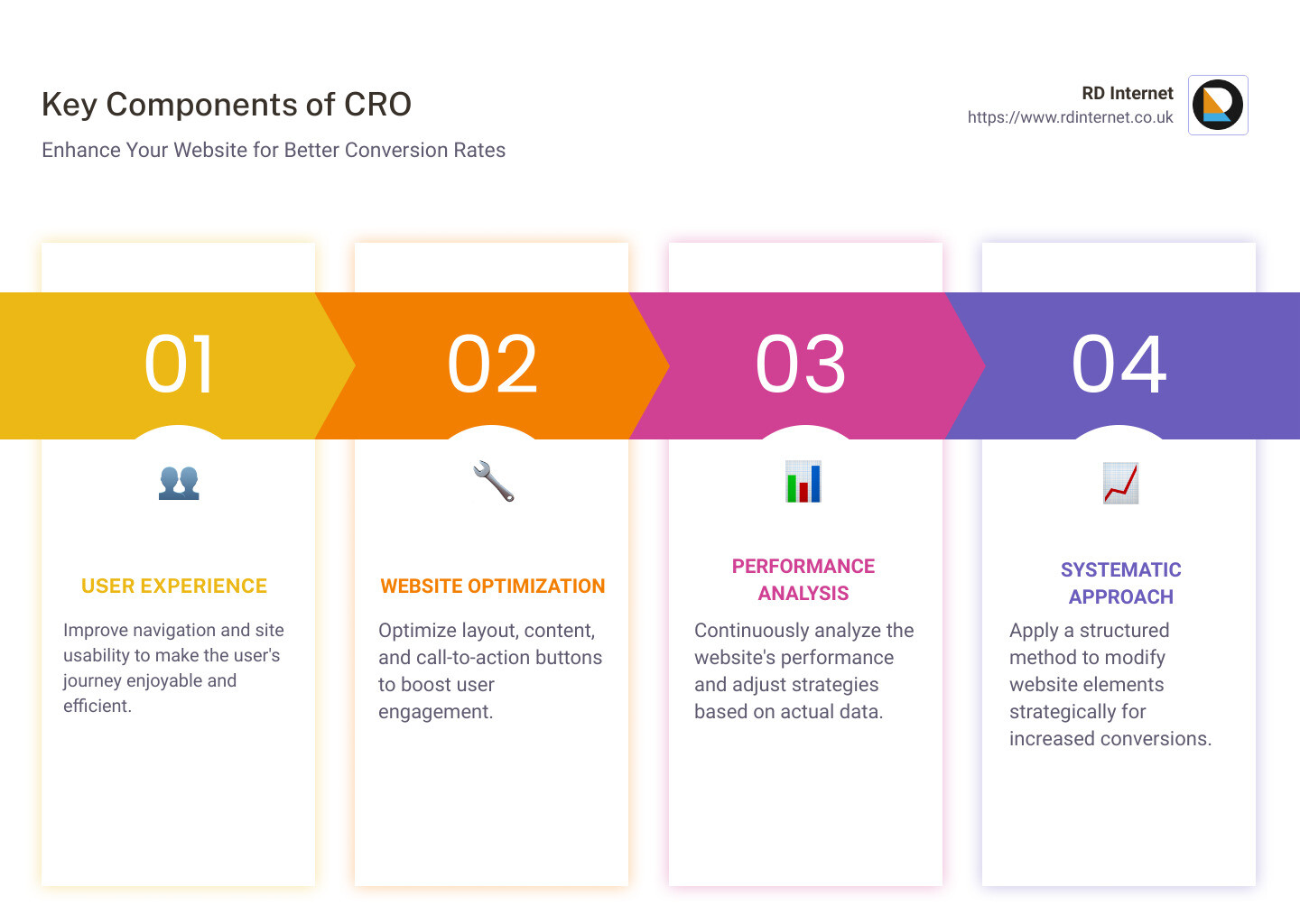
- Improving User Experience (UX): Making your site easy and enjoyable to navigate.
- Website Optimization: Adjusting various website elements like layout, content, and call-to-action buttons to increase user engagement and conversions.
- Performance Analysis: Continuously analyzing performance and implementing changes based on data, not just instincts.
CRO is not just about changing elements on your website randomly; it’s a systematic approach to increasing the percentage of visitors who perform the desired action. By focusing on CRO, businesses can maximize the value of their existing traffic, enhance user experience, and significantly boost their online conversion rates which is key to competing successfully in crowded markets.
Understanding CRO Analysis
Conversion Rate Optimization (CRO) is a technique aimed at increasing the percentage of visitors to a website who take a desired action. This could be anything from making a purchase, signing up for a newsletter, or filling out a contact form. The essence of CRO analysis is to understand what drives, stops, and persuades your website visitors.
Analytics Tools
To perform effective CRO analysis, you need the right tools. Analytics dashboards are fundamental in this process. They help you track key metrics and understand how changes affect your website’s performance. Tools like Google Analytics provide a wealth of data on visitor behavior, traffic sources, and conversion rates. For a deeper dive, session recording and heatmapping tools like Hotjar or Crazy Egg can show you exactly how users interact with your site, highlighting areas that may be causing confusion or friction.
Conversion Metrics
When analyzing your CRO efforts, it’s crucial to focus on specific conversion metrics. These metrics might include:
- Conversion Rate: The percentage of visitors who complete a desired action.
- Bounce Rate: The percentage of visitors who leave your site after viewing only one page, indicating potential dissatisfaction.
- Exit Rate: Identifies the last page users visit before leaving, which can signal where you’re losing potential conversions.
- Average Session Duration: How long visitors stay on your site, which can reflect the engagement level with your content or layout.
Understanding these metrics allows you to pinpoint where your website performs well and where it doesn’t, guiding you on where to focus your optimization efforts.
RD Internet’s Approach
At RD Internet, we use a data-driven approach to CRO analysis. We start by identifying key performance indicators (KPIs) relevant to your business goals. Our team then uses advanced analytics tools to gather data on how users interact with your site. We look for patterns in the data that could indicate usability issues or opportunities for improvement.
For instance, if we notice a high exit rate on a product page, we might conduct further analysis to see if there are issues with the page layout, content, or load times. By continuously monitoring and analyzing these metrics, RD Internet ensures that your website is always optimized for the best possible performance.
By understanding and applying these principles of CRO analysis, businesses can make informed decisions that lead to better user experiences and increased conversions. This systematic approach not only improves website efficiency but also contributes to achieving business objectives more effectively.
Key Steps in CRO Analysis
Identify Conversions
The first step in CRO analysis is to clearly identify what constitutes a conversion on your website. This could be anything from a completed sale, a sign-up for a newsletter, or a download of a white paper. Knowing exactly what you’re measuring is crucial to understanding how well your site performs and where it can be improved.
Priority Pages
Next, determine which pages on your website are most critical to your conversion goals. These are your priority pages. Often, these include your homepage, product pages, and checkout pages. By focusing on these pages, you can have the most significant impact on your overall conversion rates.
Understanding how users interact with your site is essential. Tools like heatmaps and session recordings can provide insights into user behavior. For instance, if many users abandon their cart on the checkout page, this could indicate a problem with the design or functionality of that page. Analyzing user behavior helps pinpoint areas that need refinement to enhance the user experience and increase conversions.
VoC Insights
Voice of Customer (VoC) insights gather feedback directly from your users. This can be through surveys, feedback forms, or direct customer interviews. VoC provides invaluable data about what your customers like or dislike about your website. For example, if several users mention that they find the checkout process complicated, this is a clear indication that it needs to be simplified.
By focusing on these key steps in CRO analysis, businesses can effectively identify areas for improvement, leading directly into optimizing strategies for better performance. This structured approach ensures that every change is backed by data and directly contributes to enhancing user satisfaction and conversion rates.
Common CRO Tactics
A/B Testing
A/B testing is a fundamental tactic in CRO analysis. It involves comparing two versions of a webpage or app feature to see which one performs better in terms of conversions. For instance, you might test two different call-to-action (CTA) buttons to see which one gets more clicks. This method is data-driven and helps ensure that the changes you make lead to real improvements in user engagement and sales.
User Behavior Analysis
Understanding how users interact with your site is crucial. Tools like heatmaps and session recordings can reveal where users click, how far they scroll, and where they might get stuck. For example, if a heatmap shows that users often don’t scroll past the first fold of your homepage, you might need to rearrange your content to ensure key information is visible earlier.
Digital Advertising Campaigns
Digital ads can be optimized for better conversion rates as well. By analyzing which ads bring the most traffic and which demographic converts best, you can tailor your campaigns to be more effective. This might mean changing the imagery used, the ad copy, or adjusting the targeting parameters to better match your ideal customer profile.
Landing Page Optimization
The landing page is often the first impression users have of your site, making its optimization crucial for conversions. This includes ensuring the page loads quickly, is easy to navigate, and aligns with the expectations set by your ads or search results. Simple changes, like adding testimonials or clearer headlines, can significantly improve how users perceive your page and whether they decide to take action.
By applying these tactics, businesses can create a more engaging and effective online presence. Each strategy offers a way to better understand and serve your visitors, turning casual browsing into valuable conversions. Next, we’ll explore how to conduct effective CRO audits to further enhance these strategies.
How to Conduct Effective CRO Audits
Conducting effective CRO audits is crucial for identifying areas of improvement and optimizing your website to enhance user experience and increase conversion rates. Here’s how you can carry out these audits systematically.
Define Key Actions
Start by defining what actions you consider as conversions on your website. This could be anything from a user signing up for a newsletter, making a purchase, or downloading a resource. Understanding what you’re measuring is crucial because it directs all subsequent audit activities.
Identify Easy Fixes
Look for low-hanging fruits or easy fixes on your website that can quickly improve performance. This might include:
– Simplifying forms: Reducing the number of fields in a form can decrease user frustration and abandonment rates.
– Improving page load times: Faster pages keep users engaged and reduce bounce rates.
– Clarifying call-to-action (CTA) buttons: Ensuring that CTAs are visible and compelling can directly influence conversion rates.
Develop a Conversion Hypothesis
Based on the data collected from analytics tools and user feedback, develop hypotheses on what changes might improve conversion rates. For instance, if users are dropping off at the checkout page, you might hypothesize that adding more payment options could reduce cart abandonment. Each hypothesis should be actionable and measurable.
Run Tests
Implement A/B testing to test your hypotheses. This involves creating two versions of a page (A and B) with slight variations to see which one performs better. Tools like Hotjar or Optimizely can be used to set up these tests. Ensure that you:
– Test one change at a time to understand its impact clearly.
– Allow sufficient time to gather data to reach statistical significance.
– Analyze the results to confirm or refute your hypothesis.
By systematically following these steps, you can conduct effective CRO audits that lead to meaningful improvements in your website’s performance. Each audit should provide insights that not only enhance current strategies but also inform future optimizations.
Enhancing Your CRO Strategy with Tools
Effective CRO analysis is crucial for understanding how to improve your website’s conversion rate. Utilizing the right tools can make a significant difference in your CRO efforts. Here, we’ll discuss some essential tools that can help enhance your CRO strategy.
CRO Analysis Software
CRO analysis software is designed to give you deep insights into how users interact with your site. These tools track conversions, identify bottlenecks, and help you understand the user journey. By analyzing this data, you can make informed decisions about where to make changes that could lead to higher conversion rates.
SplitSignal
SplitSignal is a tool specifically designed for A/B testing. It’s user-friendly and allows you to quickly set up tests without needing extensive technical knowledge. You can test different headlines, images, or even entire page layouts to see what performs best. The simplicity of setting up a test with SplitSignal means you can start improving your site almost immediately. Learn more about SplitSignal.
Hotjar
Hotjar offers a suite of tools to analyze user behavior, including heatmaps and session recordings. These features allow you to see where users click, how far they scroll, and what they ignore. Hotjar’s heatmaps can be particularly revealing, providing a visual representation of the most engaging elements on your website. This insight can help you optimize placement of CTAs, images, and other key content to maximize engagement and conversions. Discover Hotjar’s features.
Optimizely
Optimizely is known for its robust testing capabilities. It allows you to conduct both A/B and multivariate tests, giving you the flexibility to experiment with multiple variables simultaneously. This can be incredibly valuable when you’re trying to determine the best combination of elements on a page. Optimizely’s easy-to-use interface and detailed analytics help you understand the impact of changes and choose the best option for your site. Explore how Optimizely works.
By integrating tools like SplitSignal, Hotjar, and Optimizely into your CRO strategy, you can gain deeper insights into user behavior, test your hypotheses quickly, and apply changes that significantly boost your conversion rates. Each tool offers unique features that, when used together, provide a comprehensive approach to optimizing your website’s performance.
As you move forward, the goal of using these tools is not just to increase conversions but to better understand your users and deliver a website experience that is both engaging and effective. Now, let’s look into some common questions about CRO to clarify any remaining uncertainties.
Frequently Asked Questions about CRO
What is CRO in Analytics?
Conversion Rate Optimization (CRO) in analytics refers to the process of enhancing your website to increase the percentage of visitors who complete a desired action, such as making a purchase or signing up for a newsletter. This involves understanding how users interact with your site, what actions they take, and what might be stopping them from completing conversions.
How Do You Analyze CRO?
Analyzing CRO involves several steps that help you understand the effectiveness of your website and identify areas for improvement:
– Using Analytics Tools: Tools like Google Analytics provide data on user behavior, traffic sources, and engagement metrics.
– Heatmaps and Session Recordings: These tools show where users click, scroll, and spend time on your site, offering insights into user interaction.
– A/B Testing: This involves comparing two versions of a webpage to see which one performs better in terms of converting visitors.
These techniques allow you to gather data-driven insights and make informed decisions about how to optimize your website.
What Does CRO Tell You?
CRO provides valuable information about:
– User Behavior: Understand how users navigate your site and where they drop off.
– Conversion Barriers: Identify obstacles that prevent users from completing conversions.
– Effectiveness of Changes: Evaluate how modifications to your site affect user behavior and conversion rates.
CRO tells you what works and what doesn’t on your website, enabling you to optimize user experience and increase conversion rates effectively.
As we continue to explore the essentials of CRO, the ultimate goal is to create a seamless and engaging user experience that encourages visitors to convert. By consistently applying the insights gained from CRO analysis, businesses can achieve sustained growth and success in their digital efforts.
Conclusion
In the dynamic landscape of digital marketing, continuous improvement is not just a goal but a necessity. At RD Internet, we understand that the key to successful conversion rate optimization (CRO) lies in the perpetual cycle of testing, learning, and optimizing.
Our approach to CRO is centered around a deep commitment to understanding user behavior and making data-driven decisions. We are not content with one-time wins; instead, we strive to foster ongoing enhancements that propel your website’s performance forward. By integrating robust CRO analysis, we unlock actionable insights that lead to more effective strategies and, ultimately, higher conversion rates.
We believe in the power of incremental changes—each small tweak can lead to significant improvements over time. Whether it’s refining a call-to-action, streamlining the checkout process, or personalizing user experiences, every modification is aimed at enhancing the visitor’s journey on your site. This meticulous attention to detail ensures that our strategies are not only effective but also sustainable.
As part of our commitment to your growth, we continually monitor and adjust our tactics based on the latest trends and technological advancements. This proactive stance allows us to anticipate changes in user behavior and adapt swiftly, keeping your digital presence strong and competitive.
To learn more about how we can help you transform your website into a conversion powerhouse, visit our conversion rate optimisation service page.
In CRO, the journey never truly ends. Each step you take towards optimization not only enhances user experience but also builds a foundation for lasting success. Let us guide you through this changing landscape, ensuring that every change leads to a better, more engaging site that drives conversions and achieves business objectives. Together, we can turn your digital challenges into opportunities for growth.
Recent Comments