

Introduction
When the digital landscape is constantly shifting, understanding the role of a Social Media Manager has never been more important for small businesses looking to stand out. At its core, this role involves navigating the changing tides of social media trends and integrating them into a company’s broader digital marketing efforts. The aim? To elevate the brand’s online presence, engage with its audience in meaningful ways, and drive tangible business results.
Social media is more than just a platform for casual interaction; it’s a dynamic marketplace of ideas, products, and services. For a small business in Cardiff, competing in such a space requires a savvy Social Media Manager who can artfully blend creativity with strategy. They’re the pilot steering your brand through the storms of algorithm changes and the calm seas of viral trends, all while keeping a keen eye on the horizon for new digital marketing opportunities.
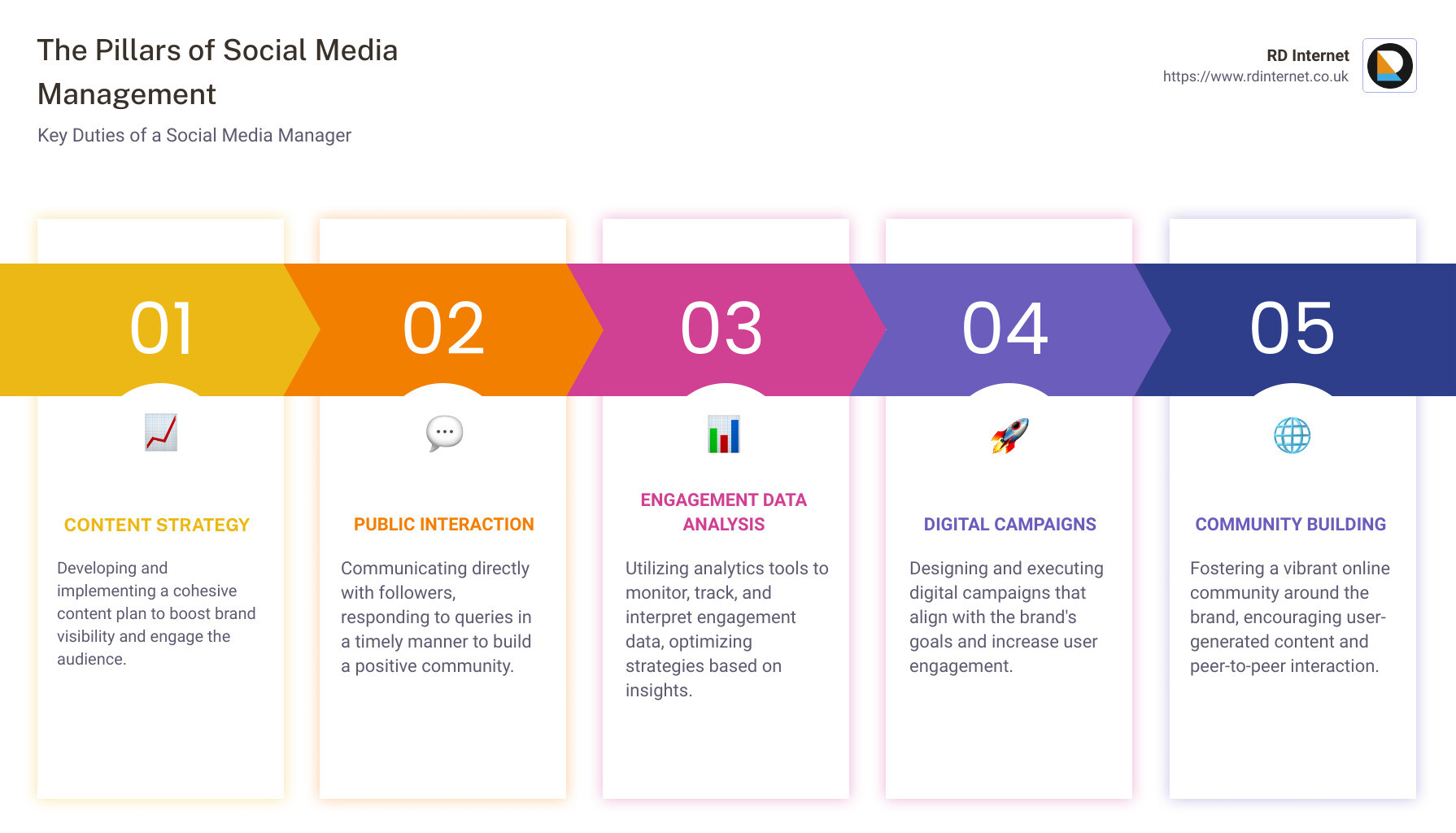
A Social Media Manager does much more than just post updates; they’re responsible for crafting content strategies, engaging with the public, analyzing engagement data, planning digital campaigns, and building community. This blend of creative and analytical skills is crucial in delivering content that resonates with the audience and drives growth.
As we delve deeper into this guide, we’ll explore these responsibilities, the essential skills needed to succeed, daily activities, challenges, and rewards of being a Social Media Manager, and how embracing continuous learning and adaptation can lead to career growth and better online visibility for your business.
Core Responsibilities of a Social Media Manager
In the realm of digital marketing, the role of a Social Media Manager is pivotal. Their duties span across various aspects of marketing and brand management on social media platforms. Here, we break down their core responsibilities into five key areas: Content Strategy, Public Interaction, Engagement Data Analysis, Digital Campaigns, and Community Building.
Content Strategy
At the heart of a Social Media Manager’s role is the creation and execution of a content strategy. This involves:
- Researching current trends to ensure the content is relevant and engaging.
- Planning a content calendar that aligns with business goals and marketing campaigns.
- Creating and curating content that resonates with the target audience, including text, images, and videos.

Public Interaction
Social Media Managers are the bridge between a brand and its audience. Their tasks include:
- Responding to comments and messages promptly to foster a positive community.
- Engaging with the audience by asking questions or running polls to increase interaction.
- Monitoring brand mentions across platforms to engage in conversations, even when not directly tagged.
Engagement Data Analysis
Data drives decisions in social media management. Social Media Managers must:
- Analyze engagement data to understand what content performs well.
- Track ROI of social media campaigns to justify the investment in different platforms.
- Use tools like Google Analytics and social media insights to gather data on audience behavior.
Digital Campaigns
Creating and managing digital campaigns is a crucial responsibility. This involves:
- Designing campaigns that align with the overall marketing strategy of the business.
- Collaborating with influencers and other marketing teams to amplify the reach.
- Measuring the success of each campaign to learn and improve future strategies.
Community Building
Last but not least, Social Media Managers play a vital role in building and nurturing online communities. This includes:
- Creating a welcoming environment for discussions and interactions.
- Identifying and connecting with brand advocates to leverage their influence.
- Organizing online events or live sessions to engage the community.
As we transition from understanding the core responsibilities, it’s clear that the role of a Social Media Manager is multifaceted. They must juggle content creation, audience engagement, data analysis, campaign management, and community building, all while keeping up with the nature of social media. In the next sections, we’ll explore the essential skills needed to manage these responsibilities effectively, and how Social Media Managers interact with other teams to achieve business goals.
Essential Skills for a Successful Social Media Manager
To excel as a Social Media Manager, certain skills are non-negotiable. These skills not only help in executing daily tasks but also in achieving long-term marketing goals. Let’s dive into the essential skills that empower Social Media Managers to perform at their best.
Writing
A knack for writing is crucial. Whether it’s crafting catchy captions, engaging posts, or compelling ad copy, the ability to communicate effectively and creatively is key. Every word counts in grabbing attention and conveying the brand’s message.
Research
Research skills enable Social Media Managers to stay ahead of trends, understand audience preferences, and find inspiration for content. It’s about digging into what competitors are doing and what’s resonating with your audience.
Customer Service
Customer Service comes into play when interacting with followers. Social Media Managers often act as the front-line representatives of a brand, addressing concerns, answering queries, and building relationships with the audience.
SEO Knowledge
Understanding SEO and how it integrates with social media is important for ensuring content is discoverable. Knowledge of keywords, hashtags, and SEO-friendly descriptions can significantly enhance a post’s reach and visibility.
Creativity & Design
Creativity and design skills are essential for creating visually appealing content. Whether it’s selecting images, creating graphics, or editing videos, a flair for design helps in crafting content that stands out.
Data Analytics
Data Analytics expertise is vital for measuring the success of social media campaigns. Analyzing metrics such as engagement rates, reach, and conversions helps in refining strategies and achieving better results.
Social Media Expertise
In-depth social media expertise across various platforms is a given. Knowing the ins and outs of each platform, from Facebook to TikTok, allows for optimized content creation and engagement strategies tailored to each channel’s unique audience.
Budgeting
Finally, budgeting skills are necessary for managing ad spends and campaign budgets. Efficiently allocating resources and maximizing ROI on paid promotions is a critical part of a Social Media Manager’s role.
In mastering these skills, Social Media Managers can navigate the complexities of digital marketing with confidence. From engaging content creation to strategic campaign execution, these competencies form the backbone of successful social media management. Understanding how Social Media Managers collaborate with other teams becomes crucial in leveraging these skills to support broader marketing objectives and drive business growth.
Daily Activities of a Social Media Manager
The role of a Social Media Manager is dynamic, blending creativity with analytics to foster brand growth and engagement. Let’s dive into their daily activities, which keep the digital heartbeat of a brand alive and thriving.
Content Creation
Every day, Social Media Managers craft compelling content that resonates with their audience. This could range from eye-catching graphics and insightful blog posts to engaging videos and stories. Creativity is key, as is the ability to convey the brand’s voice consistently across various platforms. It’s not just about making content; it’s about making content that matters to your audience.
Scheduling
Timing is everything in social media. Social Media Managers meticulously plan and schedule posts to ensure maximum visibility. Tools like Hootsuite and Buffer become their best friends, helping to automate this process. But it’s not just about setting and forgetting. They also need to be adaptable, ready to tweak their schedule based on real-time events or feedback.
Strategy Development
Behind every tweet, like, and share, there’s a strategy. Social Media Managers spend a significant part of their day refining their strategies to align with the company’s goals. This involves identifying target audiences, setting clear objectives, and determining the best platforms and content types to achieve these goals. It’s a blend of art and science, requiring both creative thinking and analytical skills.
User Interaction
Engagement is the name of the game. Social Media Managers actively interact with followers, responding to comments, messages, and mentions. This not just humanizes the brand but also fosters a sense of community. It’s about listening and engaging in meaningful conversations, turning followers into fans, and fans into advocates.
Reach Growth
Growing a brand’s social media presence is a top priority. This involves not only attracting new followers but also retaining them. Social Media Managers employ various tactics to boost reach, from leveraging hashtags and running ads to collaborating with influencers. They constantly explore new ways to expand the brand’s footprint in the digital landscape.
Performance Monitoring
What gets measured gets managed. Social Media Managers keep a close eye on analytics, tracking everything from engagement rates to click-throughs. This data informs their strategy, helping them understand what works and what doesn’t. Regular reporting also ensures that stakeholders are kept in the loop, showcasing the ROI of social media efforts.
In summary, the daily activities of a Social Media Manager are diverse and demanding. From the creative process of Content Creation to the analytical rigor of Performance Monitoring, each task is integral to building and maintaining a brand’s presence online. As they juggle Scheduling, Strategy Development, User Interaction, and Reach Growth, these professionals play a pivotal role in shaping how a brand is perceived in the digital realm. It’s a role that requires passion, flexibility, and a constant finger on the pulse of digital trends.
Challenges and Rewards in Social Media Management
Audience Engagement
Engaging an audience on social media is both an art and a science. It requires understanding what your audience cares about and how they interact online. Challenges include creating content that resonates, sparking conversations, and maintaining a consistent brand voice. On the flip side, the rewards are immense. When you successfully engage your audience, you see increased loyalty, higher conversion rates, and valuable feedback that can inform business strategies.
The digital landscape is crowded, and standing out is a significant challenge. Algorithms favor certain types of content over others, making it hard for new or smaller brands to gain visibility. However, when a social media manager navigates these waters successfully, the rewards are unparalleled. Increased brand exposure can lead to new customer acquisition, enhanced brand reputation, and opportunities for partnerships and collaborations.
Algorithm Changes
Social media platforms frequently update their algorithms, often without warning. These changes can drastically affect how content is seen and engaged with. Staying ahead of these changes requires constant vigilance and adaptability. The reward for overcoming this challenge is maintaining or even increasing your reach and engagement, ensuring your content continues to meet its intended audience.
Trend Adaptation
Trends on social media can emerge and fade away in the blink of an eye. Keeping up with these trends is challenging but essential for staying relevant. Successfully leveraging trends can make your content go viral, bringing unprecedented attention to your brand. It demonstrates to your audience that your brand is current and knows how to engage in the broader cultural conversation.
Creative Freedom
Social media management offers a unique opportunity for creative expression. The challenge here lies in balancing creativity with brand consistency and messaging. Finding that sweet spot where innovative content aligns with your brand’s goals is rewarding, as it can set you apart from competitors and capture your audience’s imagination in new ways.
Community Impact
Building and nurturing an online community is no small feat. It requires time, dedication, and a genuine interest in creating meaningful connections. The challenge is in fostering a positive environment where your audience feels valued and heard. The reward, however, is a loyal community that not only supports your brand but also advocates for it. This can lead to increased trust in your brand and a deeper understanding of your customer base.
In summary, social media management is a field filled with challenges, from keeping up with algorithm changes to staying on top of trends. Yet, the rewards, including creative freedom, meaningful community impact, and significant brand exposure, make overcoming these challenges incredibly fulfilling. As social media continues to evolve, so too will the role of the social media manager, always adapting, learning, and finding new ways to connect with audiences in the digital age.
Frequently Asked Questions about Social Media Management
Navigating social media management can raise a lot of questions. Let’s dive into some of the most common queries.
What makes a good Social Media Manager?
A good Social Media Manager is like a Swiss Army knife for digital engagement. They know how to catch the wave of current trends, using their creativity to craft content that resonates. But it’s not just about being trendy. They use monitoring tools to understand what works and what doesn’t, tweaking strategies for better results. More than anything, they ensure their efforts always align with the brand’s goals, making sure every tweet, post, or story adds value to the company’s narrative.
How does a Social Media Manager interact with other teams?
Social Media Managers are team players, often finding themselves in the middle of a collaborative web. They work closely with Marketing to ensure campaigns are cohesive across all platforms. With Sales, they might brainstorm ways social media can directly support sales goals, such as through targeted ads or social selling strategies. And they’re always in sync with Customer Service, providing a seamless brand experience by responding to queries and feedback on social platforms. This coordination ensures the brand’s voice is consistent and every customer touchpoint is an opportunity to enhance brand loyalty.
What are the career prospects for a Social Media Manager?
As digital landscapes expand, so do the opportunities for Social Media Managers. The demand for skilled professionals in this area is expected to grow, thanks to the increasingly pivotal role social media plays in business strategies. For those in the role, career growth can take many forms, from advancing to senior management positions like Head of Social Media or Social Media Strategist to specializing in a particular platform or industry. Specialization opportunities are abundant, whether it’s becoming an influencer marketing guru or mastering the art of TikTok content. The key to progress? Continuous learning and adapting to the ever-changing digital world.
In conclusion, the journey of a Social Media Manager is one of constant evolution, requiring a blend of creativity, analytical prowess, and collaborative spirit. Whether you’re just starting out or looking to advance your career, the landscape is ripe with opportunities for those willing to keep pace with the digital world’s rapid changes.
Conclusion
In the dynamic world of social media management, staying ahead means embracing the whirlwind of change with open arms. At RD Internet, we understand that the essence of social media is not just about being present; it’s about being proactive, adaptive, and continuously learning.
Continuous Learning: The digital landscape is changing, and so are the roles and responsibilities that come with it. For social media managers, this means a commitment to lifelong learning. Whether it’s mastering the latest social media platform, understanding new content trends, or getting to grips with the newest analytics tools, the learning never stops. It’s this thirst for knowledge that keeps us at the forefront, enabling us to deliver cutting-edge strategies that resonate with audiences and drive engagement.
Industry Adaptation: The only constant in the digital marketing world is change. Algorithms shift, user preferences evolve, and new platforms emerge. As social media managers, our ability to adapt to these changes not only sets us apart but ensures the brands we manage remain relevant and engaging. At RD Internet, we pride ourselves on our agility and foresight, anticipating changes and pivoting strategies to maintain and grow our clients’ digital presence.
RD Internet: We are more than just a social media management company; we are a team of passionate digital marketers committed to pushing boundaries and driving success. Our approach is rooted in a deep understanding of the digital landscape and a relentless drive to achieve excellence. By partnering with us, you’re not just getting a service; you’re gaining a partner dedicated to helping you navigate the complexities of social media management.
As we look to the future, the role of the social media manager will continue to evolve, but the core principles remain the same: creativity, analysis, and collaboration. At RD Internet, we’re excited to continue this journey, embracing new challenges, learning from each new development, and adapting to ensure we’re always delivering exceptional value to our clients.
When digital is the norm, the journey of a social media manager is indeed one of constant evolution. But it’s a journey we’re proud to be on, armed with the skills, knowledge, and passion to make a real impact. Join us, and let’s navigate the ever-changing digital landscape together.
Recent Comments