

Do you ever feel overwhelmed by the increasing competition online? Feel like you’re competing with businesses across the globe? You are not alone. As a small business owner in Cardiff, you’re competing in a digital marketing battlefield that constantly evolves. One of the most vital weapons you’re going to need in this combat is Pay-Per-Click (PPC) advertising.
PPC, also known as Page-Per-Click, is an innovative advertising model where you only have to pay when a potential customer clicks on your advertisement. It’s not just an advertisement — it’s a direct invitation to your website conveying your product or service offerings!
The effectiveness of PPC is beyond just the search engine results — it’s omnipresent, covering various websites as well even appearing on social media platforms. PPC is a time-efficient and cost-effective method to boost your online visibility, and understanding how it works is crucial, especially when you’re paying for each click.
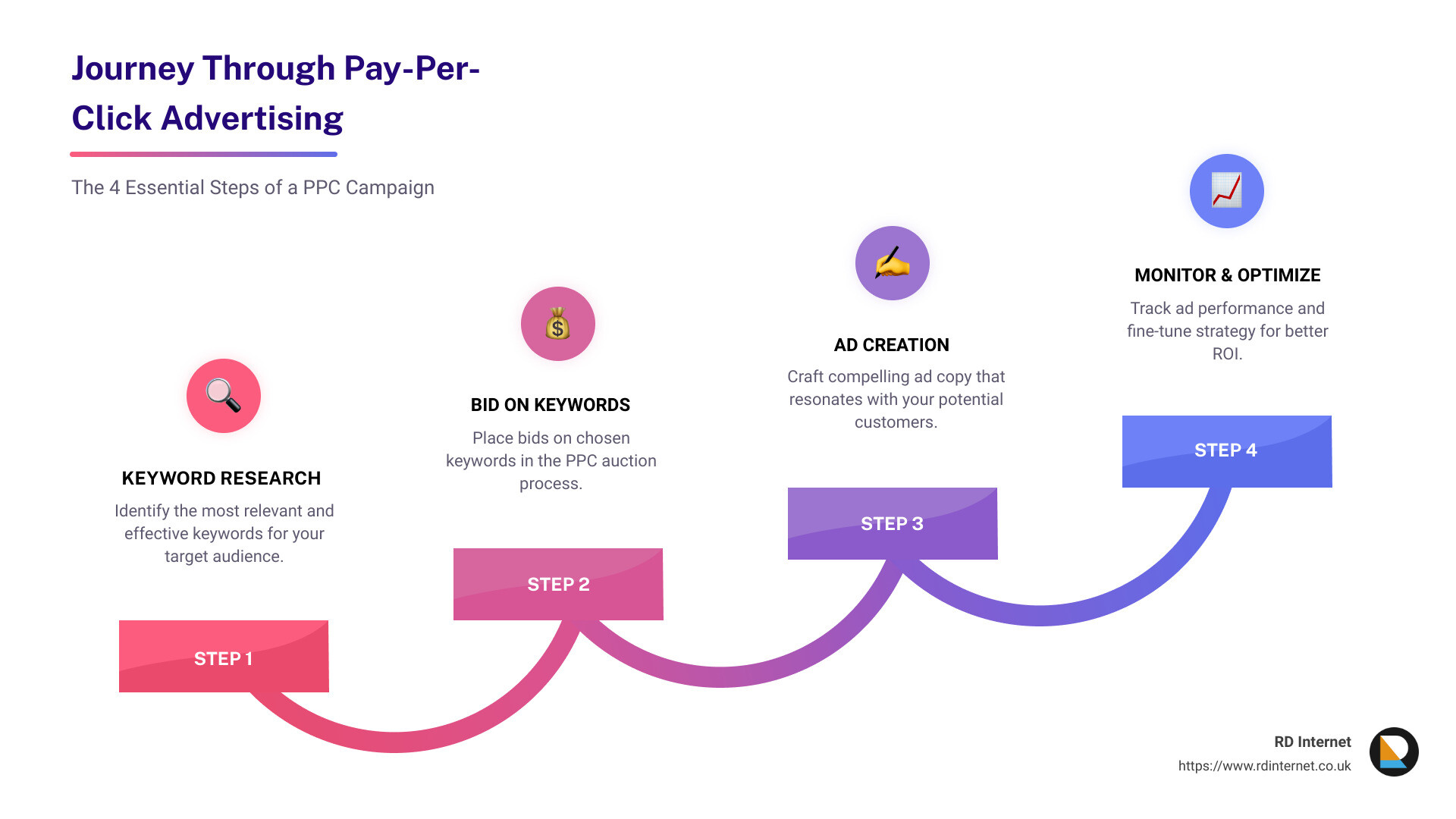
In this comprehensive guide, we at RD Internet will unwrap the ins and outs of Page Per Click pricing for you, providing an easy-to-understand breakdown of PPC and how it affects your digital marketing strategy and budget.
We’re here to propel your brand, amplify your online presence, and ensure that your business isn’t just surviving online, but thriving! Let’s embark on this enlightening journey through the broader lanes of Pay-Per-Click advertising.
Understanding the Basics of PPC
What is Pay-Per-Click (PPC)?
Pay-Per-Click, or PPC, is a form of online advertising where you, as an advertiser, pay a fee each time a user clicks on your ad. It’s like you’re purchasing visits to your website, instead of trying to earn them organically. This model of online advertising gives you a direct route to increased visibility, by targeting potential customers who are actively searching for the products or services you provide.
How Does PPC Work?
The mechanics of PPC advertising might seem complex at first, but it’s actually quite straightforward. Essentially, advertisers bid on specific keywords or phrases that they want their ads to appear for in search engine results. When a user searches for one of those keywords or phrases, the advertiser’s ad will appear among the top results. The advertiser is then charged a fee each time a user clicks on their ad.
In the backstage of this process, advertisers create campaigns that target specific demographics, interests, locations, and so forth. They set a maximum bid for the keywords they want to target. The search engine uses a complex algorithm to determine which ads to show and in what order. The algorithm takes into account factors such as the advertiser’s bid amount, the relevance of the ad to the keyword, and the quality of the ad.
It’s not just about being the highest bidder. Quality and relevance of your ads also play a crucial role in getting your ads displayed.
The Importance of PPC in Digital Marketing
In the era of fast-paced digital marketing, PPC holds a significant place. Why? Because it’s a powerful tool that can provide instant exposure for your brand, especially on search engine results pages like Google or Bing.
For small businesses struggling to gain traction in a saturated market or during peak shopping seasons, it’s a game-changer. Moreover, PPC has the capability to deliver an impressive Return on Investment (ROI), by placing your brand directly in front of potential customers right when they’re ready to buy.
Additionally, PPC offers measurable results. Every click, impression, and conversion can be tracked, providing valuable insights into your audience’s behaviour, preferences, and conversion pathway. This can help you refine your marketing strategies and make data-driven decisions.
In a nutshell, understanding PPC and leveraging its power is key to achieving success in your digital marketing campaigns. At RD Internet, we’re committed to helping you harness this power to create a powerful online presence and drive significant traffic to your website. Stay tuned as we delve deeper into the cost structure of PPC, the role of keywords, and strategies for effective PPC campaigns.
The Cost Structure of PPC
As we delve into pay-per-click (PPC) advertising, one of the critical aspects to understand is its cost structure. This knowledge is vital for planning your budget effectively and allocating resources judiciously.
How Much Does PPC Cost?
The cost of PPC is not set in stone. It varies significantly depending on several factors, particularly the competitiveness of the keywords you’re targeting and your bid amount for each keyword. The pricing model is structured around a bidding system, where you place a maximum bid on a keyword. If your ad is clicked, you pay the search engine, hence the term ‘pay-per-click.’
On average, the cost-per-click (CPC) can range anywhere from £0.66 to £1.32 in the UK, especially with platforms like Google Ads. However, it’s important to remember that these are averages and the actual costs can vary depending on a variety of factors.
Factors Influencing PPC Costs
Several factors can influence the cost of your PPC campaign. Some of the key factors include:
-
Keyword competitiveness: High-demand keywords typically cost more per click. If many advertisers are bidding on a particular keyword, the cost will naturally go up.
-
Ad Quality: Search engines assess the quality and relevance of your ads when determining your ad rank. High-quality, relevant ads can lead to lower costs and better ad positions.
-
Target audience and location: The cost can also be affected by the specific audience you’re targeting and the geographical location. Targeting a highly competitive market or region can increase the cost.
-
Bid strategy: Your bid strategy can also impact the cost. If you opt for automated bidding strategies, the platform will adjust your bids to maximize results, which can sometimes lead to higher costs.
Understanding the PPC Auction Process
At the heart of the PPC model is a unique auction system, which happens behind the scenes every time a user performs a search. The search engine assesses all eligible ads based on the bid amount, the quality, and the relevance of the ads.
It’s not just about who bids the highest. The auction system also considers the relevance and quality of your ads and landing pages. This determines your ‘Ad Rank’, which ultimately decides your ad position and cost per click.
Understanding this process is crucial as it highlights the importance of not only bidding strategically but also ensuring that your ads are of high quality and highly relevant to the search queries.
At RD Internet, we are experts in navigating the complexities of the PPC cost structure and auction process. We help you optimize your PPC campaigns, ensuring that you get the most value for every pound spent. In the next section, we’ll explore the vital role of keywords in PPC and how you can choose the right keywords for your campaign.
The Role of Keywords in PPC
Keywords are the backbone of any successful PPC campaign. They are the terms and phrases your target audience uses when searching for products or services like yours. Choosing the right keywords is vital for ensuring your ads reach the right audience.
Importance of Keyword Research in PPC
At RD Internet, we cannot emphasize this enough: keyword research is crucial. It’s the starting point of your PPC journey and is a continuous process. It involves not only identifying relevant terms and phrases but also understanding the intent behind those keywords.
As Wordstream puts it, your PPC keyword list should be always growing and adapting to ensure you’re not missing out on valuable traffic-driving keywords. This means constantly looking for new keywords that resonate with your business offerings and audience intent.
How to Choose the Right Keywords for Your PPC Campaign
Choosing the right keywords for your PPC campaign involves identifying terms and phrases that are highly relevant to your business, yet not overly competitive. This may include long-tail keywords—more specific and less common phrases that account for the majority of search-driven traffic.
These long-tail keywords are less competitive and therefore less expensive, which can contribute to a higher return on investment (ROI). For instance, instead of bidding on a generic keyword like “Italian restaurant”, you might consider a long-tail keyword like “authentic Italian restaurant in Cardiff”.
Here at RD Internet, we use sophisticated keyword research tools to generate an extensive list of keywords that align with your business and audience.
The Impact of Keyword Relevance on PPC Costs
A factor that significantly impacts your PPC costs is the relevance of your keywords to your ad and landing page. This relevance is considered by Google when assigning a Quality Score for each of your keywords.
Google Ads assigns a Quality Score on a scale of 1 to 10 for each of your keywords, based on factors like your ad’s relevance to the keyword, expected click-through rate (CTR), and landing page quality. A higher Quality Score can lead to lower costs and better ad positions.
In conclusion, understanding the role of keywords in PPC and choosing the right keywords are vital for creating a successful page per click campaign. With careful planning and ongoing optimization, we at RD Internet can help you make the most of your PPC campaigns and maximize your ROI.
PPC Platforms and Their Pricing Models
Navigating PPC can be a bit complex, but understanding the different platforms and their pricing models can clear the path. Let’s dive into some of the most common platforms, starting with Google Ads.
Overview of Google Ads as a PPC Platform
Google Ads is the most popular PPC platform, occupying a sizable chunk of the market share. It is divided into two key parts: the Google Search Network and the Google Display Network. The former includes search ads on Google search, Google Maps, Google Shopping, and search partners on non-Google websites. The latter covers display ads and videos on YouTube, Gmail, Blogger, and 3 million partner websites and apps. This dual approach allows your ads to reach a vast audience, increasing your chances of driving significant traffic to your site.
Understanding the Pricing Model of Google Ads
The pricing model of Google Ads is primarily based on a bid-based system. Advertisers compete against each other by bidding on specific keywords relevant to their target audience. The highest bid, along with other factors such as the quality and relevance of the ad, determines which ads appear first in the search results. This model can be hyper-focused and effective, but it also means your cost per click (CPC) can vary depending on the competition and the keywords you’re targeting.
That said, Google Ads also provides opportunities for cost management. You can set daily budget limits to prevent overspending and use negative keywords to exclude irrelevant searches. At RD Internet, we can help you optimize your Google Ads campaigns to get the most value for your budget.
Other PPC Platforms and Their Pricing Models
Beyond Google Ads, there are other PPC platforms that can be leveraged depending on your business needs and target audience.
Meta Ads, encompassing both Facebook and Instagram, allows for precise targeting based on demographics and interests. Its pricing model, like Google Ads, is largely based on bidding. However, it offers a variety of ad formats, including image, video, carousel, and more, each with different pricing structures.
TikTok Ads is an excellent platform to reach a younger and highly engaged audience. It offers a range of advertising options, including branded hashtags and in-feed ads. The costs can vary based on the ad format and the audience you’re targeting.
Microsoft Ads extends your reach beyond Google to users on Bing and partner sites. It operates similarly to Google Ads, with a bid-based model for keywords.
Lastly, LinkedIn Ads is a powerful platform for B2B marketing, with advanced targeting options including job title, employer, industry, and professional skills. Like other platforms, LinkedIn Ads uses a bidding system, with costs varying based on the competition for your target audience.
In conclusion, the cost of your page per click campaign will depend on the platform you choose, the keywords you target, and the competition for those keywords. We at RD Internet can help you navigate these complexities, ensuring you get the most value from your PPC campaigns.
Strategies for Effective PPC Campaigns
Executing a successful PPC campaign is not a one-and-done task. It requires a well-planned strategy, constant monitoring, and regular adjustments to achieve the best results. Let’s dive into the key strategies that can help you maximize your return on investment on page per click campaigns.
Defining Your Target Audience and Setting Clear Goals
The first step to formulating a successful PPC strategy is understanding your target audience. At RD Internet, we believe in tailoring campaigns to the specific needs and preferences of your audience. Factors like age, gender, location, and interests play significant roles in defining your audience and crafting a strategy that resonates with them.
In addition, setting clear, measurable goals for your campaign is essential. Are you aiming to increase website traffic, boost online sales, or generate more leads? Having a clear goal guides your PPC strategy and provides a benchmark to measure your success.
Creating Compelling Ad Copy
Once you’ve identified your audience and set your goals, the next step is crafting compelling ad copy. Your ad is your first interaction with potential customers, so it should be attention-grabbing and relevant. Using the right keywords in your ad copy can help improve its relevance, attracting more clicks and conversions.
But remember, writing engaging ad copy isn’t a one-time task. Google, for instance, allows you to update your ads with fresh copy, testing different combinations of headlines and descriptions to find what works best. At RD Internet, we continually update and refine your ad copy to improve its performance.
Monitoring and Optimizing Your PPC Campaign
Your PPC campaign needs constant attention and fine-tuning, just like a garden. Regular monitoring allows you to quickly identify what’s working and what isn’t, enabling you to adjust your strategies accordingly. This is not a set-it-and-forget-it strategy.
We, at RD Internet, are committed to testing different ad formats, targeting options, and continually assessing your ads’ performance. Our strategies also include using negative keywords to improve the effectiveness of your campaign and trying out different bidding strategies to maximize your ROI.
For instance, if you find that your conversion rate is lower on mobile devices, you could decrease your maximum cost-per-click bid for clicks from mobile devices to compensate for the lower conversion rate.
To summarize, a successful PPC campaign requires ongoing monitoring, adjustments, and optimizations. With our expertise in managing PPC campaigns, we can help you navigate this complex process and drive success for your business.
In the next section, we’ll wrap up our discussion on page per click pricing and how to maximize ROI from your PPC campaigns.
Conclusion: Maximizing ROI from Your PPC Campaigns
In digital marketing, mastering pay-per-click (PPC) can be a game-changer for small business owners like you. As we’ve discussed, PPC allows your business to appear at the top of search engine results pages, directly targeting customers who are actively searching for your products or services.
The complexity of PPC, however, can be daunting. You might be wondering, “How do I navigate the intricacies of keyword selection, ad creation, and campaign optimization?” That’s where we at RD Internet step in.
When it comes to page per click pricing, it’s all about balance. You want to maximize your reach without overspending on your budget. This delicate balance can be achieved through strategic planning, careful execution, and constant monitoring and optimization.
The key to a successful PPC campaign is not to set it and forget it. Regular adjustments are necessary to ensure your ads are performing at their best. By continually assessing your campaign’s performance and making necessary adjustments, you’ll ensure your PPC campaign remains effective and continues to drive results.
A successful PPC campaign also requires an understanding of your audience and their needs. Your customers should be at the heart of all your digital marketing efforts. By crafting compelling ad copy, choosing relevant keywords, and optimizing your landing pages, you can increase traffic to your website, boost conversions, and ultimately, enhance your revenue.
In conclusion, PPC is a powerful tool in your digital marketing toolbox. When used correctly, it can help your business reach more potential customers, increase your online visibility, and drive sales.
At RD Internet, we understand the challenges small business owners face in navigating PPC. We’re here to provide the support you need to set up, manage, and optimize your PPC campaigns for maximum ROI.
Are you ready to take your digital marketing to the next level with page per click? With strategic planning, careful execution, and the right support, you can master PPC and achieve online success for your business.
For more information on PPC and other digital marketing strategies, check out our other resources on SEO, Social Media, and Content Marketing.
Here’s to your success in the exciting world of PPC!
Recent Comments